Heating is the largest single energy use in American homes, according to the U.S. Energy Information Administration. Whether you heat with gas, electricity, oil, or propane, the same principles apply: keep heat from escaping, run the system efficiently, and don’t heat spaces and hours you don’t need. Here’s how to bring winter bills down without being cold.
Table of Contents
- 1. Use a smarter thermostat schedule
- 2. Stop the drafts
- 3. Close the fireplace damper
- 4. Use windows to your advantage
- 5. Keep the heating system in shape
- 6. Insulate where it counts
- 7. Lower water heating costs
- 8. Reverse your ceiling fans
- 9. Use space heaters carefully
- 10. Get help if you need it
- Common questions
1. Use a smarter thermostat schedule
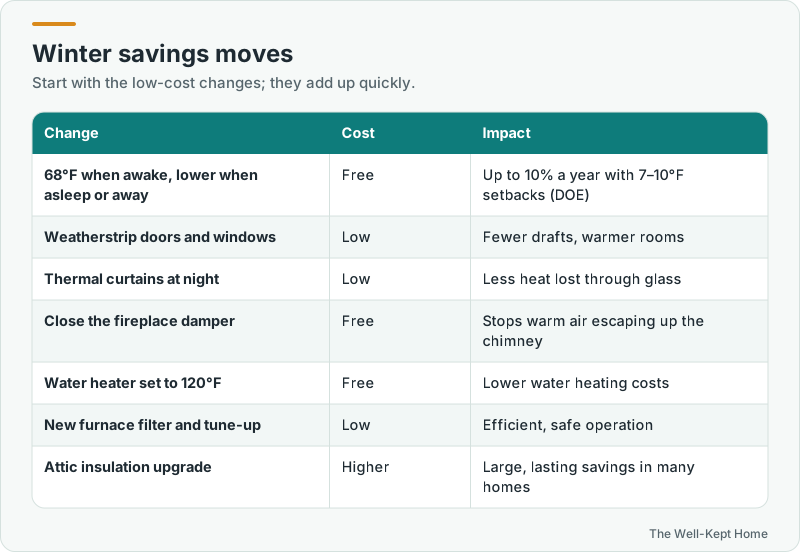
The U.S. Department of Energy suggests setting the thermostat to 68°F while you’re awake and lower while you’re asleep or away. DOE estimates that turning it back 7 to 10 degrees for eight hours a day can save up to 10% a year on heating and cooling. A programmable or smart thermostat handles the schedule automatically, so the house warms up before you wake or come home.
A note for heat pump owners
Heat pumps work differently. A large setback can trigger expensive electric backup heat when the system tries to recover quickly. Use smaller setbacks of a few degrees, and use a thermostat designed for heat pumps that recovers gradually. Check that the display isn’t showing “Aux” or “Emergency” heat more than it should on mild days.
2. Stop the drafts
Air leaks let warm air out and cold air in. The most common places to check:
- Exterior doors. Replace worn weatherstripping and add a door sweep if you see daylight underneath.
- Windows. Caulk gaps around frames. Plastic window insulation kits are inexpensive and work well on drafty single-pane windows.
- Outlets and switches on exterior walls. Foam gaskets behind the cover plates cut drafts.
- The attic hatch, a classic leak. Add weatherstripping and a rigid foam board on top.
- Plumbing and wiring penetrations under sinks and in the basement.
Our guide to finding air leaks in your house explains how to track them down, and how to weatherstrip doors and windows covers the fix.
3. Close the fireplace damper
An open damper is like an open window. When the fireplace isn’t in use, keep the damper closed. If you rarely use the fireplace, an inflatable chimney balloon or a fitted cover helps further. Make sure the fire is completely out before closing the damper.
4. Use windows to your advantage
Open curtains on south-facing windows on sunny days to let the sun warm the house, then close them at night. Thermal or insulated curtains reduce heat loss through glass after dark.
5. Keep the heating system in shape
- Change the furnace filter on schedule. See how often to change your HVAC filter.
- Schedule a fall tune-up, which includes safety checks for gas furnaces. See what an HVAC tune-up includes.
- Keep supply vents and returns clear of furniture and rugs.
- Seal and insulate ducts that run through unheated attics, crawlspaces, or garages.
6. Insulate where it counts
The attic is usually the best place to add insulation, since heat rises and many older homes have far less than current recommendations. Basement rim joists, the band of wood where the house sits on the foundation, are another common gap. See our guide to attic insulation costs.
7. Lower water heating costs
Water heating is another major energy use. DOE suggests setting the water heater to 120°F, which is enough for most households and reduces standby heat loss. Low-flow showerheads and shorter showers help too.
8. Reverse your ceiling fans
Set ceiling fans to spin clockwise on low speed in winter. This gently pushes warm air that collects near the ceiling back down into the room, which is especially helpful in rooms with high ceilings.
9. Use space heaters carefully
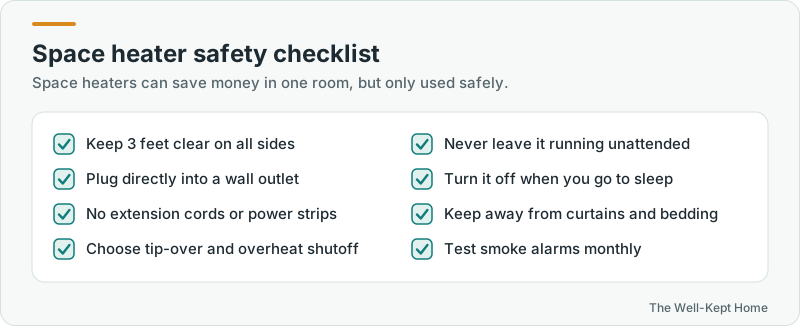
Heating one occupied room with a space heater while turning the central thermostat down can save money, but only if you actually lower the thermostat, and only if the heater is used safely. Space heaters are a leading cause of home heating fires.
10. Get help if you need it
Many utilities offer free energy audits, weatherization programs, rebates, and budget billing. Income-qualified households may be eligible for bill assistance through the Low Income Home Energy Assistance Program (LIHEAP) or free upgrades through the federal Weatherization Assistance Program, both administered by states.
Common questions
Is it cheaper to keep the heat at one temperature all day?
For most furnaces and boilers, no. Lowering the temperature while you’re asleep or away saves energy, even counting the warm-up. Heat pumps are the exception that calls for smaller setbacks.
Does a humidifier help me save on heat?
Slightly more humid air can feel warmer, so some people are comfortable at a lower setting. Keep indoor humidity between about 30% and 50% to avoid condensation and mold.
What’s the cheapest fix with the biggest impact?
Usually the thermostat schedule, followed by weatherstripping doors and sealing the attic hatch.