The short answer: don’t make vinegar your regular granite cleaner. Granite is much more resistant to acid than marble, so a single accidental wipe is unlikely to ruin it. But vinegar can gradually dull a polished finish, weaken the sealer that protects the stone from stains, and damage some stones sold as “granite” that contain acid-sensitive minerals. Stone care professionals consistently recommend pH-neutral cleaners instead. Here’s why, what to use, and how to keep granite looking good.
Table of Contents
Why acids and stone don’t mix
Many natural stones, such as marble, limestone, and travertine, are made largely of calcium carbonate, which acids dissolve. That’s what causes the dull, rough spots called etching. True granite is mostly made of harder silicate minerals like quartz and feldspar, which resist acid. Two complications remain:
- The sealer. Most granite countertops are sealed to slow the absorption of oils, wine, and other stains. Acidic and harsh cleaners can break down the sealer over time, leaving the stone more vulnerable to staining.
- “Granite” isn’t always granite. In the countertop trade, the word covers a range of stones, and some contain calcite or other acid-sensitive minerals that can etch.
What to use instead
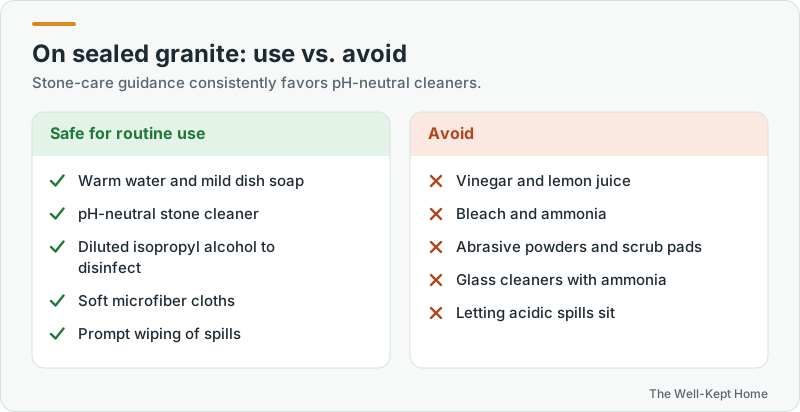
- Warm water and a few drops of mild dish soap for daily cleaning. Wipe, rinse with a clean damp cloth, and dry to avoid streaks.
- A pH-neutral stone cleaner made for granite and other natural stone.
- Diluted isopropyl alcohol to disinfect: a mix of rubbing alcohol and water is a common recommendation for sealed granite. Rinse and dry afterward.
- Soft microfiber cloths, not abrasive pads.
What to avoid
- Vinegar, lemon juice, and other acids, including many bathroom and hard water cleaners.
- Bleach and ammonia, which can dull the surface and degrade the sealer with repeated use. Many glass cleaners contain ammonia.
- Abrasive powders and scouring pads, which can scratch or haze polished stone.
- Letting acidic spills sit. Wipe up wine, citrus juice, tomato sauce, and soda promptly.
Is your granite sealed?
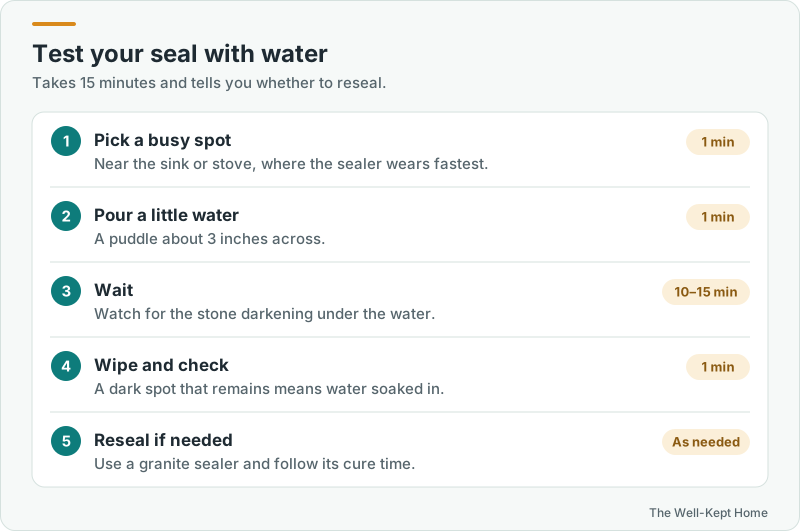
The water test takes about 15 minutes. Pour a small puddle of water, about 3 inches across, on a frequently used area near the sink or stove. If the stone under the water darkens within a few minutes, the water is soaking in and it’s time to reseal. If the water beads up and the stone stays the same color after 10 to 15 minutes, the sealer is still working.
How often granite needs resealing varies with the stone and how the counter is used; some granites rarely need it, while more porous ones need it more often. Many homeowners reseal every year or two. Granite sealers are sold at hardware stores; follow the product’s application and cure instructions.
Removing stains
Stains in granite are usually absorbed into the stone, so surface cleaners won’t remove them. A poultice draws stains out:
- Oil-based stains, such as cooking oil or grease: a paste of baking soda and water, spread over the stain, covered with plastic wrap, and left for up to a day before removing.
- Organic stains, such as coffee, tea, or wine: a paste made with baking soda and 3% hydrogen peroxide often works better on light-colored stone. Test first on dark stone.
Repeat if needed. Persistent stains are a job for a stone restoration professional.
Fixing dull spots
If you see dull or rough patches where acidic spills sat, the stone may be etched. Light etching on some stones can be improved with a stone polishing compound. Deeper damage needs professional honing and polishing.
What about quartz countertops?
Engineered quartz is a different material, made from crushed quartz bound with resin. It doesn’t need sealing, but manufacturers often warn against harsh chemicals and very high or low pH cleaners, and against high heat. Check your manufacturer’s care guide.
A simple daily routine
- Wipe spills promptly, especially acidic ones.
- Clean with dish soap and warm water, or a stone cleaner.
- Dry with a microfiber cloth.
- Use trivets and cutting boards.
- Test the seal a couple of times a year.
For a broader look at gentle cleaning, see non-toxic cleaning products for home and where a vinegar cleaner is and isn’t safe.
Common questions
I cleaned my granite with vinegar for months. Did I ruin it?
Probably not, but the sealer may be worn. Do the water test and reseal if needed. If you see dull patches, they may be etching, which a stone professional can assess.
Are disinfecting wipes safe on granite?
Many contain ingredients that can dull the finish or degrade the sealer with frequent use. Use them sparingly, or use diluted alcohol instead.
Can I use Windex on granite?
Many glass cleaners contain ammonia, which isn’t recommended for regular use on granite. Choose a stone-safe cleaner.
How do I know what stone I have?
Check your purchase paperwork or ask the fabricator. If you’re unsure, treat it like a sensitive stone and stick to pH-neutral products.