Pets experience your floors and counters very differently than you do. Dogs and cats walk barefoot across freshly cleaned surfaces, lick their paws, sniff at floor level, and sometimes drink from places they shouldn’t. They’re also smaller than people, so the same exposure can affect them more. That doesn’t mean you need to give up effective cleaning. It means choosing products carefully, using them correctly, and keeping pets away until surfaces are dry.
Table of Contents
Why pets are more vulnerable
- Paws and tongues. Residue on floors ends up on paws, and then in mouths during grooming.
- Size. A small dose for a person can be a large one for a cat or a small dog.
- Cats in particular process certain compounds, such as phenols and some essential oils, less efficiently than people and dogs do, which makes them more sensitive.
- Birds have very sensitive respiratory systems and can be harmed by fumes and aerosols.
Ingredients to use carefully
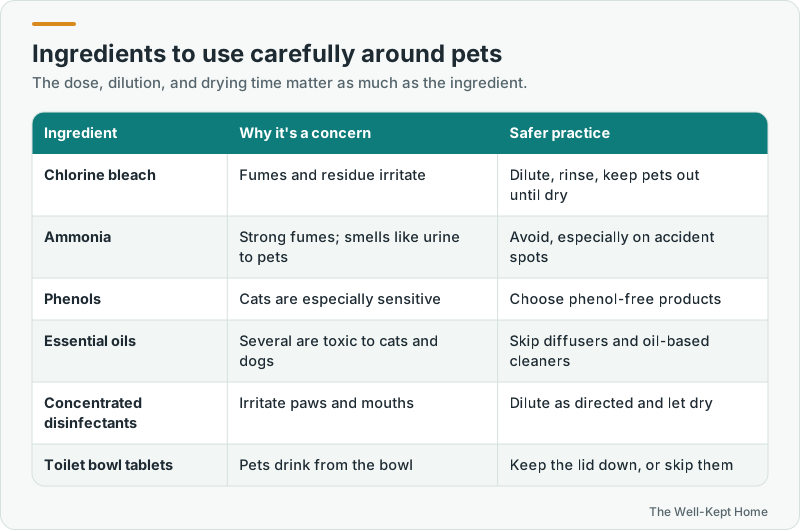
- Chlorine bleach. Effective, but its fumes and residue can irritate. If you use it, dilute it as directed, rinse surfaces with clean water, ventilate, and keep pets out until everything is dry.
- Ammonia. Strong fumes, and on pet accident spots its smell can resemble urine, which may encourage pets to mark the same spot again.
- Phenols. Found in some disinfectants. Cats are especially sensitive to them, so choose phenol-free products in cat households.
- Essential oils. Several common oils, including tea tree, eucalyptus, citrus, pine, peppermint, and wintergreen, can be toxic to cats and dogs depending on the concentration and exposure. Be cautious with oil-based cleaners and diffusers.
- Concentrated disinfectants. Used undiluted or left wet, they can irritate paws and mouths. Follow the label’s dilution and let surfaces dry.
- Toilet bowl tablets and in-tank cleaners. Pets that drink from the toilet can ingest them. Keep the lid down, or skip them.
What to look for in pet-safe products
- Third-party certification, such as the EPA’s Safer Choice label, which reviews ingredients for safety.
- Fragrance-free options, which avoid many potential irritants.
- Clear directions on dilution, rinsing, and dry time.
- Enzyme cleaners for accidents. They break down the proteins in urine, vomit, and feces, removing the odor that draws pets back to the same spot.
Be cautious of “pet-safe” claims with no explanation. The phrase isn’t regulated, so read the ingredients and directions.
Pet-safe cleaning habits
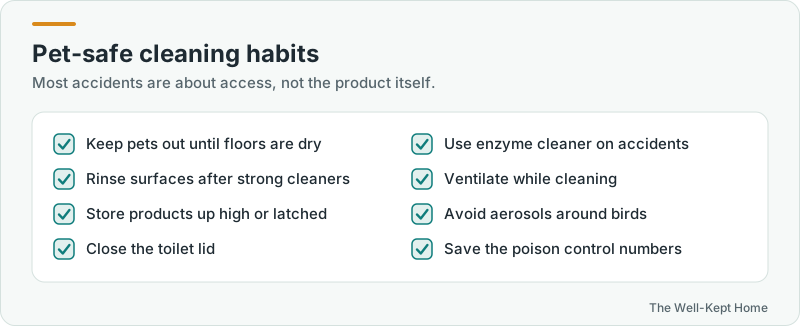
- Keep pets out of the room until floors and surfaces are completely dry.
- Rinse after using stronger cleaners on floors.
- Store products up high or in latched cabinets; curious dogs chew bottles.
- Close the toilet lid.
- Ventilate while cleaning, and avoid aerosols around birds.
- Wash pet bowls with dish soap and hot water rather than strong cleaners.
- Clean up laundry pods and dishwasher packets, which pets may bite into.
Simple pet-friendly options for everyday cleaning
- Floors: warm water with a small amount of a mild, fragrance-free floor cleaner or dish soap, followed by a rinse on sticky residue.
- Glass and mirrors: a diluted vinegar spray; see DIY vinegar cleaner.
- Odors: baking soda on carpets and pet beds, then vacuum; see cleaning with baking soda and vinegar.
- Accidents: blot, then use an enzyme cleaner and let it work.
Cleaning bowls, beds, and litter boxes
- Food and water bowls. Wash them daily with hot water and dish soap, or in the dishwasher if they’re dishwasher-safe. Stainless steel and ceramic are easier to keep clean than scratched plastic.
- Beds and blankets. Vacuum them weekly and wash covers in hot water with a fragrance-free detergent. Skip scented boosters and dryer sheets for pets with sensitive skin.
- Litter boxes. Scoop daily, and scrub the empty box with hot water and unscented dish soap when you change the litter. Many cats avoid a box that smells of strong cleaners or perfume, so rinse it thoroughly and let it dry.
- Toys. Hard toys can be washed with dish soap and water; most soft toys can go through the washing machine.
If your pet is exposed
If your pet licks, eats, or is splashed with a cleaning product and shows symptoms such as drooling, vomiting, trouble breathing, or unusual behavior, contact your veterinarian right away. Two animal poison helplines operate around the clock: the ASPCA Animal Poison Control Center at (888) 426-4435 and the Pet Poison Helpline at (855) 764-7661. Both may charge a consultation fee. Have the product container handy so you can read the ingredients.
Hiring cleaners in a pet household
If you use a cleaning service, tell them about your pets and ask what products they use. Many offer pet-safe or fragrance-free options; see green cleaning services. Agree on where pets will be during the visit, for their safety and the cleaners’.
Common questions
Is vinegar safe for pets?
Diluted vinegar is generally considered low-risk for cleaning around pets once it’s dry. Some pets dislike the smell, which fades quickly.
Is bleach ever okay around pets?
It can be used carefully: properly diluted, rinsed, ventilated, and fully dry before pets return. Never mix it with other cleaners.
Are “natural” cleaners automatically pet-safe?
No. Some natural ingredients, especially certain essential oils, can be toxic to pets. Check the ingredients.
What’s the best cleaner for pet urine?
An enzyme cleaner, after blotting up as much as possible. Avoid ammonia-based products on urine spots.