An HVAC tune-up is preventive maintenance for your heating and cooling system: a technician cleans key parts, takes measurements, tightens connections, and checks safety controls before problems turn into breakdowns. Done well, it’s one of the best values in home maintenance. Done badly, it’s a 20-minute look at the thermostat and a sales pitch.
Here’s what a real tune-up should include, when to schedule it, what it costs, and how to find a company that does it right.
Table of Contents
When to schedule a tune-up
- Air conditioners: in spring, before cooling season.
- Furnaces and boilers: in fall, before the first cold snap.
- Heat pumps: ideally twice a year, spring and fall, since they work in both seasons.
Booking in the shoulder seasons is easier, too. Technicians are less busy, and you’re not competing with emergency calls during a heat wave.
What a tune-up should include
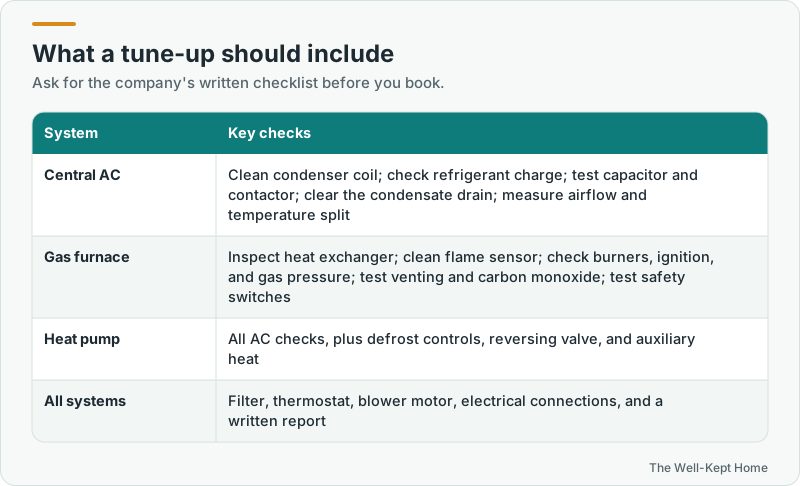
Air conditioners and heat pumps
- Inspect and clean the outdoor condenser coil
- Check the refrigerant charge using pressure and temperature measurements
- Test the capacitor and contactor, two common failure points
- Tighten electrical connections and check for burned wires
- Clear the condensate drain line and check the drain pan
- Inspect the blower, and clean it if needed
- Measure the temperature difference between return and supply air
- For heat pumps: test the reversing valve, defrost controls, and backup heat
Gas furnaces
- Inspect the heat exchanger for cracks, which can leak carbon monoxide
- Clean the flame sensor and inspect the burners
- Check the ignition system and gas pressure
- Test the venting and draft, and check for carbon monoxide
- Test safety controls such as the high-limit switch
- Inspect the blower motor and belt, if there is one
Every system
- Check or replace the air filter
- Check thermostat operation
- Provide a written report of what was done and found
What a tune-up costs
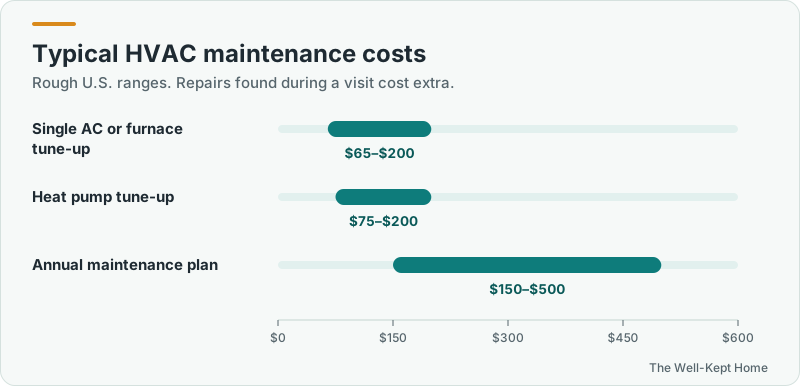
Cost guides commonly put a single AC or furnace tune-up at roughly $65 to $200, and heat pump tune-ups in a similar range. Some national averages run higher depending on the market and the company. Annual maintenance plans, which usually include two visits plus perks like priority scheduling and repair discounts, commonly cost about $150 to $500 a year. Repairs found during the visit are priced separately. For a deeper breakdown, see our guide to AC maintenance costs.
Is a tune-up worth it?
- Efficiency: clean coils, the correct refrigerant charge, and good airflow keep the system running near its rated efficiency.
- Fewer breakdowns: worn capacitors, loose wires, and clogged drains are cheap to fix during a tune-up and expensive when they fail in peak season.
- Safety: furnace inspections can catch cracked heat exchangers and venting problems that can expose a household to carbon monoxide.
- Warranty: some manufacturers’ warranties expect regular professional maintenance. Keep your receipts.
How to choose a company
- Licensing and insurance. HVAC contractors are licensed in most states. Check the license.
- Certified technicians. NATE (North American Technician Excellence) certification is a respected industry credential.
- A written checklist. Ask for it before booking. If a company can’t tell you what the tune-up includes, keep looking.
- Clear pricing for the visit and for common repairs.
- No high-pressure sales. Be wary of very cheap tune-up specials that end with a long list of urgent repairs or a pitch for a new system. A second opinion is reasonable before any major repair.
How to tell the tune-up was done right
A thorough visit leaves a trail. You should get a written report or checklist with actual readings, such as refrigerant pressures or the temperature split for an air conditioner, and the result of a carbon monoxide check for a gas furnace. The outdoor coil should look clean, the filter should be fresh, and the technician should be able to explain anything they recommend fixing and why. If all you received was a sticker on the unit and a quote for a new system, ask for the checklist, or try a different company next time.
How to prepare for the visit
- Clear a path to the furnace or air handler and the outdoor unit.
- Have your filter size handy, or a spare filter.
- Write down anything unusual: noises, smells, uneven rooms, or higher bills.
- Know the system’s age and model if you can. It’s usually on a label on the unit.
Between visits, you can handle the basics yourself: change the filter on schedule and keep the outdoor coil clean.
Common questions
How long does a tune-up take?
A thorough tune-up typically takes about an hour per system, sometimes longer if cleaning or minor repairs are needed. Be skeptical of 15-minute visits.
Do I need a tune-up for a new system?
Yes. Annual maintenance keeps a new system running efficiently and helps protect the warranty. The first visit often confirms that installation settings are correct.
Can I skip a year?
Many systems will run fine for a year without service, but skipping regularly allows small problems to build. If the budget is tight, prioritize the furnace’s safety check in fall.