Washers and dryers are among the most energy-hungry appliances in many homes, and the efficiency gap between models is wide. ENERGY STAR estimates that certified washers use about 20% less energy and about 30% less water than standard models, and that heat pump dryers use almost 30% less energy than conventional dryers. If you’re shopping for a new laundry pair, here’s how to compare efficiency, what the different dryer types mean for your bills and your laundry room, and how to get the most out of whatever you buy.
Table of Contents
Where the energy goes
For washers, most of the energy goes into heating water, not running the motor. That’s why cold-water washing and efficient water use matter so much. For dryers, the energy goes into generating heat to evaporate water from clothes. The less water the washer leaves in your clothes, the less work the dryer has to do, which is why a washer’s spin speed affects your dryer bill.
Choosing an efficient washer
- ENERGY STAR certification is the baseline. Certified washers use less energy and water than standard models.
- ENERGY STAR Most Efficient is a designation for the top performers in a given year.
- Front-load vs. top-load. Front-loaders generally use less water and spin faster. High-efficiency top-loaders with an impeller instead of an agitator have closed much of the gap.
- Spin speed. Faster final spins leave clothes drier, shortening dryer time.
- Capacity. Choose a size that fits your typical loads. Running half-empty loads in a huge machine wastes water and energy.
- Efficiency ratings. Washers are rated by Integrated Modified Energy Factor (IMEF), where higher is better, and Integrated Water Factor (IWF), where lower is better.
Choosing an efficient dryer
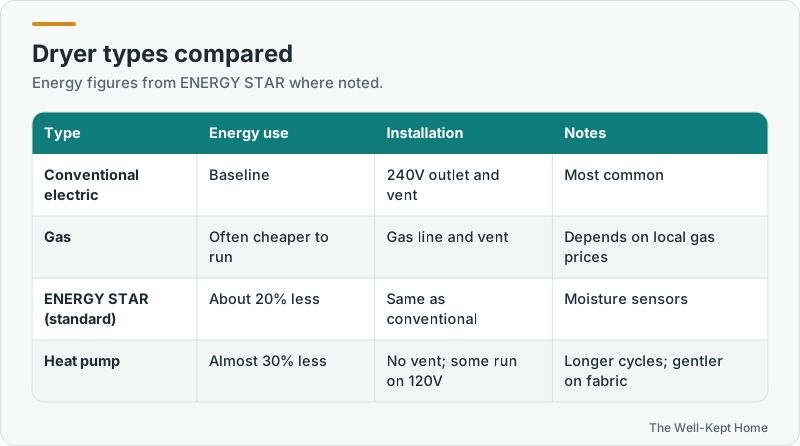
Conventional electric and gas dryers
Most dryers heat air with an electric element or a gas burner and vent the moist air outside. Gas dryers are often cheaper to run where natural gas is inexpensive. ENERGY STAR certified conventional dryers use about 20% less energy than standard models, largely thanks to moisture sensors that stop the cycle when clothes are dry instead of running on a timer.
Heat pump dryers
Heat pump dryers recycle heat in a closed loop instead of venting hot air outside, which makes them the most efficient option, using almost 30% less energy than conventional dryers by ENERGY STAR’s estimate. They don’t need an exhaust vent, so they can go in closets and apartments where venting is hard, and some models run on a standard 120-volt outlet. Trade-offs include longer cycle times, a higher purchase price, and the need to drain condensed water, either into a drain or a container. They also dry at lower temperatures, which is gentler on fabrics.
All-in-one washer-dryer combos
Several major brands now sell ventless washer-dryer combos that use heat pump drying. They save space and handle a load from wet to dry without transferring it. Loads are typically smaller, and full cycles take longer than a separate washer and dryer.
Features that save energy
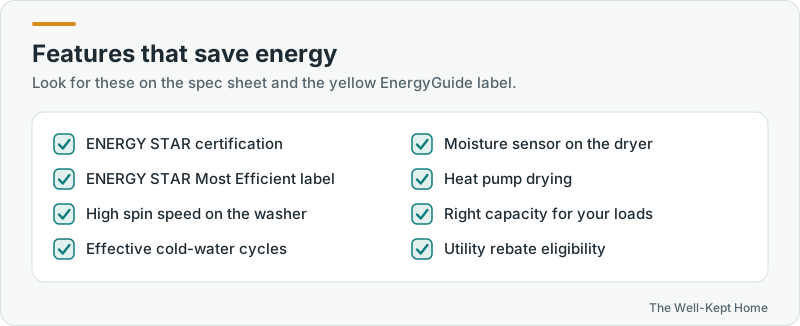
Check the spec sheets and the yellow EnergyGuide label, and look for ENERGY STAR certification, the Most Efficient designation, a high spin speed, effective cold-water cycles, a moisture sensor, and heat pump drying where it fits your space.
Rebates
Many utilities offer rebates on ENERGY STAR washers and dryers, especially heat pump dryers. Some states’ income-qualified Home Electrification and Appliance Rebate programs include heat pump clothes dryers. Check your utility and state energy office before you buy; see energy efficiency rebates for homeowners.
Using any washer and dryer more efficiently
- Wash in cold water whenever possible. Modern detergents are formulated for it.
- Run full loads, but don’t overstuff.
- Use the highest spin speed the fabric can handle.
- Use the moisture-sensing cycle instead of timed dry.
- Clean the lint screen every load.
- Keep the dryer vent clean; a clogged vent makes the dryer run longer and is a fire hazard. See dryer vent cleaning.
- Dry loads back to back so the dryer starts warm.
- Air-dry when you can.
- Keep the washer clean so you’re not running extra cycles to fix odors; see cleaning a front-load washer.
How to compare models
The ENERGY STAR website has a product finder that lists certified washers and dryers with their efficiency ratings, and lets you filter for the Most Efficient designation. Compare models you’re considering on efficiency, capacity, and features, then look at reliability ratings and reviews. Brands and models change frequently, so check current listings rather than relying on last year’s picks.
Common questions
Is a heat pump dryer worth the higher price?
It depends on how much laundry you do, your electricity rates, and whether you need ventless installation. Heavy users and homes with expensive electricity recover the difference faster. Rebates can narrow the gap.
Do efficient washers clean as well?
Yes, when used with HE detergent in the right amount. Overdosing detergent causes residue and odors in low-water machines.
Is gas or electric cheaper to run?
In many areas, gas dryers cost less to operate than conventional electric ones. Heat pump dryers can close or reverse that gap. Compare using your local rates.
How long do washers and dryers last?
Many last around 10 to 13 years with good maintenance, though it varies by brand and use.