Most house cleaning services wipe the outside of your appliances on every visit. The inside of the oven, the refrigerator shelves, the microwave walls, and the grease-coated range hood filters are a different story. They take time and specific products, so cleaners usually treat them as add-ons or as part of a dedicated appliance deep clean.
If you’re booking one, here’s what’s typically included, what it costs, and how to make sure you get what you pay for.
Table of Contents
What an appliance deep clean usually covers
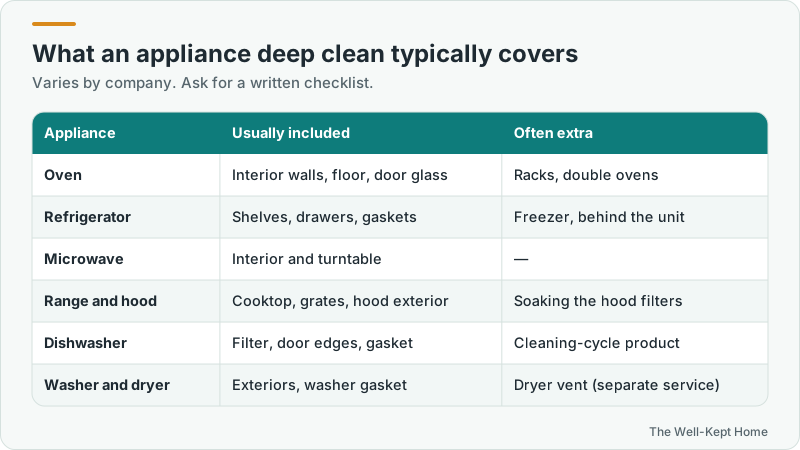
- Oven: interior walls, floor, door glass, and sometimes the racks. Some cleaners use non-caustic products and others use commercial oven cleaners, so ask which, especially if you have kids, pets, or a sensitive nose.
- Refrigerator: removing and washing shelves and drawers, wiping the interior, cleaning the door gaskets, and putting food back. Freezers are often extra.
- Microwave: interior walls, ceiling, turntable, and door.
- Range and cooktop: burner grates, drip pans, knobs, and the cooktop surface.
- Range hood: degreasing the exterior and soaking or washing the metal filters.
- Dishwasher: cleaning the filter, door edges, and gasket, and running a cleaning cycle.
- Washer and dryer: wiping the exteriors, cleaning the washer gasket and dispenser, and clearing lint from the trap housing.
Pulling appliances out to clean behind and underneath them is sometimes included and sometimes extra. Many companies won’t move heavy appliances at all because of the risk to floors and water lines, so ask up front.
What it costs
Pricing usually works one of two ways: as add-ons to a regular or deep house cleaning, or bundled into a larger whole-home deep clean or move-out clean.
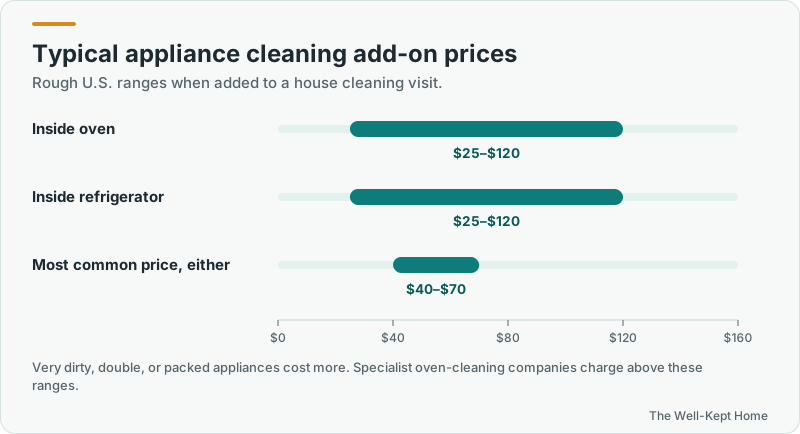
As add-ons, inside-oven and inside-refrigerator cleaning commonly run somewhere between about $25 and $120 each, with many companies charging $40 to $70. Very dirty ovens, double ovens, and packed or iced-up refrigerators sit at the high end, and some companies won’t clean a fridge that’s full, frozen over, or moldy. Microwaves and range hood filters are usually smaller add-ons. Specialist oven-cleaning companies, which remove and dip-clean parts, charge more than general house cleaners.
How to prepare
- Clear out the fridge or confirm that the cleaner will empty it. Toss anything expired and keep a cooler ready for items that need to stay cold.
- Turn off the oven well before the appointment so it’s completely cool.
- Clear the cooktop and the counters around the appliances.
- Point out special surfaces such as stainless steel, glass cooktops, enamel, or self-clean oven liners that need specific products.
- Say what products you prefer. If you want non-toxic cleaning products used, mention it when you book.
Is it worth paying for?
An appliance deep clean earns its price when time is short, when you’re moving in or out, or when the job has been put off long enough to become a half-day project. If you’d rather do it yourself, our guides cover the hardest parts: cleaning an oven without harsh chemicals, cleaning refrigerator coils, and cleaning a dishwasher filter.
What usually isn’t included
- Appliance repairs or diagnosing problems
- Refrigerator condenser coil cleaning, which some cleaners won’t touch
- Dryer vent cleaning, a separate specialty service; see dryer vent cleaning near you
- Moving built-in or very heavy appliances
- Mold remediation inside appliances
Questions to ask before booking
- Which appliances are included, and which are add-ons?
- Will you clean inside the freezer, behind the fridge, and the oven racks?
- What products do you use on ovens and stainless steel?
- How long will it take, and is the price flat or hourly?
- What happens if a surface or part is damaged during cleaning?
Common questions
How long does an appliance deep clean take?
Plan on roughly 30 to 90 minutes per major appliance, depending on its size and condition. A greasy oven that hasn’t been cleaned in a year is at the long end; a refrigerator that only needs its shelves washed is at the short end. A full kitchen’s worth of appliances can take a cleaner most of a morning.
Do cleaners use the self-clean cycle?
Most don’t, because the cycle takes hours and produces smoke and odors. If you’d like the oven done that way, run the cycle yourself the day before and ask the cleaner to wipe out the ash and clean the door glass.
Is inside-fridge cleaning safe for food?
It should be. A good cleaner uses food-safe products inside the refrigerator, wipes away any residue, and keeps cold items in a cooler while the shelves are washed. If you’re unsure, ask what they spray inside the fridge and request unscented products so nothing picks up a smell.
How often should appliances be deep cleaned?
For most homes, once or twice a year is plenty for the oven and refrigerator, with quick wipe-downs in between. Range hood filters benefit from cleaning every month or two if you cook often, and the dishwasher filter should be checked monthly.
Making the results last
Once the appliances are clean, a few small habits keep them that way: wipe oven spills once they cool, check the fridge for expired food each week before grocery shopping, clean the dishwasher filter monthly, and run the range hood fan every time you cook. A professional reset once or twice a year is then usually all it takes to keep the kitchen looking cared for.