“Non-toxic” is printed on a lot of cleaning bottles, but it isn’t a regulated term for household cleaners in the U.S. A product can call itself non-toxic, natural, or plant-based without meeting any particular standard. That doesn’t mean safer products don’t exist; they do. It means you have to look past the front label to find them. Here’s how to read cleaning labels, which certifications carry real weight, which ingredients deserve caution, and simple safer swaps for common jobs.
Table of Contents
Start with the back of the bottle
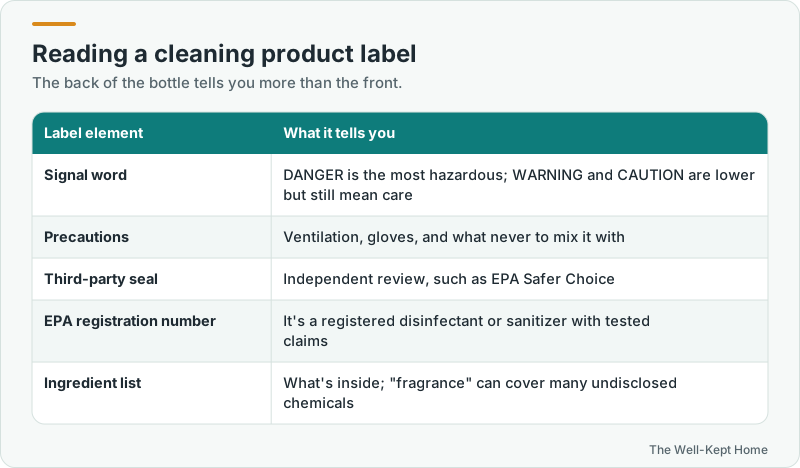
Signal words
Household products that pose a hazard carry signal words on the label. DANGER marks the most hazardous products, such as corrosive drain openers and oven cleaners. WARNING and CAUTION indicate lower, but still real, hazards. A product with no signal word isn’t necessarily harmless, but a DANGER label is a clear prompt to look for a gentler option, or to use it with real care.
Precautionary statements
These tell you how to use a product safely: ventilate, wear gloves, keep away from children, and, critically, what never to mix it with.
Third-party certifications
Independent labels carry more weight than a company’s own claims. In the U.S., look for the EPA’s Safer Choice label, Green Seal, or UL ECOLOGO. For disinfectants, the EPA’s Design for the Environment logo marks products that meet lower-hazard criteria.
EPA registration numbers
Products that claim to kill germs are regulated as pesticides and carry an EPA registration number. That number means the germ-killing claims have been reviewed. It doesn’t mean the product is mild.
Ingredient lists
Many companies now list ingredients voluntarily. A single word, “fragrance,” can stand for a mix of many undisclosed chemicals, which matters for people who are sensitive to scents.
Ingredients and products that deserve caution
- Chlorine bleach is an effective disinfectant, but it irritates lungs and skin, and mixing it with ammonia or acids, including vinegar, releases toxic gases.
- Ammonia, found in many glass cleaners, gives off strong fumes.
- Strong acids and caustics in drain openers, toilet bowl cleaners, and oven cleaners can cause serious burns.
- Heavy fragrances and air fresheners add chemicals to indoor air without cleaning anything.
- Aerosol sprays put fine droplets into the air you breathe.
- Disinfectants used daily on every surface. Some research has linked frequent use of certain disinfecting products to respiratory irritation. Most everyday cleaning doesn’t require them.
Clean first, disinfect when needed
Public health guidance distinguishes between cleaning and disinfecting. Cleaning with soap or detergent and water removes most germs, dirt, and impurities. Disinfecting kills germs that remain and is most useful for high-touch surfaces when someone is sick, or for areas like raw meat prep. Cleaning everything and disinfecting selectively reduces chemical exposure without sacrificing hygiene.
Safer swaps by task
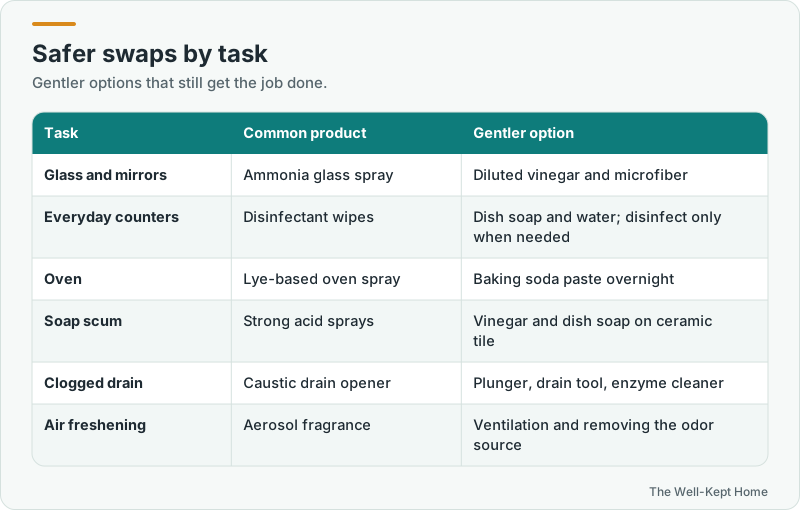
- Glass and mirrors: diluted vinegar and microfiber instead of ammonia sprays.
- Counters: dish soap and water for daily cleaning; a disinfectant only when needed.
- Oven: an overnight baking soda paste instead of lye-based sprays; see cleaning an oven without harsh chemicals.
- Soap scum on ceramic tile: vinegar and dish soap; see removing soap scum.
- Drains: mechanical tools and enzyme cleaners instead of caustic openers; see enzyme vs. chemical drain cleaners.
- Odors: ventilation and removing the source instead of masking scents.
“Natural” doesn’t always mean safer
Some natural ingredients carry real risks. Several essential oils are toxic to cats and dogs, for example, and citrus and pine oils can irritate skin and lungs. Natural acids like vinegar and lemon juice damage natural stone. Judge a product by its ingredients, certifications, and how you use it, not by the word “natural.” See pet-safe cleaning products.
Safe storage and use
- Keep products in their original, labeled containers.
- Store them up high or in a latched cabinet, away from children and pets.
- Never mix products, especially bleach with ammonia or acids.
- Ventilate while cleaning.
- Save the national Poison Help line, 1-800-222-1222, which connects you to your local poison center.
Common questions
Are “plant-based” cleaners non-toxic?
Not necessarily. Plant-based ingredients can still irritate skin or lungs. Look for third-party certification rather than relying on marketing terms.
Is vinegar a disinfectant?
Vinegar has some antimicrobial activity, but it isn’t an EPA-registered disinfectant. Use a registered product when you truly need to disinfect.
What’s the safest all-purpose cleaner?
For most daily cleaning, a few drops of dish soap in warm water is hard to beat. It’s gentle, effective, and safe on most surfaces.
Do I need different products for every room?
No. A small kit of dish soap, a certified all-purpose cleaner, vinegar, baking soda, and microfiber cloths handles most of the house.