Pull back the rubber door seal on a front-load washer and you may find black or dark green spots, slimy residue, and a smell that explains why your towels never seem fresh. That’s mold and mildew, growing on a mix of detergent film, fabric softener, lint, and body soil that collects in the gasket’s folds and never fully dries.
It’s one of the most common front-loader problems, and in most cases you can fix it yourself in under an hour. Here’s how to clean it properly, which cleaner to use, and what to do if the stains won’t budge.
Table of Contents
Why the gasket gets moldy
The gasket’s job is to seal the door watertight. Its folds also trap water after every cycle, and a closed door keeps the humidity high inside the drum. Add the residue left by too much detergent or liquid softener and you have the warm, damp, food-rich spot that mold thrives in. Washing only in cold water makes it worse, because cold water doesn’t dissolve residue as well.
What you’ll need
- Rubber gloves, plus a mask if you’re sensitive to mold or bleach
- Liquid chlorine bleach, or oxygen bleach powder if you’d rather avoid chlorine
- A bucket of warm water
- Microfiber cloths, an old toothbrush, and paper towels
- Dish soap
Step by step: cleaning a moldy gasket
1. Clear out the debris
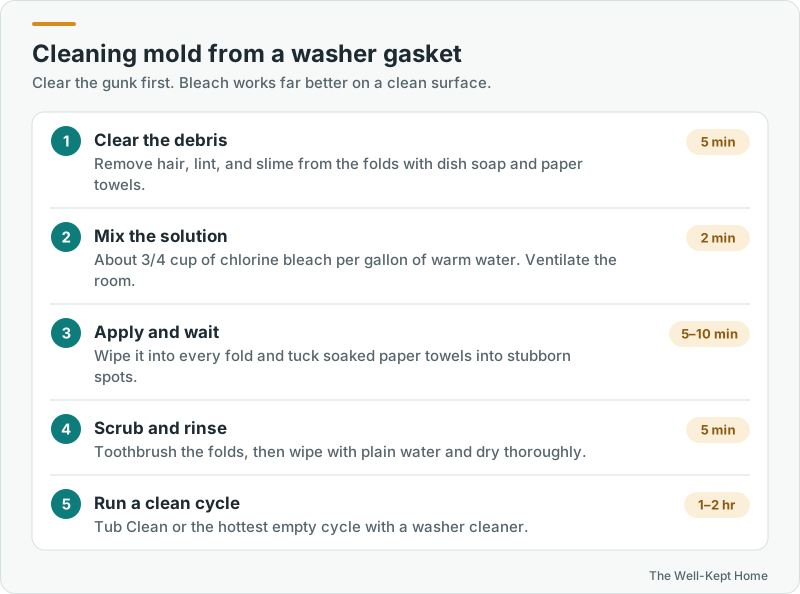
Open the door and gently pull the gasket folds back. Remove hair, lint, coins, and buttons, then wipe out standing water and slimy film with paper towels and a little dish soap. Bleach works much better on a surface that’s already free of gunk.
2. Mix a diluted bleach solution
Washer manufacturers commonly recommend a dilute solution for the door seal. Whirlpool’s care instructions, for example, call for about 3/4 cup of liquid chlorine bleach per gallon of warm water. Mix it in a bucket, open a window or run a fan, and never combine bleach with vinegar, ammonia, or other cleaners.
3. Apply it and let it sit
Wipe the solution generously into every fold of the gasket, including the bottom, where water pools. For stubborn spots, soak paper towels in the solution and tuck them into the folds so the bleach stays in contact. Leave it for 5 to 10 minutes, then move on. Strong bleach left on rubber for hours isn’t good for it.
4. Scrub and rinse
Scrub the folds with the toothbrush, then wipe everything with a cloth dampened in plain water to remove the bleach. Dry the gasket thoroughly with a towel.
5. Run a cleaning cycle
Run the washer’s Tub Clean cycle, or the hottest cycle with an empty drum, using a washer cleaner or the amount of bleach your manual recommends. This reaches mold on the outer tub and other surfaces you can’t get to by hand.
6. Let it dry
Leave the door open for several hours afterward so the gasket dries completely.
Prefer not to use chlorine bleach?
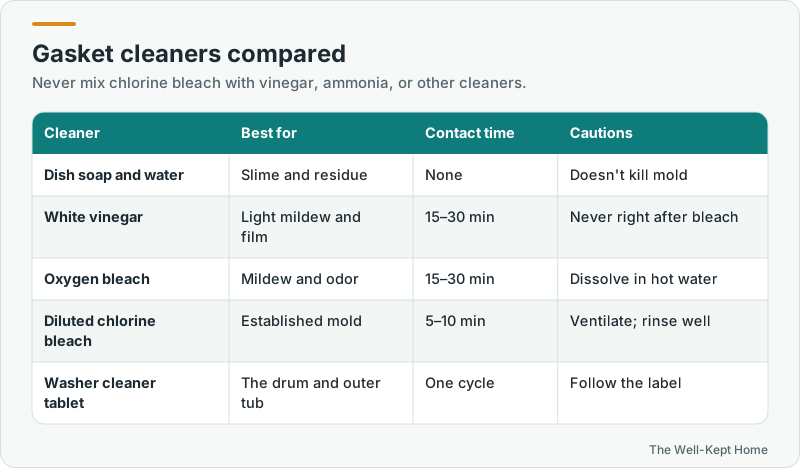
Oxygen bleach (sodium percarbonate) dissolved in hot water is a good alternative. It has no chlorine smell and is less likely to spot your next load. It works more slowly, so give it 15 to 30 minutes of contact time. Vinegar can clean light mildew and residue, but it’s less reliable against established mold, and it should never be mixed with chlorine bleach or used right after it.
What if the black stains won’t come off?
Mold that has grown into the rubber for a long time can leave dark stains even after it’s dead. If the gasket is clean, smells fine, and the stains don’t spread, they’re cosmetic. If the gasket is torn or cracked, or still smells after repeated cleanings, replace it. Replacement gaskets are available for most models. Handy homeowners can often swap one with basic tools and the model’s instructions, and an appliance repair technician can do it otherwise.
Keep mold from coming back
- Wipe the gasket dry after the last load of the day, especially the bottom fold.
- Leave the door slightly open between loads. If you have small children or pets, close the laundry room door instead.
- Use HE detergent and measure it. Overdosing is the biggest single cause of residue.
- Cut back on liquid fabric softener, or switch to wool dryer balls.
- Take wet laundry out promptly.
- Clean the drum monthly. Our guide to cleaning a front-load washer with vinegar walks through a full routine.
- Clear the drain pump filter every few months.
Is gasket mold a health risk?
For most healthy people, a small amount of mold in a washer gasket is more nuisance than hazard. People with asthma, mold allergies, or weakened immune systems are more sensitive, so they should wear gloves and a mask while cleaning or ask someone else to do it. If mold keeps appearing around the machine, on the floor, or on the wall behind it, look for a leak. A dripping hose or a failing door seal can create a bigger moisture problem out of sight.
If your washer still smells once the gasket is clean, the source may be somewhere else. See why your washing machine smells.