The lint screen in your dryer catches most lint, but not all of it. The rest travels into the vent duct that carries hot, moist air outside. Over months and years it builds up along the duct walls, in the bends, and at the exterior hood. Airflow drops, drying times stretch out, and the dryer runs hotter.
That’s more than an energy problem. The U.S. Fire Administration estimates that clothes dryers are involved in about 2,900 home fires a year, and it lists failure to clean them as the leading cause. A professional dryer vent cleaning is one of the cheapest ways to take that risk off the table.
Table of Contents
Warning signs your vent is clogged
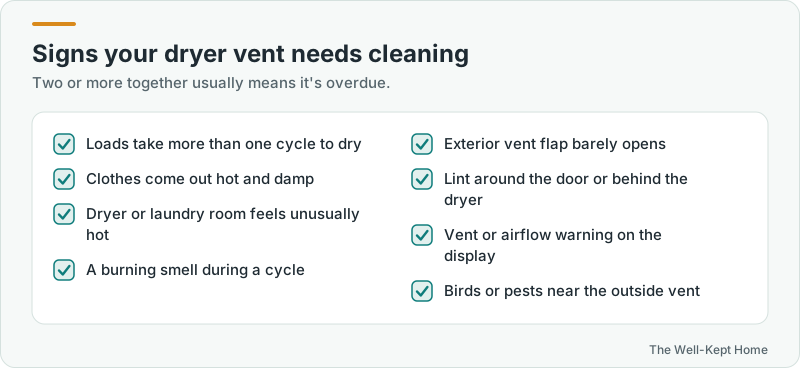
Any one of these is worth checking. Two or more together usually means a cleaning is overdue:
- Clothes take more than one cycle to dry, or come out hot but still damp.
- The outside of the dryer or the laundry room feels unusually hot.
- You smell something hot or burning during a cycle.
- The exterior vent flap doesn’t open when the dryer runs, or barely moves.
- Lint collects around the dryer door or behind the machine.
- Your dryer shows a vent or airflow warning. Many newer models have one.
- You’ve seen birds or rodents near the exterior vent.
What a professional cleaning includes
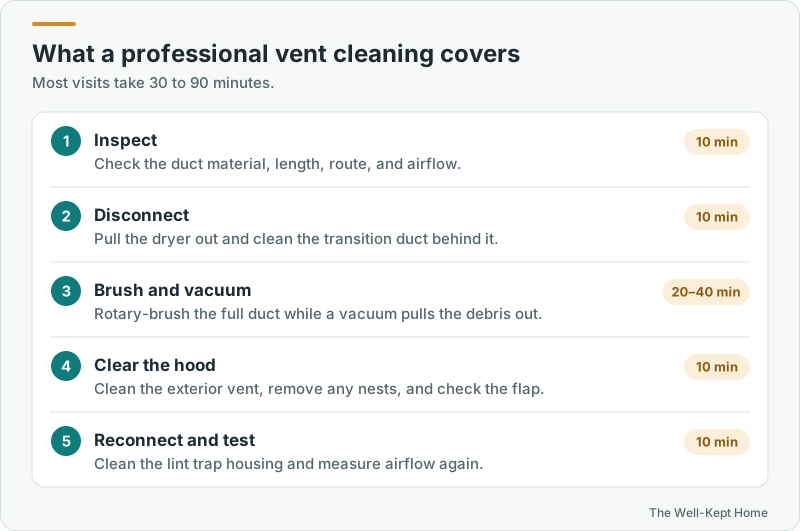
A typical visit takes 30 to 90 minutes and usually covers:
- Inspection of the duct material, length, and route, plus an airflow measurement if the technician has the tools.
- Disconnecting the dryer and cleaning the transition duct behind it.
- Rotary brushing through the full length of the duct with flexible rods, combined with a high-powered vacuum or compressed air to pull the debris out.
- Cleaning the exterior hood, clearing any nests, and making sure the flap opens freely.
- Cleaning the lint trap housing, where lint slips past the screen.
- Reconnecting and testing, ideally with an airflow reading before and after.
Problems a good technician will point out
- Plastic or foil accordion ducts. They sag, trap lint, and crush easily. Dryer manufacturers and building codes call for metal duct for the run through the house.
- Ducts that are too long. The International Residential Code limits dryer exhaust ducts to 35 feet, reduced for each bend, unless the dryer manufacturer allows a longer run. Long runs clog faster and may need a booster fan.
- Screws through the duct. Screw tips inside the duct snag lint. Joints should be sealed with foil tape or clamps.
- Screens over the exterior vent. A screen at the termination traps lint and isn’t allowed under the residential code. A proper hood uses a damper flap or louvers.
- Roof terminations, which clog more often and are harder to clean.
How often to have it done
Once a year is the common recommendation for an average household. Large families, homes with long or roof-mounted vents, and anyone who dries a lot of towels or pet bedding may need it more often. Between professional cleanings, empty the lint screen every load, and wash it with soapy water every few months if you use dryer sheets, which can leave a film that blocks airflow.
How to choose a dryer vent cleaning company
- Look for specialists. Chimney sweeps, duct cleaners, and dedicated dryer vent companies commonly offer this service. The Chimney Safety Institute of America offers a Certified Dryer Exhaust Technician credential, which shows formal training.
- Ask what’s included: the full duct length, the exterior hood, the transition duct, and the lint trap housing.
- Ask whether they measure airflow before and after. It’s the best proof the job worked.
- Get the price in writing, including any charges for roof access, nest removal, or repairs. Our breakdown of dryer vent cleaning costs shows typical prices.
- Watch for bundled upsells. Some companies use a cheap dryer vent special to sell whole-house air duct cleaning, which is a separate service you may not need.
Can you do it yourself?
For short vents that run straight out through a wall, a DIY brush kit that attaches to a drill can do a good job. Disconnect the dryer, brush from both ends if you can, vacuum up the debris, and reconnect everything securely. Long runs, roof vents, multiple bends, or vents you can’t reach safely are better left to a professional, as is any vent showing signs of overheating or damage.
Common questions
How long does a dryer vent cleaning take?
Most residential cleanings take 30 to 90 minutes. Roof vents, long runs, and heavy clogs take longer.
Can a clogged vent damage the dryer?
It can. Restricted airflow makes the dryer run hotter and longer, which wears out heating elements, thermal fuses, and belts sooner. A thermal fuse that keeps blowing is often a vent problem rather than a dryer problem.
Do gas dryers need vent cleaning too?
Yes, and it matters even more. Gas dryers send combustion exhaust out through the same vent as the lint and moisture, so a blocked vent can push that exhaust back into the house. Keep a working carbon monoxide alarm near any gas appliance.