A washing machine is supposed to make things clean, so a smelly one is especially annoying. The good news is that the type of smell usually tells you where to look. Musty and sour odors almost always come from residue and mildew inside the machine. A rotten-egg or sewage smell usually points to the drain, not the washer itself.
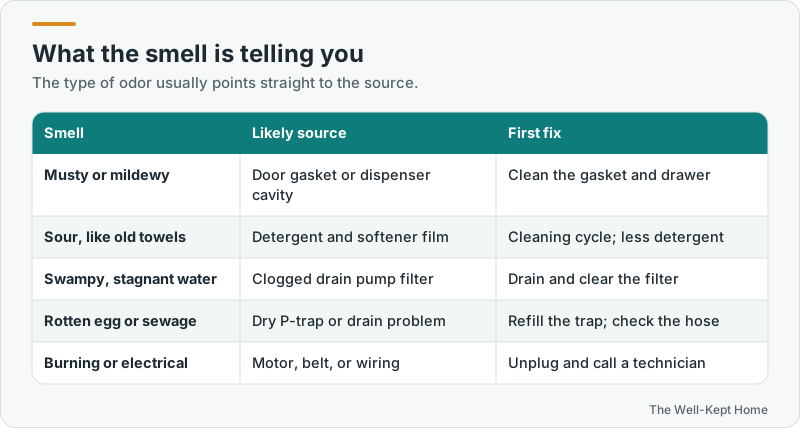
Table of Contents
1. Mildew in the door gasket (front-loaders)
The rubber seal around a front-loader’s door traps water, lint, and detergent residue in its folds. It’s the most common source of musty washer smells. Pull the folds back and look: slime or black spots mean it needs a thorough cleaning. Our guide to removing mold from a washer gasket covers it step by step.
2. Detergent and softener buildup
Using more detergent than the machine can rinse away, or a lot of liquid fabric softener, leaves a film on the outside of the drum where you can’t see it. Bacteria and mildew feed on it and give off a sour smell. High-efficiency machines are especially prone, because they use so little water. The fix is a cleaning cycle, then using less detergent from then on.
3. A clogged drain pump filter
Most front-loaders and some top-loaders have a filter that catches lint, hair, coins, and small socks before water reaches the drain pump. When it clogs, dirty water sits in the bottom of the machine between loads and starts to stink. On most front-loaders it’s behind a small panel at the bottom front. Drain it into a shallow pan, clear it, and rinse it. If you’ve never done this, it may be the entire problem.
4. A dirty dispenser drawer
The detergent drawer and the cavity it slides into collect sludge and mildew, especially on the top of the cavity, which you can’t see with the drawer in place. Pull the drawer out, soak it in hot water, and wipe the inside of the opening with a cloth.
5. Residue in a top-loader
Top-loaders get smelly too, usually from residue on the outside of the inner tub and under the agitator. Run a cleaning cycle with a washer cleaner, or fill the tub with hot water, add the cleaner your manual recommends, let it soak for an hour, and then finish the cycle. Leave the lid open afterward.
6. A sewer smell from the drain
If the smell is more rotten egg than mildew, the problem is likely the drain line. Most washers empty into a standpipe with a P-trap, a U-shaped bend that holds water to block sewer gas. If that trap dries out, or the drain hose is jammed into the standpipe so tightly that there’s no air gap, the trap can be siphoned empty and sewer gas comes back into the room. Pour a bucket of water into the standpipe to refill the trap and check how the hose sits. If the smell persists, have a plumber check the drain and vent. Our guide to getting rid of smelly drains covers the basics.
7. Wet laundry left in the machine
Clothes left damp for even a few hours start to sour, and the smell transfers to the drum. If it happens often, set a phone reminder or use delay-start so the cycle finishes when you’re home.
How to deodorize a smelly washer
- Clean the door gasket and dispenser drawer by hand.
- Clear the drain pump filter.
- Run a Tub Clean cycle with a washer cleaner, or the hottest cycle with an empty drum. A vinegar cycle helps with scale and film; see cleaning a front-loader with vinegar.
- Wipe the drum and gasket dry, and leave the door open for several hours.
- Rewash any towels or clothes that picked up the smell, on a hot cycle if the fabric allows.
When to call a technician
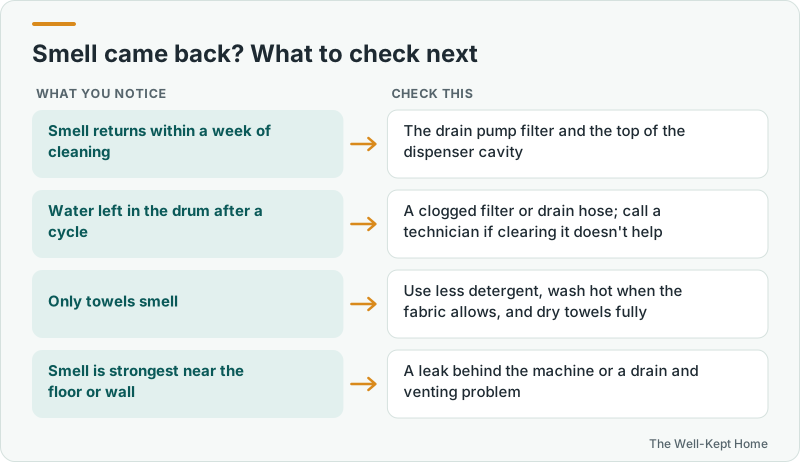
- The smell returns within days of a thorough cleaning.
- Water stays in the drum after a cycle, or the machine drains slowly.
- There’s a burning or electrical smell. Unplug the machine and stop using it.
- You find water on the floor or mold growing behind the machine, which suggests a leak.
Common questions
Can a smelly washer make clean clothes smell?
Yes. Odor-causing bacteria and mildew in the drum and gasket transfer to fabric, especially towels and workout clothes, which hold moisture. Clean the machine first, then rewash the affected items. Otherwise the smell comes right back.
Is it safe to clean a washer with bleach and vinegar?
Not together. Use one or the other in a given cycle, and run a plain rinse cycle in between if you use both on the same day. Mixing bleach with vinegar releases chlorine gas.
Do front-loaders smell more than top-loaders?
They’re more prone to it, because the airtight door and the gasket hold moisture. Top-loaders with the lid left open dry out faster. Either type stays fresh with the right detergent dose and a monthly cleaning cycle.
For routine prevention, a monthly cleaning cycle and the right amount of detergent solve most odor problems. If you’d rather use a product than vinegar, see our comparison of washing machine cleaner tablets.