Front-load washers save water and energy, and they’re gentle on clothes. The tradeoff is that they hold onto moisture. The door seals tightly, the rubber gasket has folds that trap water, and low-water cycles don’t always rinse detergent residue away. Give it a few months and you get a musty smell, gray film in the dispenser, and dark spots in the gasket.
White vinegar is a cheap way to cut through mineral buildup and detergent residue, and it helps with mild odors. It isn’t a cure-all, and there’s one caveat worth knowing before you start, but used occasionally it’s an effective part of a monthly cleaning routine.
Table of Contents
A quick caveat about vinegar
Vinegar is an acid. Used now and then, it’s fine for most washers. Some appliance technicians caution that frequent full-strength use may be hard on rubber seals and hoses over time, and some manufacturers recommend their own washer cleaner or a diluted bleach cycle instead. Check the “Tub Clean” or “Clean Washer” section of your manual first. If it specifically says not to use vinegar, follow the manual and use this guide for the gasket, drawer, and filter only.
Also, never add vinegar to a cycle that contains chlorine bleach, and don’t run them back to back without a rinse cycle in between. Mixing the two releases chlorine gas.
What you’ll need
- 2 cups of distilled white vinegar
- Baking soda (optional)
- Microfiber cloths and an old toothbrush
- A shallow pan or old towels for the drain filter
- Rubber gloves
Step by step
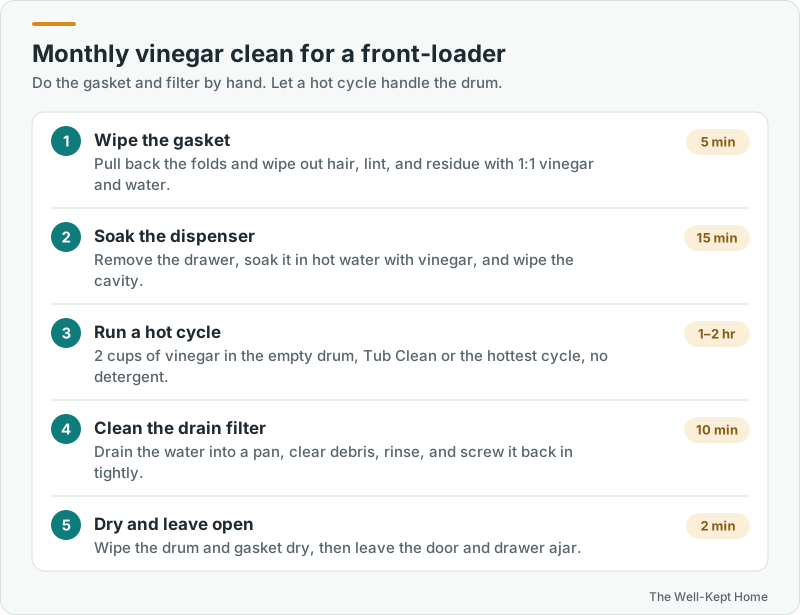
1. Clean the door gasket first
Pull back the folds of the rubber gasket and look inside, especially at the bottom, where water collects. Wipe out hair, lint, coins, and slimy residue with a cloth dampened in a 1:1 mix of warm water and vinegar, and use the toothbrush in the folds. If you find black mold spots that won’t wipe away, see our guide to removing mold from a front-load washer gasket. Established mold usually needs something stronger than vinegar.
2. Remove and soak the dispenser drawer
Most dispenser drawers pull out completely once you press a release tab, often marked on the softener compartment. Soak the drawer in hot water with a splash of vinegar for 15 minutes, scrub the corners with the toothbrush, and rinse. While it’s out, look into the empty cavity. Mildew often grows on the ceiling of that opening, where you can’t see it with the drawer in place. Wipe it clean.
3. Run a hot cycle with vinegar
Pour 2 cups of white vinegar directly into the empty drum. Run the machine’s Tub Clean cycle if it has one, or the hottest, longest cycle with an extra rinse. Don’t add detergent or clothes.
4. Optional: follow with baking soda
If odor was the main complaint, sprinkle about half a cup of baking soda into the drum and run a short hot cycle. Baking soda helps lift remaining residue and neutralize smells. Run it as a separate cycle rather than mixing it with the vinegar, since the two cancel each other out.
5. Clean the drain pump filter
This is the step most people skip, and it’s often the real source of a bad smell. Most front-loaders have a small access panel at the bottom front of the machine, with a filter behind it that catches lint, hair, coins, and the occasional baby sock. Put down towels or a shallow pan, open the small drain hose or unscrew the filter slowly, and let the water run out. Expect more water than you’d think. Remove the debris, rinse the filter, and screw it back in firmly. Your manual shows the exact process for your model.
6. Wipe the drum and leave the door open
After the last cycle, wipe the drum, door glass, and gasket dry. Leave the door and the dispenser drawer slightly open so the inside can dry out completely.
How often to do it
For most households, once a month keeps a front-loader fresh. If you wash mostly in cold water, use liquid fabric softener, or run several loads a day, do it every two to three weeks. Cleaning the drain filter every few months is usually enough unless you notice slow draining.
Vinegar vs. washer cleaner tablets
Vinegar is good at dissolving mineral scale and cutting detergent film. Dedicated washer cleaners, usually oxygen-based or bleach-based, are better at killing mold and breaking down the slimy biofilm behind persistent odors. A practical approach is to use a commercial cleaner monthly and a vinegar cycle every so often for scale. Our guide to the best washing machine cleaner tablets compares the main types.
Habits that keep it clean
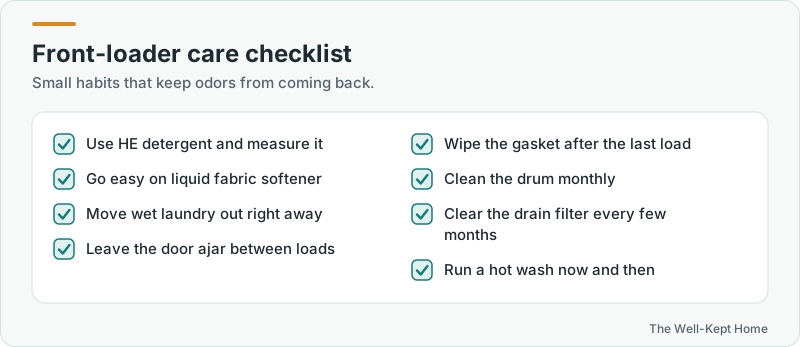
- Use HE detergent, and less of it. Front-loaders use little water, so excess detergent doesn’t rinse away. It becomes the film that feeds odors. Fill to the line on the cap, not the top of the cap.
- Go easy on liquid fabric softener. It leaves a waxy residue in the dispenser and drum.
- Move wet laundry out promptly. A damp load sitting for hours makes both the clothes and the drum smell.
- Leave the door ajar between loads. If you have small children or pets, close the laundry room door instead so no one can climb inside.
- Run a hot wash now and then. Cold-only washing doesn’t dissolve residue as well.
If your washer still smells after a full cleaning, the cause may be in the drain or hose rather than the drum. See why your washing machine smells for the other usual suspects.