The outdoor unit of your central air conditioner, the condenser, has one main job: dumping the heat pulled out of your house. It does that through a coil wrapped in thin aluminum fins. When those fins get coated with dust, grass clippings, cottonwood fluff, and leaves, heat can’t escape as easily. The system runs longer, uses more electricity, and puts more strain on the compressor.
Cleaning the outside of the condenser coil is a reasonable DIY job once a year. Here’s how to do it safely and without damaging the delicate fins.
Table of Contents
When to clean it
The best time is spring, before the cooling season starts. If you live near cottonwood trees or the unit sits next to a lawn, check it again in midsummer. Fluff and clippings can blanket a coil in a few weeks.
What you’ll need
- A garden hose with an adjustable spray nozzle
- A soft brush, such as a long-bristled paintbrush or a coil brush
- A fin comb, inexpensive at hardware stores
- A foaming, non-acid coil cleaner made for outdoor condenser coils (optional)
- Work gloves, since the fins are sharp
- A screwdriver or nut driver, if you’re removing panels
Step by step
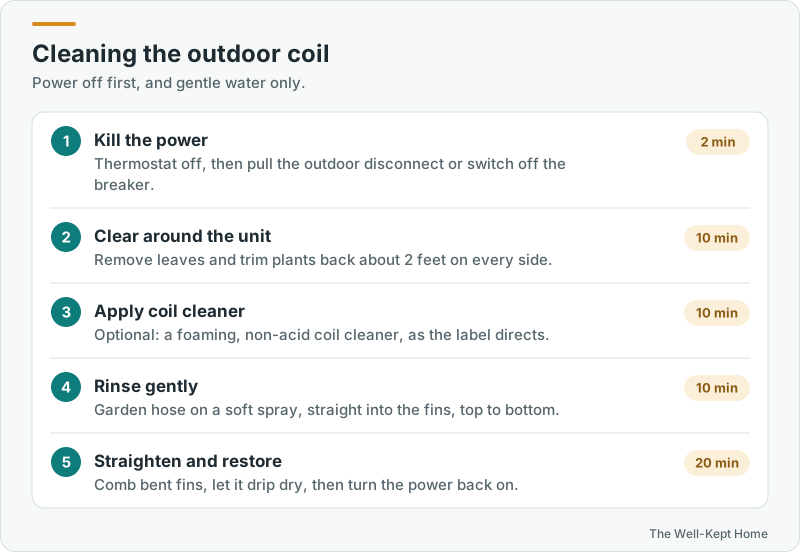
1. Turn off the power, twice
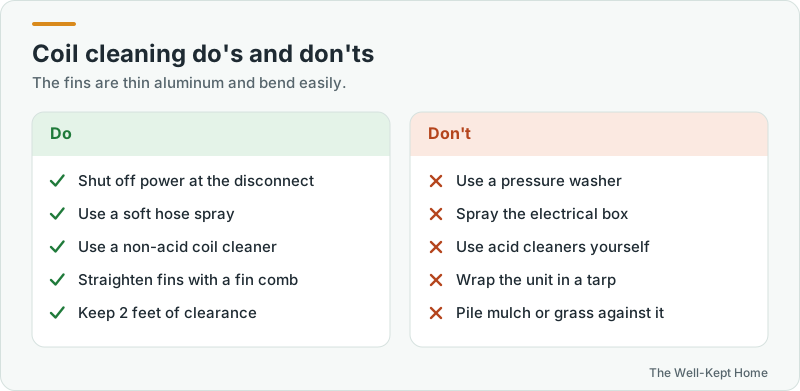
Switch the thermostat to Off. Then shut off power at the outdoor disconnect, a small box mounted on the wall near the unit with a pull-out block or a switch, and turn off the AC breaker in the main panel as well. Wait a few minutes before touching anything.
2. Clear around the unit
Pick up leaves, sticks, and debris from around the base and on top of the unit. Trim plants and shrubs back so there’s about 2 feet of clearance on every side. Air needs to flow freely into the coil.
3. Brush off loose debris
Use a soft brush to gently remove fluff and dirt from the outside of the fins. Brush in the direction the fins run, usually vertically, never across them.
4. Apply a coil cleaner (optional)
For a greasy or heavily soiled coil, spray a foaming coil cleaner made for outdoor condensers, following the label. It foams into the fins and loosens grime. Stick with non-acid products. Acid-based coil cleaners are used by professionals and can damage aluminum fins and harm plants if they’re mishandled.
5. Rinse gently
Set the hose to a soft shower or gentle stream, not a jet. Spray straight into the fins, working top to bottom, until the water runs clear. Keep water away from the electrical box on the side of the unit. Never use a pressure washer; it flattens the fins and can bend the coil tubes.
For the most thorough cleaning, technicians often remove the top grille and fan assembly and rinse from the inside out, which pushes dirt back the way it came in. That involves supporting the fan motor and its wiring, so only do it if your manual describes the process and you’re comfortable. Otherwise, rinsing from the outside does most of the good.
6. Straighten bent fins
Bent fins block airflow. Gently run a fin comb through flattened areas to straighten them. Go slowly; the fins are soft.
7. Let it dry and restore power
Let the unit drip-dry for about 30 minutes, then restore the power at the disconnect and the breaker and turn the thermostat back to Cool.
What about the indoor coil?
The evaporator coil inside, on top of your furnace or air handler, is usually sealed behind panels or taped access covers and sits next to the drain pan and blower. Cleaning it properly often means opening sealed panels and using specialized cleaners, so it’s best left to a technician during a tune-up. Keeping a clean air filter in place is the best way to protect it.
Keep it cleaner longer
- Point mower discharge away from the unit.
- Don’t pile mulch, soil, or decorations against it.
- Keep 2 feet of clearance around the sides and about 5 feet above it.
- In winter, skip full plastic covers, which trap moisture. If you cover it at all, use a breathable top cover that leaves the sides open.
When to call a pro
If the coil is heavily matted, the fins are badly crushed, the unit is iced up, or the system still isn’t cooling well after cleaning, schedule service. A technician can deep-clean the coil, check the refrigerant charge, and test electrical parts. See our guides to signs your AC needs servicing and an HVAC tune-up.
Common questions
Will cleaning the coil lower my electric bill?
It helps the system run closer to its rated efficiency. How much you save depends on how dirty the coil was. Badly clogged coils make the biggest difference.
Can I use dish soap instead of coil cleaner?
A mild dish soap solution can loosen light grime, but rinse it thoroughly. Products made for coils are designed to foam into the fins and rinse clean.
How often should I clean it?
Once a year for most homes, more often if the unit is near trees, a lawn, or a dusty road.