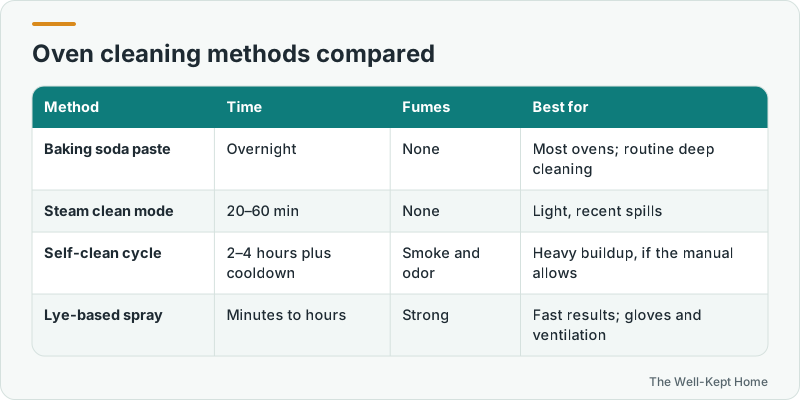
Conventional oven cleaners work fast because they’re strongly alkaline. Many contain sodium hydroxide, better known as lye, which dissolves baked-on grease but also burns skin and eyes and fills the kitchen with fumes. If you’d rather skip all that, a paste of baking soda and water does the same job more slowly. It needs time, not muscle.
Table of Contents
The baking soda method
What you’ll need
- About 1/2 cup of baking soda
- Water
- White vinegar in a spray bottle
- A plastic or silicone scraper, or an old spatula
- Damp microfiber cloths and rubber gloves
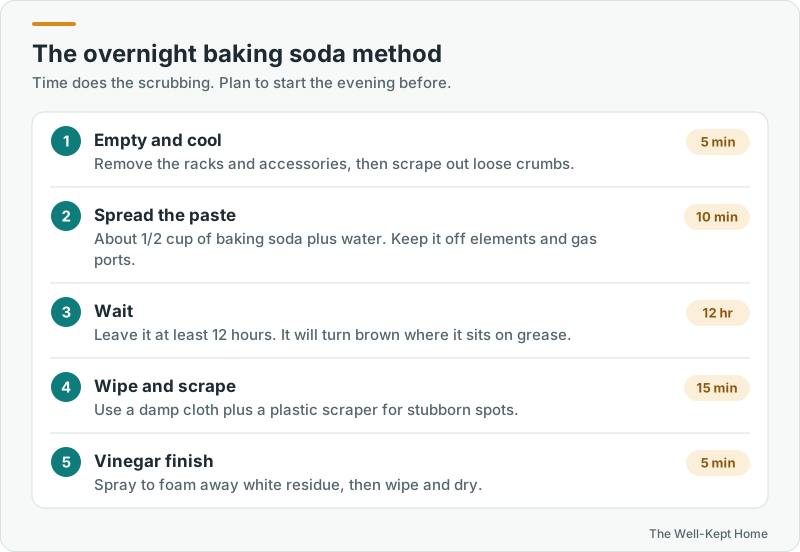
1. Prep the oven
Make sure the oven is off and completely cool. Remove the racks, thermometer, and any pizza stone. Scrape out loose crumbs and burned bits with a dry scraper.
2. Mix and spread the paste
Stir a few tablespoons of water into the baking soda until it’s spreadable, about the texture of frosting. With gloves on, spread it over the bottom, sides, and back of the oven, concentrating on greasy and brown areas. Keep the paste off the heating elements, and in a gas oven keep it away from the burner ports and gas inlet slots. It will turn brown in places as it sits on grease. That’s normal.
3. Wait overnight
Leave the paste for at least 12 hours. This is where the cleaning happens. Baking soda is mildly alkaline, and given enough time it loosens grease and burned-on food so they wipe away.
4. Wipe and scrape
Wipe the paste out with a damp cloth, using the plastic scraper on stubborn spots, and rinse the cloth often. For anything still stuck, add a little fresh paste and work it with the scraper.
5. Spray with vinegar
Spray white vinegar over any remaining white residue. It foams as it reacts with the baking soda, which helps lift the last of it. Wipe again with a damp cloth until the residue is gone.
6. Dry and reheat
Wipe the oven dry, put the racks back, and run the oven at a low temperature for about 15 minutes to drive off any leftover moisture.
Cleaning the oven door glass
Spread a thin layer of baking soda paste on the inside of the door glass, leave it for 20 to 30 minutes, then wipe it off with a damp cloth. A plastic scraper or the corner of a non-scratch sponge handles stubborn spots. Grime between the inner and outer panes is a different job. On many ovens the door can be removed and the panes reached, but check the manual first, because it’s fiddly and easy to get wrong.
Cleaning oven racks without chemicals
Racks are easiest to clean in a bathtub. Line the tub with an old towel so the racks can’t scratch it, lay them on top, and cover them with hot water. Add about half a cup of dish soap or powdered dishwasher detergent and let them soak overnight. In the morning, scrub with a stiff brush or non-scratch pad, rinse, and dry, then rinse the tub well. If your racks are porcelain-coated or have gliding mechanisms, check the manual before soaking or scrubbing them.
What about the self-cleaning cycle?
A self-cleaning cycle burns residue to ash at extremely high temperatures, far above normal cooking heat. It doesn’t use chemicals, but it does produce smoke and strong odors as the grease burns off, which can bother people with asthma, and the fumes are dangerous for pet birds. The intense heat can also stress parts such as fuses, control boards, and door locks, which is why a failed oven right before a holiday meal is such a common story. If you use it, ventilate well, remove the racks unless the manual says otherwise, and don’t run it right before you need the oven.
Steam clean mode
Many newer ovens have a steam clean setting: you pour water into the bottom of the cool oven and run a short, low-temperature cycle. The steam softens light, recent spills so they wipe away easily. It’s a good way to keep up between deep cleans, but it won’t remove months of baked-on grease on its own.
Keeping it clean longer
- Put a sheet pan on the rack below anything likely to bubble over. Don’t line the oven floor with foil unless your manual allows it; on many ovens foil can block airflow or damage the finish.
- Wipe up spills once the oven has cooled, before they bake on again.
- Do a quick baking soda spot clean every month or two so you never face a full overnight job.
A clean oven is one of those jobs that’s easy to put off. If you’d rather hand it off, many cleaners offer inside-oven cleaning as an add-on; see our guide to appliance deep cleaning services. For a gentler approach to the rest of the house, see our guide to non-toxic cleaning products.