Walk down the cleaning aisle and you’ll find two very different kinds of drain cleaners. Chemical drain openers promise to blast through clogs in minutes. Enzyme and bacterial cleaners promise a gentler, slower clean that’s safe for pipes and septic systems. Both claims are partly true, and they’re made for different problems.
Here’s how each works and when to use which.
Table of Contents
How chemical drain cleaners work
Chemical drain openers fall into three main groups:
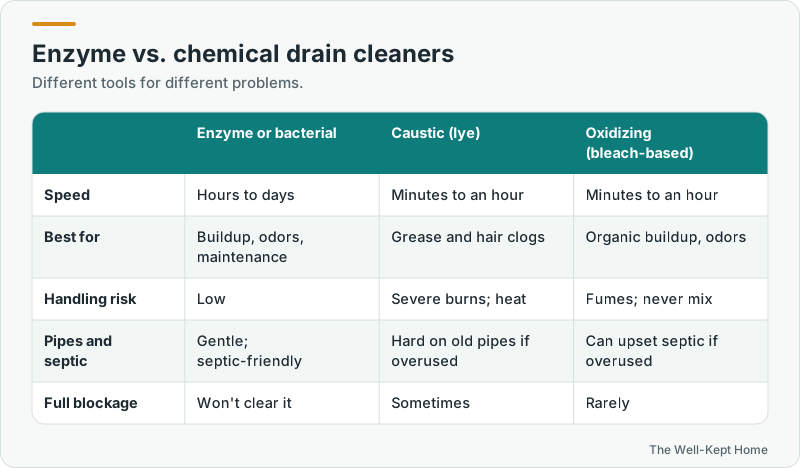
- Caustic cleaners contain strong bases such as sodium hydroxide, also called lye, or potassium hydroxide. They’re dense enough to sink through standing water, and they release heat as they work. They turn grease into a soapy substance and break down hair and other proteins.
- Oxidizing cleaners use bleach (sodium hypochlorite), peroxides, or similar chemicals to break down organic material. They’re often marketed for odors and buildup as well as clogs.
- Acid cleaners use concentrated sulfuric or hydrochloric acid. They’re extremely aggressive, and many are sold mainly to professionals. They’re the most dangerous to handle.
Chemical cleaners can clear a clog quickly. They also cause chemical burns and eye injuries when they splash, give off fumes, and can be hard on older pipes and finishes with repeated use. If they don’t clear the clog, you’re left with a sink or tub full of hazardous water.
How enzyme and bacterial cleaners work
Enzyme cleaners contain enzymes that break down specific organic materials, such as fats, proteins, and starches. Bacterial cleaners contain live bacteria that digest organic buildup and keep working as they colonize the pipe. Many products combine both.
They work slowly, over hours or days, and they need time in the pipe without water rushing through, which is why most labels say to use them at night. They’re very good at removing the film that causes odors, slow drains, and drain flies. They’re not good at clearing a drain that’s fully blocked, and they’re slow on dense hair clogs.
The safety difference
Enzyme cleaners are low-risk to handle and safe for all common pipe materials and septic systems. Chemical cleaners require gloves, eye protection, and ventilation, and they come with rules that matter:
- Never mix different drain cleaners, or a drain cleaner with bleach, vinegar, or ammonia.
- Never plunge or snake a drain right after using a chemical cleaner; the liquid can splash back.
- If a chemical cleaner doesn’t work, don’t add more. Call a plumber and tell them what you used.
- Store them high, sealed, and away from children.
Septic systems and older pipes
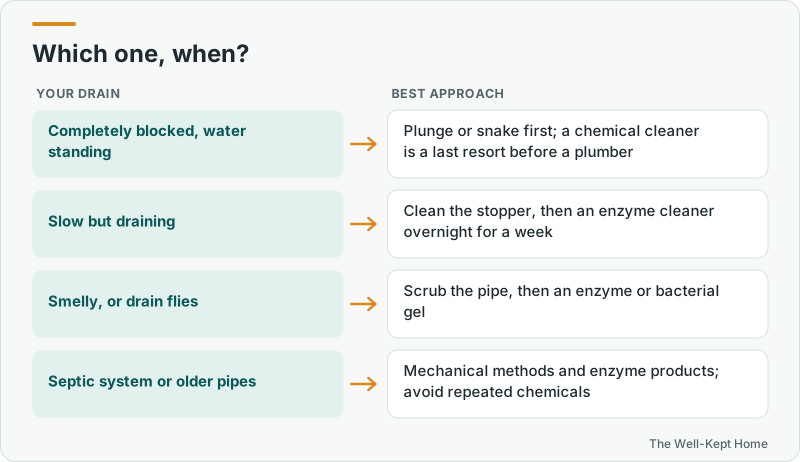
A septic system relies on bacteria to break down waste. Many chemical drain cleaners are labeled septic-safe in normal doses, but frequent or heavy use can upset the bacterial balance. Enzyme and bacterial cleaners are the friendlier choice for septic homes. The same goes for older homes with aging metal pipes, where repeated use of harsh chemicals adds stress to plumbing that may already be fragile.
When to use which
For a completely blocked drain
Start mechanical. Clean the stopper, use a barbed drain tool or a plunger, open the P-trap, or run a hand auger. Our guides to unclogging a bathroom sink without chemicals and clearing a shower drain full of hair walk through each method. A chemical cleaner is a last resort before calling a plumber, and some people prefer to skip it entirely.
For a slow drain
Clean the stopper and overflow first, then use an enzyme cleaner overnight for about a week. This handles the soap scum and organic film that cause most slow drains.
For odors and drain flies
Scrub the pipe with a drain brush, then use an enzyme or bacterial gel. See how to get rid of drain flies and how to get rid of smelly drains.
For maintenance
A monthly enzyme treatment in bathroom sinks, showers, and the kitchen sink keeps buildup from becoming a clog. It’s cheaper than a service call.
The verdict
Use enzyme cleaners for prevention, odors, and slow drains. Use tools, not chemicals, for real clogs. And if a clog won’t clear, call a professional before reaching for something stronger. See our guide to drain cleaning services for what to expect.
Common questions
Do enzyme drain cleaners really work?
Yes, for what they’re designed to do: digesting organic buildup over time. They’re not a fast fix for a blocked drain, so judge them on maintenance, not emergencies.
Is Drano safe for my pipes?
Products like it are formulated to be used on household plumbing according to the label. The bigger risks are personal injury and overuse on old or damaged pipes. Follow the directions exactly and don’t combine products.
Can I use an enzyme cleaner after a chemical one?
Wait until the chemical has been thoroughly flushed with plenty of water. Strong chemicals can kill the bacteria and denature the enzymes, so the enzyme product won’t work well until the pipe has been rinsed.