Soap scum is the dull gray-white film that builds up on shower walls, usually heaviest in the splash zone around waist height. It feels waxy when it’s wet and chalky when it’s dry. It’s also more stubborn than ordinary dirt, because it isn’t really dirt.
Table of Contents
What soap scum actually is
Traditional bar soap is made from fats. When it meets the calcium and magnesium in hard water, it reacts and forms an insoluble residue, sometimes called lime soap, that clings to surfaces. Body oils, skin cells, and conditioner get trapped in that layer, and minerals from the water dry on top of it. The result is a film that’s part grease and part mineral scale. Plain water can’t rinse it off, and the best cleaners go after both parts at once.
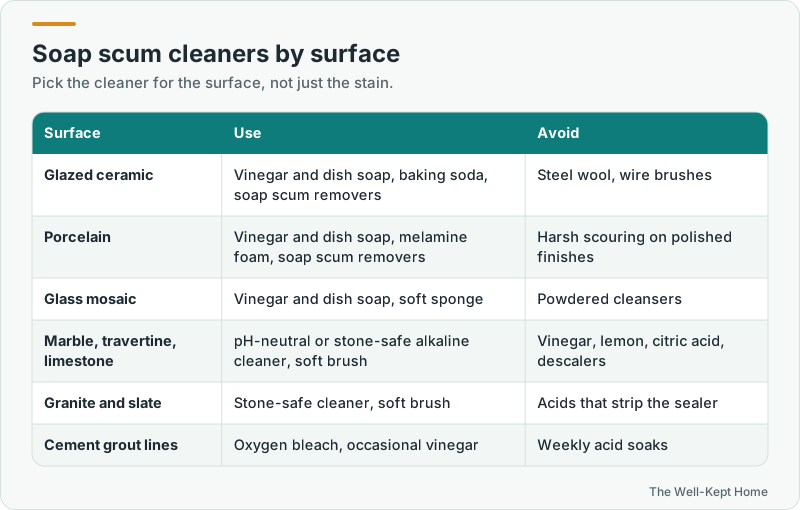
Before you pick a cleaner, though, figure out what your tile is made of. The method that works perfectly on porcelain can ruin marble.
Ceramic and porcelain tile
Glazed ceramic and porcelain are tough. They tolerate mild acids, which is good news, because an acid plus a degreaser is the fastest way through soap scum.
- Mix the spray. Combine 1 cup of warm white vinegar with 1 cup of grease-cutting dish soap in a spray bottle and swirl gently. The vinegar dissolves the mineral part of the film. The dish soap cuts the oily part and helps the mix cling to the wall.
- Spray and wait. Coat the tile and leave it for 15 to 30 minutes. Thick buildup can go longer, but don’t let it dry on.
- Scrub. Use a non-scratch scrub sponge or a soft brush on an extension handle. Most of the film should come away with moderate effort.
- Rinse thoroughly. Dish soap residue is slippery. Rinse until the wall no longer feels slick, and pay attention to the floor.
- Dry. Squeegee or towel the tile so new water spots don’t form.
For heavy, years-old buildup, follow the vinegar spray with a paste of baking soda and a little water on the sponge. A commercial soap scum remover is also fine on glazed tile; just ventilate and rinse well.
One caution: if your tile is ceramic but the grout is plain cement grout, don’t soak the grout lines in acid every week. Occasional use is fine, but constant acid exposure slowly wears cement grout down. For grout, see how to clean grout without scrubbing.
Natural stone: marble, travertine, and limestone
This is where people do real damage. Marble, travertine, and limestone are made largely of calcium carbonate, the same mineral as limescale. An acid that dissolves soap scum also dissolves the stone, leaving dull etch marks that usually need professional honing to fix. Vinegar, lemon juice, citric acid, and most bathroom descalers are off the table.
For stone showers:
- Use a pH-neutral cleaner labeled safe for natural stone, or a soap scum remover made specifically for stone.
- Give it time to work, then use a soft nylon brush instead of abrasive pads.
- For heavier film, an alkaline cleaner that’s labeled stone-safe breaks down the oily component better than a neutral one.
- Rinse and dry, then check the sealer. If water darkens the stone quickly instead of beading on it, the stone is due for resealing.
Granite and most slate resist acid better than marble does, but their sealers don’t, so the same stone-safe approach is the smart default.
Glass and textured tile
Glass mosaic tile handles vinegar well, but it scratches more easily than glazed ceramic, so skip powdered cleansers. Textured and matte tile traps scum in tiny pores. A soft brush works better than a sponge there, and a longer soak does more than harder scrubbing.
Stop it from building back up
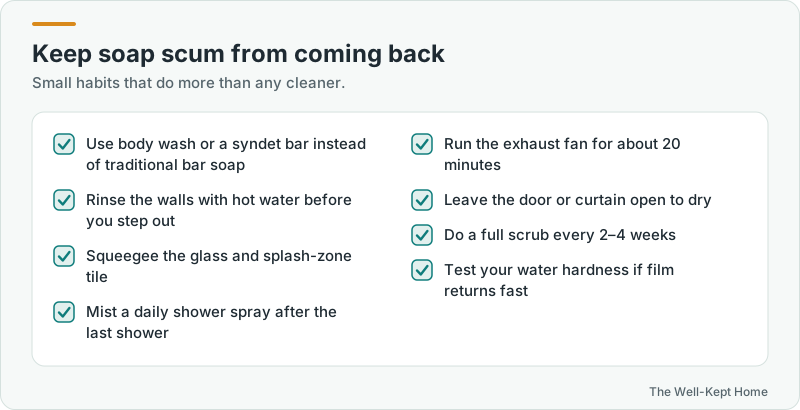
A few small changes cut soap scum dramatically:
- Switch from traditional bar soap to body wash or a syndet bar (short for synthetic detergent). These don’t react with hard water the same way, so they leave much less residue.
- Squeegee the walls after showers, or at least the area that gets the most splash.
- Use a daily shower spray after the last shower of the day. It keeps the film from bonding.
- Run the exhaust fan during the shower and for about 20 minutes after.
- Look at your water. If you’re fighting scum and spots every week, very hard water may be the root cause, and a water softener reduces both.
Common questions
Do baking soda and vinegar together remove soap scum?
Used one after the other, yes. Mixed together in advance, they neutralize each other, and the fizz you see is mostly carbon dioxide escaping. Spray the vinegar first, let it work, then use baking soda as a gentle scrub.
Can I use a Magic Eraser on shower tile?
On glazed ceramic and porcelain, yes. Melamine foam is a fine abrasive and lifts light scum well. Avoid it on polished stone and high-gloss glass tile, where it can dull the surface.
How often should I deep clean for soap scum?
With a squeegee habit and body wash, a full scrub every two to four weeks is usually enough. Without them, expect visible film within a week.