When water is pouring through a ceiling or sewage is backing into a tub, you need a plumber now, and you’re likely to pay more for one. Knowing what counts as a true emergency, what to do before help arrives, and what emergency rates typically look like helps you limit both the damage and the bill.
Table of Contents
What counts as a plumbing emergency
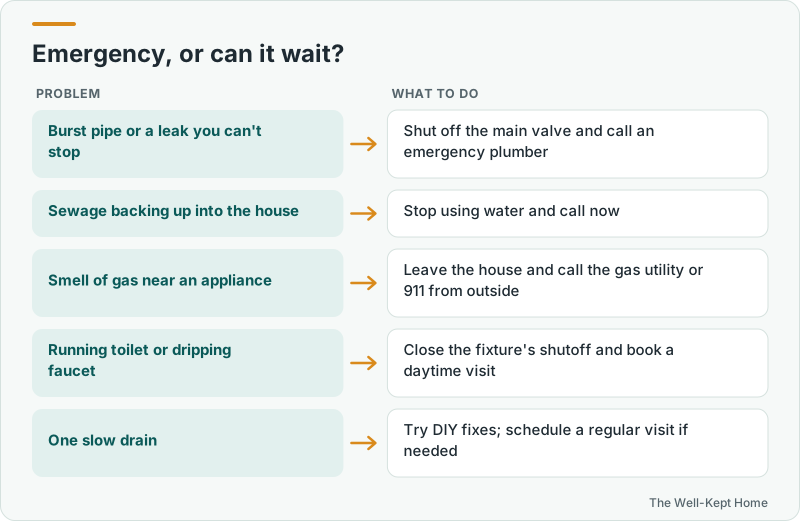
These usually can’t wait for business hours:
- A burst pipe or any leak you can’t stop.
- Sewage backing up into tubs, showers, or floor drains.
- No water to the whole house, if it’s not a utility outage.
- A water heater leaking heavily from the tank.
- An overflowing toilet that won’t stop even after you close the supply valve.
- Frozen pipes in cold weather, before they burst.
One exception: if you smell gas, it’s not a plumbing call first. Leave the house and call your gas utility or 911 from outside.
These can usually wait for a regular appointment: a dripping faucet, a running toilet with its supply valve closed, a single slow drain, or a small leak you can stop with a shutoff valve.
What to do before the plumber arrives
- Shut off the water. For a fixture leak, close the small valve under the sink or behind the toilet. For a burst pipe or a leak you can’t isolate, shut off the main water valve, usually where the water line enters the house: in a basement, crawlspace, garage, or utility closet, or outside in a meter box. Find it now, before you ever need it.
- Turn off the water heater if it’s leaking, or if the main water is off for a long time. Switch off the breaker for an electric heater, or set a gas heater to “pilot” or “off.”
- Stay safe around electricity. If water is near outlets, appliances, or the electrical panel, don’t touch them while standing in water. If it’s safe to reach the panel, shut off power to the affected area.
- Drain the lines after a burst pipe by opening the lowest faucets in the house.
- Protect belongings. Move valuables, rugs, and electronics away from the water.
- Document everything. Take photos and video of the damage for insurance before you clean up.
What emergency plumbing costs
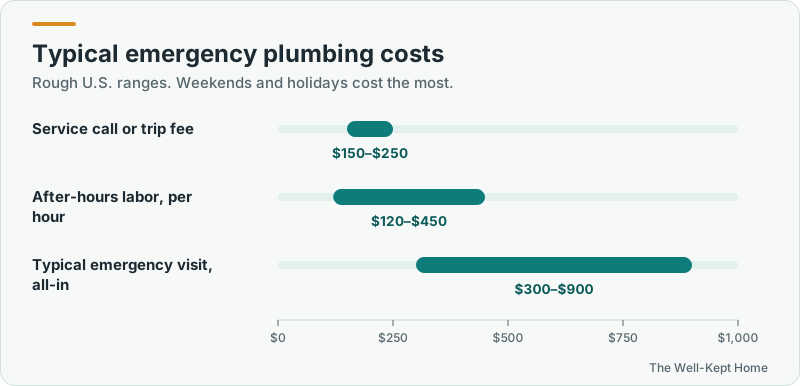
Emergency rates vary a lot by region and company. Cost guides commonly describe a service call or trip fee of roughly $150 to $250, sometimes more. After-hours labor often runs about 1.5 times normal rates on weeknights and 2 to 3 times normal on weekends and holidays. Typical all-in totals for an emergency visit, including the fee, a couple of hours of labor, and basic parts, commonly land somewhere between about $300 and $900. Larger repairs, such as replacing a water heater or a section of sewer line, cost more. Treat these as rough national figures and ask for specifics on the phone.
How to find a legitimate local plumber fast
Emergencies are when people get overcharged. A few quick checks help:
- Ask for the company name and state license number on the phone, and look it up if you can.
- Ask what you’ll pay before anyone is dispatched: the trip fee, the after-hours hourly rate, and whether there’s a minimum.
- Be cautious with generic listings. Some ads route calls to a dispatch service that subcontracts the job. That isn’t always bad, but ask who will actually show up.
- Get the estimate in writing before major work starts, even if it’s a text or email.
- Do only what’s urgent at night. Stop the leak or clear the backup, then get daytime quotes for non-urgent repairs.
After the emergency
- Dry things out fast. The EPA advises drying water-damaged materials within 24 to 48 hours to prevent mold growth. Use fans and dehumidifiers, and call a water damage restoration company for large areas.
- Call your insurer. Sudden, accidental water damage is often covered; gradual leaks and maintenance issues usually aren’t. Sewer backup coverage is typically an optional endorsement.
- Keep receipts for the plumber, drying equipment, and any emergency repairs.
Preventing the next emergency
- Know where your main shutoff is, and make sure everyone in the house does too.
- Insulate pipes in unheated areas and keep cabinet doors open on very cold nights.
- Replace rubber washing machine hoses with braided steel ones.
- Install inexpensive water leak sensors near the water heater, washer, and sinks.
- Consider an automatic water shutoff valve if you travel often.
- Keep drains clear; see our guide to drain cleaning services for warning signs.
Common questions
Is it cheaper to wait until morning?
Often yes, if you can stop the water and nothing is getting worse. Shut off the valve, clean up, and book a regular appointment. If water keeps flowing or sewage is backing up, the cost of waiting is usually higher than the emergency rate.
Do plumbers charge for the estimate?
For emergency calls, the trip or service fee usually covers the diagnosis. Some companies credit it toward the repair.
What does a plumber need from me when I call?
Your address, what’s happening, whether the water is shut off, and any access details. Mention if sewage is involved, since it changes what the plumber brings.