Bathroom sink drains are small, usually 1-1/4 or 1-1/2 inches in diameter, and most clogs sit within a few feet of the drain opening. That means you don’t need a heavy-duty plumbing machine. A small, inexpensive tool handles the vast majority of bathroom sink clogs. The question is which kind.
Here’s how the main types of drain snake compare, what to look for, and how to use one without making a mess or damaging the sink.
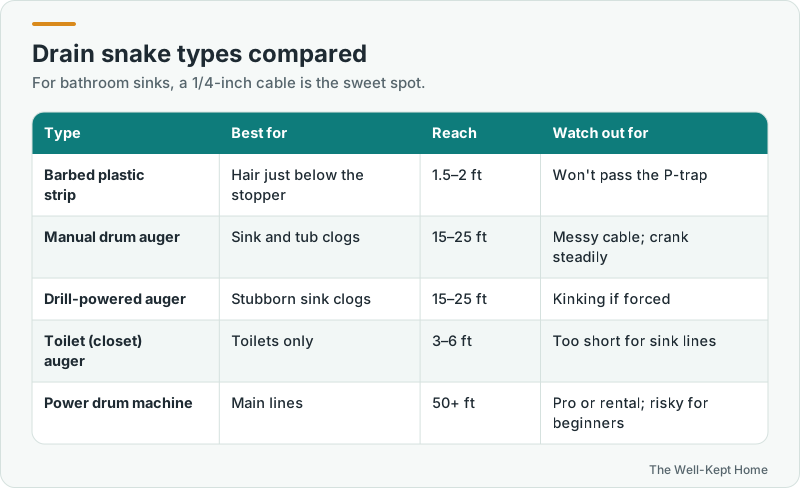
Table of Contents
1. Barbed plastic drain strips
These are thin plastic strips, about 18 to 24 inches long, with small barbs along the edges. You push one down the drain, twist, and pull it out with the hair attached. They’re cheap, often sold in multi-packs, and surprisingly effective for the most common bathroom clog: a hair mat just below the stopper.
Best for: quick hair removal and routine maintenance. Limits: they can’t get past the P-trap, and they’re too flimsy for packed clogs.
2. Manual drum augers
A hand-cranked drum auger holds a coiled steel cable, usually 1/4 inch thick and 15 to 25 feet long, inside an enclosed drum. You feed the cable into the drain and turn the handle, which spins the cable so its tip can bore into a clog or grab it. This is the best all-around tool for bathroom sinks, tubs, and showers.
Best for: clogs past the stopper, in the trap, or in the pipe inside the wall. Limits: the cable comes back dirty, and it takes a little practice to crank and feed at the same time.
3. Drill-powered augers
Some hand augers can attach to a cordless drill, which spins the cable faster with less effort. They’re handy for stubborn clogs and for people who’d rather not crank by hand. Ridgid, Cobra, and General Pipe Cleaners are among the established makers of sink-size augers.
Best for: tougher clogs and repeated use. Limits: it’s easier to kink the cable or scratch the sink if you push too hard. Run the drill slowly.
4. Toilet augers
A toilet auger, also called a closet auger, has a short cable inside a rigid tube with a protective sleeve that keeps it from scratching porcelain. It’s made for the curves of a toilet trap and is too short and too stiff for sink drains. Don’t buy one for a sink.
5. Power drum machines
Large motorized drain machines with 50 feet or more of thick cable are made for main lines and are usually rented or used by plumbers. They’re overkill for a bathroom sink and can damage small pipes in inexperienced hands.
What to look for
- Cable diameter: 1/4 inch is right for bathroom sinks and tubs. Thicker cables won’t make the tight turns in a sink trap.
- Length: 15 to 25 feet is plenty for a sink. Clogs farther out than that usually mean a branch or main line problem.
- An enclosed drum: it keeps the dirty cable contained and makes cleanup easier.
- A cable lock: lets you lock the cable at a set length while you crank.
- A bulb or spring head: good at snagging hair.
How to use a hand auger on a sink
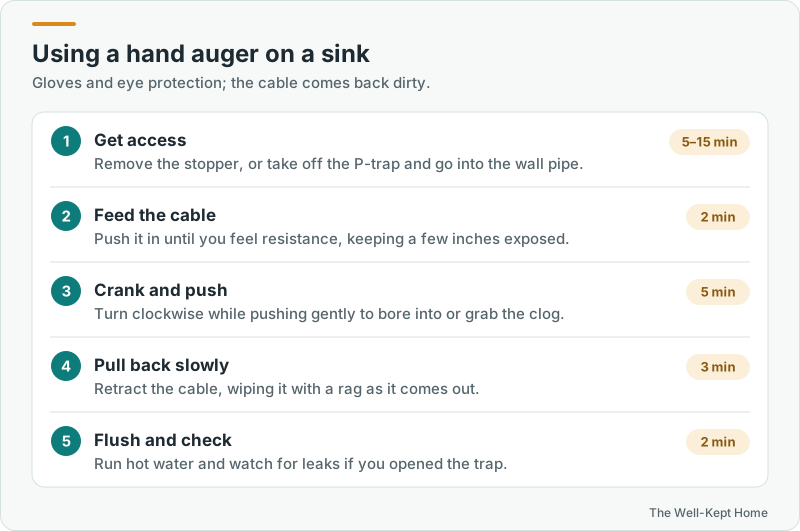
- Get access. Remove the stopper. If the auger won’t pass the tight bend of the trap from above, take off the P-trap and feed the cable directly into the pipe inside the wall. That often works better.
- Protect the sink. Lay a towel around the drain so the cable doesn’t scratch the finish.
- Feed the cable until you feel resistance.
- Lock and crank. Lock the cable with a few inches showing, then turn the handle clockwise while pushing gently. Unlock and feed more cable as it advances.
- Pull back slowly, cranking as you go, and wipe the cable with a rag as it comes out.
- Flush with hot water and check for leaks if you removed the trap.
Wear gloves and eye protection. And never use a snake right after pouring a chemical drain cleaner down the sink, because the cable can splash caustic liquid.
When a snake isn’t enough
If 25 feet of cable doesn’t clear it, or if other fixtures are slow too, the clog is likely in a branch or main line. That’s a job for a plumber with longer, more powerful equipment; see our guide to drain cleaning services. For a step-by-step walkthrough of every chemical-free sink fix, see how to unclog a bathroom sink without chemicals.
Our recommendation
Keep a pack of barbed plastic strips for routine hair removal, and a 1/4-inch, 25-foot manual drum auger for the clogs they can’t reach. Together they cost less than a single plumber’s visit and handle most bathroom sink problems.
Common questions
Can a drain snake damage pipes?
A sink-size hand auger used gently won’t harm normal plumbing. Forcing a cable, using a power auger too aggressively, or snaking old, fragile pipes can cause damage.
How do I clean the snake afterward?
Pull the cable through a rag as you retract it, then rinse it with hot soapy water and let it dry completely before storing it, so it doesn’t rust.
Can I use the same snake for the shower?
Yes. A 1/4-inch auger works for tubs and showers too. Feed it through the drain or, on many tubs, through the overflow opening.