If you live with pets or allergies, you’ve probably wondered whether a better air filter would help. It can, but probably not in the way the marketing suggests. A good HVAC filter removes particles floating in the air while the system runs. Much of what makes people sneeze, though, settles onto floors, bedding, and furniture. The best results come from combining the right filter with a few household habits.
Table of Contents
What triggers allergies indoors
- Pet dander: tiny flakes of skin, along with proteins from saliva and urine, from cats, dogs, and other animals. Some particles are small enough to stay airborne for a long time.
- Dust mite allergens: mostly larger particles that settle quickly into bedding, carpets, and upholstery.
- Pollen: tracked in on clothes and pets, and blown in through open windows.
- Mold spores: from damp areas such as bathrooms, basements, and around leaks.
The best HVAC filter for most allergy and pet homes
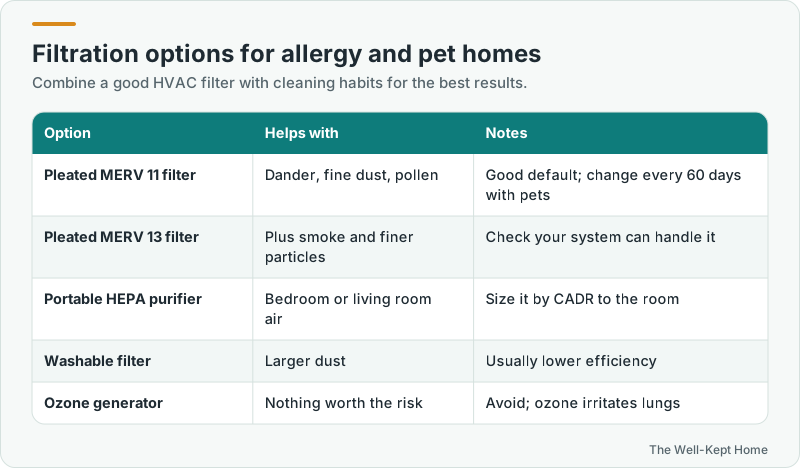
For most homes, a pleated MERV 11 filter is the right starting point. It captures a much larger share of fine particles, including much of the dander that drives pet allergies, than a basic MERV 8 filter, and most residential systems handle it well. If someone in the home has asthma or significant allergies, and your system can handle it, a MERV 13 filter captures even more, especially in a 4-inch media cabinet that restricts airflow less. Our comparison of MERV 8 vs. MERV 11 filters explains the ratings in detail.
Change it on time. With pets, a 1-inch pleated filter usually needs replacing about every 60 days, and sometimes monthly in a multi-pet home. See how often to change your HVAC filter.
Running the fan more often
An HVAC filter only cleans air while the blower runs. Setting the fan to “on” instead of “auto,” or using a circulation setting that runs it part of each hour, increases filtration. It also uses more electricity, especially with older blower motors, so many people run the fan continuously only during peak allergy season or on high-pollen days.
What about HEPA?
True HEPA filters capture at least 99.97% of particles at 0.3 microns, but they’re too dense for nearly all residential HVAC systems. Putting one in a standard furnace slot would choke airflow. Whole-home HEPA requires a dedicated bypass system installed by a technician.
For most homes, the practical way to get HEPA filtration is a portable air purifier in the rooms where it matters most, especially the bedroom. Size it to the room using its Clean Air Delivery Rate (CADR). A common guideline from AHAM, the appliance manufacturers’ association, is a smoke CADR of at least two-thirds of the room’s area in square feet. A 150-square-foot bedroom, for example, calls for a smoke CADR of at least 100.
Products to avoid
- Ozone generators marketed as air purifiers. Ozone irritates the lungs, and the EPA has warned that these devices aren’t an effective way to clean indoor air. California regulates air cleaners for ozone emissions; a CARB-certified purifier is a safer choice.
- Cheap washable filters promising allergy relief. Many have low efficiency and need diligent cleaning to work at all.
- “Hypoallergenic” claims without a MERV rating. Look for the number.
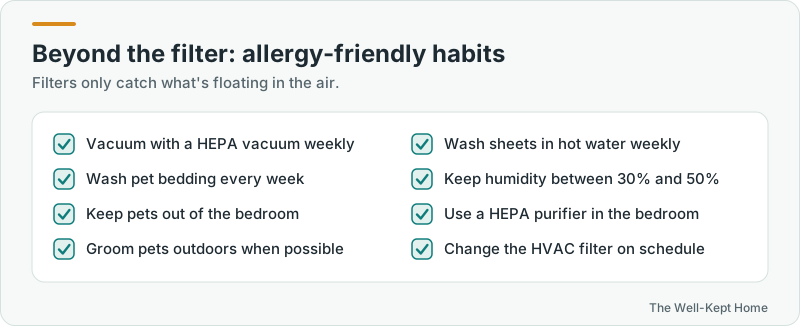
Habits that matter as much as the filter
- Vacuum weekly with a vacuum that has a sealed HEPA filter, so it doesn’t blow fine dust back into the air.
- Wash pet bedding weekly in hot water, and wash your own sheets weekly too.
- Keep pets out of the bedroom if someone has pet allergies.
- Groom pets outdoors when possible, and bathe dogs regularly as your vet recommends.
- Control humidity. The EPA recommends keeping indoor humidity between about 30% and 50%. Dust mites and mold thrive above that.
- Use hard floors and washable rugs where you can, since carpet holds allergens.
What to expect
Better filtration reduces airborne particles, and many people with allergies notice the difference. It doesn’t eliminate allergens that have already settled into carpets and upholstery, and it won’t replace medical treatment for allergies or asthma. If symptoms are severe, talk to a doctor or allergist about testing and treatment.
Common questions
Should I buy the highest MERV filter my store sells?
Only if your system can handle it. MERV 11 is a safe upgrade for most homes. Go higher with your technician’s or manufacturer’s approval, ideally in a thicker filter.
Do air purifiers help with pet allergies?
A properly sized HEPA purifier reduces airborne dander in the room where it runs, and it helps most in bedrooms. Run it continuously on a setting quiet enough to sleep with.
Will duct cleaning help my allergies?
There’s little evidence that routine duct cleaning reduces allergy symptoms. See whether air duct cleaning is worth it.