Every hard water stain starts the same way: a drop of water dries on the glass and leaves its minerals behind. Stop the water from drying in place and you stop the stain. That’s the whole strategy. Everything else is about finding methods you’ll actually stick with.
If your glass is already cloudy, clean it first using our guide to removing hard water stains from glass shower doors. Prevention works best on clean glass, and protective coatings won’t bond properly over mineral film.
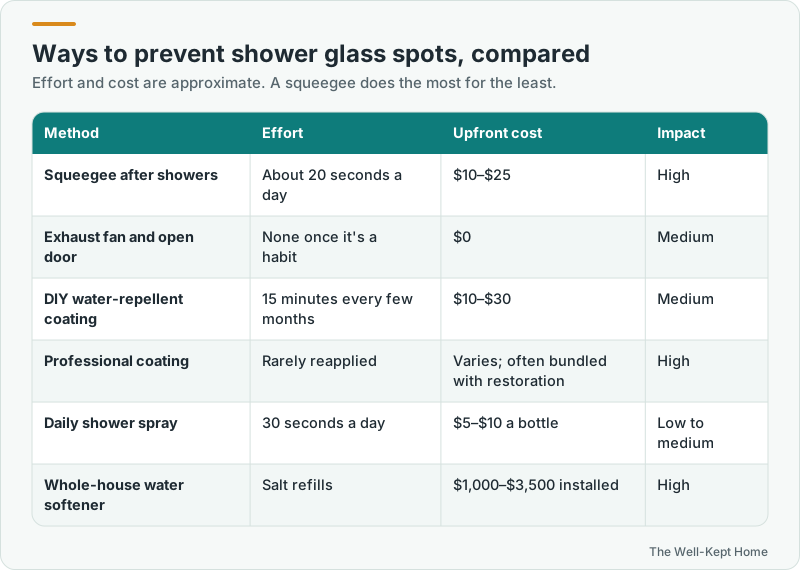
Table of Contents
1. Squeegee after every shower
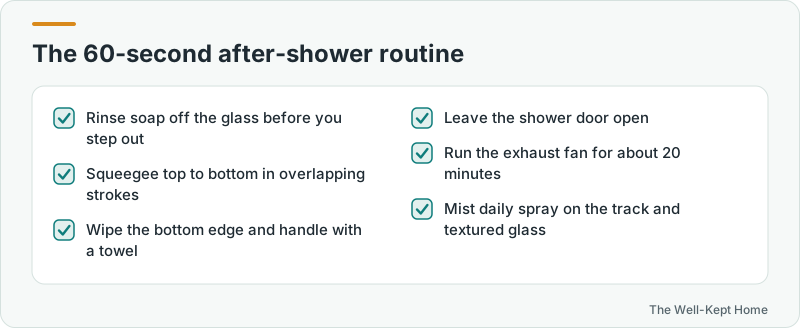
Nothing else comes close for the cost. A 20-second pass with a squeegee removes most of the water before it can evaporate. Work from top to bottom in overlapping strokes, then catch the drips along the bottom edge with a towel.
A few things make the habit stick:
- Buy a squeegee with a soft silicone blade, at least 10 inches wide, and hang it inside the shower where you can’t miss it.
- Give the glass a quick rinse at the end of your shower to wash off soap, so the blade glides instead of dragging.
- Don’t forget the bottom rail and the area around the handle, where water collects.
2. Add a water-repellent coating
Hydrophobic coatings make water bead up and run off instead of clinging, so there’s less left to dry on the glass. You have two routes:
- DIY spray or wipe-on products are sold for shower glass at hardware stores. They’re inexpensive and take about 15 minutes to apply to clean, dry glass. Plan on reapplying every few weeks to every few months, depending on the product and how often the shower gets used.
- Professional coatings, often applied after a shower glass restoration or when new glass is installed, bond more durably and can last for years with the right care.
Coatings don’t make glass maintenance-free. They make the squeegee more effective and leftover spots easier to wipe away. Clean coated glass with gentle, non-abrasive products so the coating lasts.
3. Ventilate properly
The faster the bathroom dries, the less time minerals and mildew have to settle in. Run the exhaust fan during your shower and for about 20 minutes afterward. If the fan can’t clear the mirror within a few minutes, it may be undersized or the duct may be blocked. Leave the shower door open afterward so air can reach the inside of the glass.
4. Use a daily shower spray
A no-rinse daily shower spray, misted on after the last shower of the day, slows down mineral and soap buildup. It’s no substitute for a squeegee, but it helps on surfaces that are hard to dry, like textured glass and the door track. A simple homemade version is equal parts water and white vinegar. Skip the vinegar version if your shower has natural stone nearby.
5. Deal with the water itself
In a very hard water area, all of the above takes more work. Two things are worth knowing:
- A whole-house water softener removes calcium and magnesium before the water ever reaches the shower. It’s the only option that addresses the cause, and it also protects faucets, the water heater, and appliances. It’s also the most expensive. See our breakdown of water softener installation costs.
- Filtered showerheads usually don’t help with spots. Most shower filters target chlorine and odors. They don’t remove the hardness minerals that cause spots, so check the specs before buying one for this purpose.
6. Keep a light weekly routine
Even with good habits, a few spots will form. Once a week, spray the glass with diluted vinegar, let it sit for five minutes, wipe it with a non-scratch sponge, rinse, and squeegee. Catching buildup while it’s light means you’ll never need strong acids or polishing.
What doesn’t prevent stains
- Glass cleaner sprayed on wet glass. It mixes with the water and dries with the minerals still in it.
- Car wax and household oils. They repel water for a while but often streak, attract grime, and can make a shower floor slippery.
- Keeping the door shut to hold in the warmth. Trapped humidity slows drying, which is exactly what you don’t want.
If you only do one thing
Squeegee the glass after every shower. Add the fan and an open door, and most homes never get past light, easy-to-wipe spots. Add a coating if you want the glass to look clean between weekly wipes, and consider a softener if your water is hard enough to scale your faucets and kettle too.