“Deep clean” is one of the most common services cleaning companies offer, and one of the least standardized. Most people know it means “more thorough than a regular clean,” but not exactly what that covers. Here’s a room-by-room checklist of what a professional deep clean typically includes, what’s usually extra, and how to use the list, whether you’re comparing companies or planning to do it yourself.
Table of Contents
How a deep clean differs from a standard clean
A standard clean maintains a home that’s already in decent shape: wiping counters, cleaning bathrooms, dusting reachable surfaces, vacuuming, and mopping. A deep clean includes all of that plus the detail work that builds up over time: baseboards, door frames, light fixtures, grout, soap scum, hard water deposits, cabinet fronts, vents, and the spaces behind and under things. It takes significantly longer, which is why it costs more; see how much a deep clean costs.
The room-by-room checklist
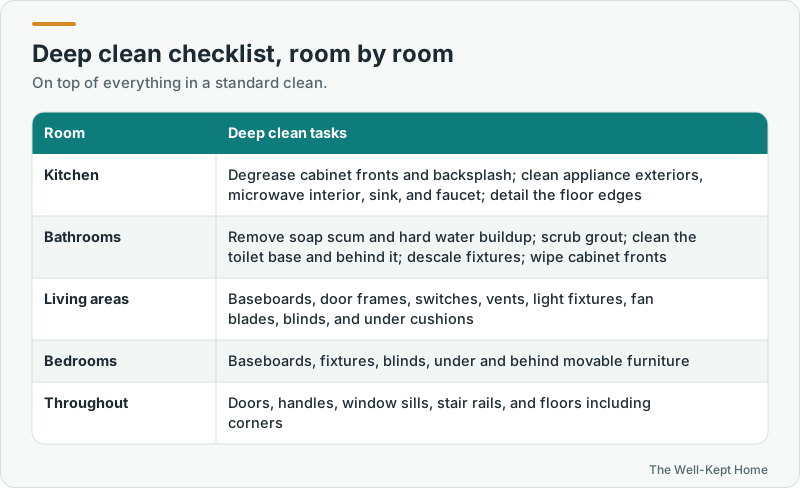
Kitchen
- Degrease cabinet fronts, handles, and the backsplash
- Clean appliance exteriors, including the tops and sides of the fridge
- Clean the microwave inside and out
- Scrub the stovetop, grates, burner caps, and knobs
- Wipe the range hood exterior
- Scrub the sink and descale the faucet
- Wipe light switches, outlets, and the trash can
- Detail the floor, including edges, corners, and under the toe kicks
Bathrooms
- Remove soap scum and hard water buildup from tub, shower walls, and glass
- Scrub grout
- Clean the entire toilet, including the base, bolts, and the floor behind it
- Descale faucets and showerheads
- Wipe vanity cabinet fronts, mirrors, and fixtures
- Clean the exhaust fan cover
- Detail the floor and baseboards
Living areas
- Dust and wipe baseboards, door frames, and doors
- Wipe light switches, outlets, and handles
- Dust light fixtures, lamps, ceiling fan blades, and vent covers
- Dust blinds and window sills
- Vacuum under cushions and, where possible, under and behind furniture
Bedrooms
- Baseboards, door frames, and fixtures
- Blinds and window sills
- Under and behind movable furniture
- Ceiling fans and vent covers
Throughout the home
- Entry doors and handles
- Stair railings and spindles
- Floors, including corners and edges
- The laundry area: appliance exteriors and the floor
Laundry room and entry
- Wipe the washer and dryer exteriors and the tops of the machines
- Clean around the lint trap housing and the floor in reach behind the machines
- Wipe entry doors, thresholds, and the shoe area
- Clean mirrors, light fixtures, and baseboards in halls and entries
What’s usually extra
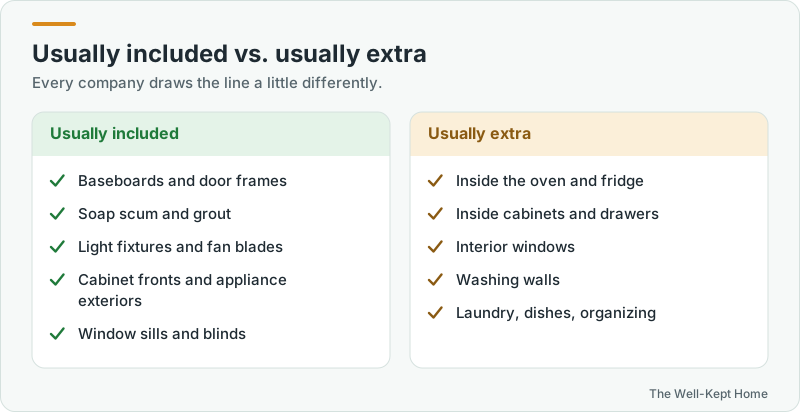
Most companies treat these as add-ons, priced separately:
- Inside the oven and refrigerator; see appliance deep cleaning
- Inside cabinets and drawers, which usually need to be emptied first
- Interior windows and window tracks
- Washing walls, beyond spot-cleaning
- Laundry, dishes, and organizing
- Carpet shampooing and upholstery cleaning
- Garages, patios, and exterior windows
Mold remediation and biohazard cleanup aren’t part of a deep clean at all. They require specialists.
What a deep clean won’t fix
A deep clean removes buildup, but some problems aren’t cleaning problems. Etched shower glass, permanently stained grout, worn finishes, and lingering odors from a leak or pet accidents in the subfloor need repair, restoration, or specialty services. Mold growth beyond small surface spots calls for a mold professional. A good cleaner will point these out instead of promising results that cleaning can’t deliver. For hard water damage on glass, see shower glass restoration.
How long a deep clean takes
For an average home, a professional team of two or three often needs several hours. Large homes, many bathrooms, pets, or long gaps since the last thorough cleaning can stretch it to a full day.
How to use this checklist
- Comparing companies: ask each one for its deep clean checklist and compare it against this list. Note what’s included, what’s extra, and what’s missing. See how to compare deep cleaning offers.
- Before the cleaners arrive: mark your top priorities so the team focuses there first.
- DIY: work top to bottom, so dust falls onto areas you haven’t cleaned yet, and dry to wet, dusting before wiping. Spray the bathroom and kitchen cleaners first so they can work while you dust elsewhere, and save floors for last.
Common questions
Does a deep clean include disinfecting?
Many companies disinfect high-touch surfaces as part of a deep clean, but it isn’t universal. Ask what products they use and where.
How often should a home be deep cleaned?
Once or twice a year for most homes with regular upkeep, more often for homes with pets, kids, or no regular cleaning.
Is a move-out clean the same as a deep clean?
Close, but a move-out clean usually includes the inside of cabinets and appliances by default, since the home is empty. See move-out cleaning.
Do I need to prepare for a deep clean?
Clear clutter from surfaces and floors, put away valuables, and point out priorities and delicate surfaces. Cleaners can then spend their time cleaning.