If your shower turns into a shallow bath every morning, hair is almost certainly to blame. Every shower sends a few strands down the drain. They catch on the crossbars just below the cover, soap scum glues them together, and within months there’s a dense, slimy mat blocking the flow.
Hair doesn’t dissolve easily, which is why pouring products down a shower drain so often disappoints. The reliable fix is to pull the clog out. It’s a little gross, but it usually takes less than 15 minutes.
Table of Contents
What you’ll need
- Rubber gloves
- A screwdriver (flat and Phillips)
- A flashlight
- Needle-nose pliers
- A barbed plastic drain-cleaning strip
- A plunger
- A 1/4-inch hand auger, for deeper clogs
- A plastic bag for the hair
Step 1: Get the drain cover off
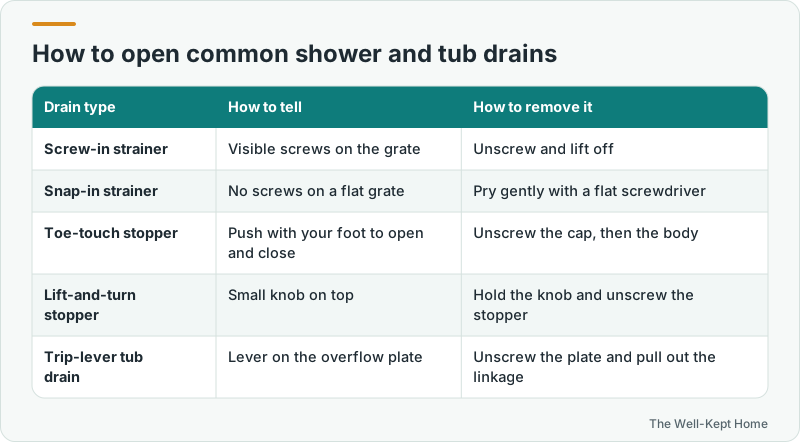
How you open the drain depends on the type:
- Screw-in strainers have one or two visible screws. Unscrew them and lift the cover off.
- Snap-in strainers have no screws. Pry gently around the edge with a flat screwdriver.
- Toe-touch tub stoppers open and close when you press them with your foot. Hold the base, unscrew the cap, then unscrew the stopper body.
- Lift-and-turn stoppers have a small knob. Hold the knob and turn the whole stopper counterclockwise to unscrew it.
- Trip-lever tub drains are controlled by a lever on the overflow plate. Unscrew the plate and pull the linkage up and out; hair often wraps around the plunger at the bottom.
Step 2: Pull out the hair
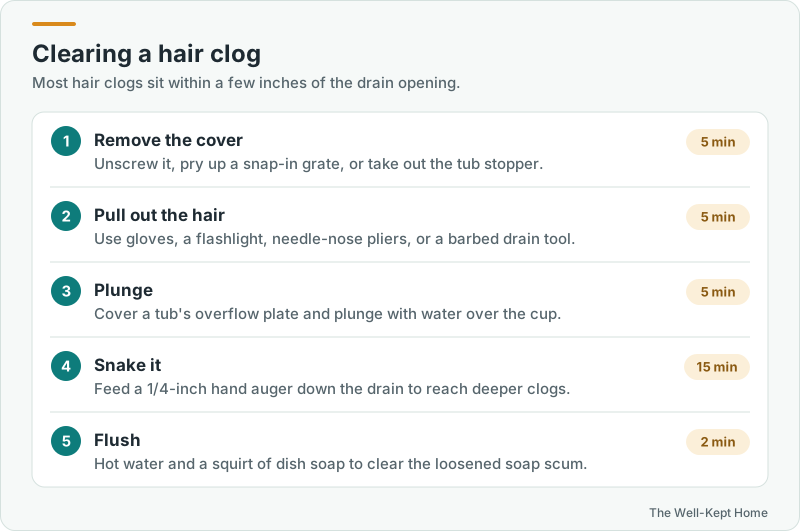
Shine a flashlight into the drain. You’ll usually see the clog right away, caught on the crossbars. Grab it with needle-nose pliers or gloved fingers and pull slowly so it comes out in one piece. Then push a barbed drain strip down as far as it goes, twist, and pull it back up to catch the hair you can’t see. Repeat until it comes out clean.
Avoid poking around with a straightened wire hanger. It can scratch the drain finish and push the clog deeper.
Step 3: Plunge if it’s still slow
With the cover off, run enough water to cover the plunger cup. On a tub, cover the overflow opening with a wet rag so the pressure doesn’t escape. Give it 15 to 20 firm strokes and pull away sharply. Repeat a few times.
Step 4: Snake it for deeper clogs
If the water still won’t drain, the clog is farther down. Feed a 1/4-inch hand auger into the drain and crank it clockwise as you push. When you feel resistance, keep cranking to grab or break up the clog, then pull the cable back slowly. On tubs, it’s often easier to run the auger through the overflow opening after removing the plate.
Step 5: Flush it clear
Run hot water with a squirt of dish soap for a minute or two to wash out loosened soap scum. Replace the cover or stopper and test the drain.
Why chemical cleaners struggle with hair
Some caustic drain cleaners can break down hair, but slowly, and standing water in the shower dilutes them. When they don’t fully clear the clog, you’re left with caustic water in the tub, which makes plunging or snaking dangerous because of splashing. Pulling the hair out mechanically is faster and safer. For ongoing maintenance, an enzyme cleaner helps with the soap scum that glues hair together; see enzyme vs. chemical drain cleaners.
Keep hair out of the drain
- Use a hair catcher. Silicone domes and stainless mesh catchers sit over the drain and trap hair before it goes down. Empty them after each shower.
- Brush your hair before showering, which removes loose strands that would otherwise wash down.
- Clean the drain monthly. Pull the cover and remove what’s collected before it becomes a clog.
- Flush with hot water weekly to keep soap scum from building up.
When it’s not a hair clog
If water backs up into the shower or tub when you flush the toilet or run the washing machine, the problem is likely in the main drain line, not the shower drain. The same goes for gurgling sounds and several slow drains at once. That’s a job for a plumber; see our guide to drain cleaning services.
Common questions
How often do shower drains clog?
Households with long hair, or several people using one shower, can see a slow drain every few months. A hair catcher stretches that to years.
Is it okay to use a plunger in a shower?
Yes. Use a clean cup plunger, not the one from the toilet, and make sure there’s enough water to cover the cup so it can create a seal.
The cover won’t come off. What now?
Some drain covers are glued or corroded in place. Work from above with a barbed drain strip, which slips through most grates. If that fails, a plumber can remove the cover without damaging the drain.