Stainless steel earns its name by resisting rust and stains, not by being immune to them. A thin, invisible layer of chromium oxide on the surface protects the metal. Keep that layer intact and a stainless sink stays bright for decades. Damage it, with the wrong cleaner or a pan left sitting wet, and you get rust spots, pitting, and a dull, cloudy finish.
Here’s a simple routine that keeps your sink looking good, and how to fix the most common problems.
Table of Contents
Daily: rinse and dry
The single most useful habit is also the simplest. After the last dishes of the day, rinse the sink to clear food residue and wipe it dry with a towel. Water left to dry on stainless steel leaves mineral spots, especially if you have hard water.
Weekly: the deep clean
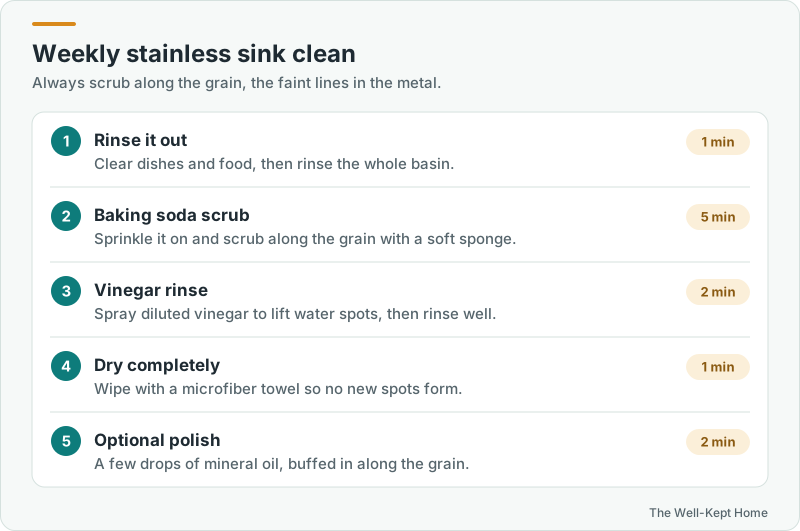
- Clear and rinse. Remove dishes, the sink grid, and the drain strainer, then rinse the basin.
- Scrub with baking soda. Sprinkle baking soda over the damp sink and scrub with a soft sponge or a non-scratch pad. Work in the direction of the grain, the faint brushed lines in the metal. Scrubbing across the grain leaves visible scratches.
- Rinse with vinegar. Spray diluted white vinegar over the sink. It fizzes against the baking soda and helps dissolve water spots and hard water film. Don’t let it sit for long; rinse thoroughly with water.
- Clean the drain area. Scrub the strainer, stopper, and drain flange with an old toothbrush. If the drain smells, see our guide to getting rid of smelly drains.
- Dry completely. Wipe the whole sink, including the faucet base, with a microfiber towel.
- Polish (optional). Put a few drops of mineral oil or olive oil on a soft cloth and buff along the grain. It gives the steel a soft sheen and helps water bead off. A stainless steel polish does the same thing.
Fixing common problems
Water spots and cloudy film
White spots and a cloudy haze are mineral deposits from hard water. Diluted vinegar on a cloth, followed by a rinse and a dry, clears them. Drying the sink daily prevents them. If your faucet has the same buildup, see how to remove limescale from faucets.
Rust-colored spots
Stainless steel rarely rusts by itself. Orange spots usually come from something else: a cast iron pan left wet in the sink, a steel can, steel wool particles, or iron in your water. Make a paste with an oxalic acid cleanser such as Bar Keepers Friend and a little water, rub it gently along the grain, then rinse thoroughly. Most surface rust stains lift in a minute or two.
Stubborn stains
Tea, coffee, and food stains usually come out with a baking soda paste left for 15 minutes before scrubbing. For heavier stains, an oxalic acid cleanser works well.
Scratches
Fine scratches are part of a stainless sink’s life, and they blend in over time. Light scratches can be softened by rubbing gently along the grain with a fine non-woven pad, or with a stainless scratch repair kit. Deep gouges are permanent, and aggressive sanding can make them more obvious.
What to avoid
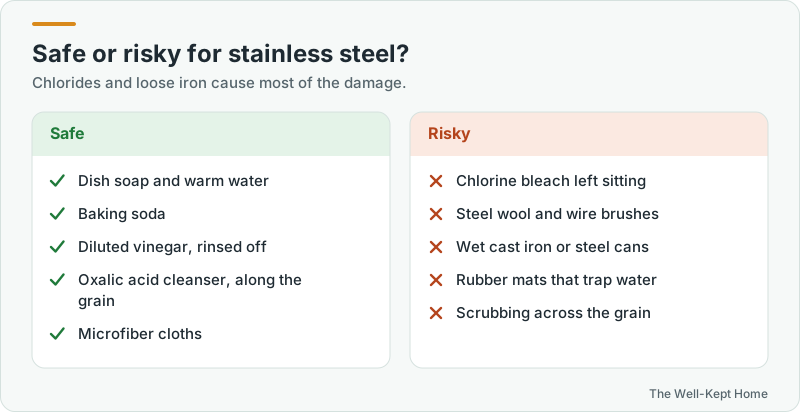
- Chlorine bleach left on the surface. Chlorides attack the protective layer and can cause pitting. If you use a bleach product nearby, rinse the sink right away.
- Steel wool and wire brushes. They scratch, and they leave tiny iron particles that rust and stain the sink.
- Cast iron and steel cans left wet in the sink. They leave rust rings.
- Rubber mats that trap water. Water and food sitting under a mat for days can discolor the steel. If you use a mat, lift it to dry. A stainless sink grid is a better choice.
- Abrasive powders scrubbed across the grain.
Keeping it looking new
- Rinse and dry the sink daily.
- Use a sink grid to protect the bottom from pots and pans.
- Do the baking soda clean weekly.
- Polish monthly if you like the shine.
A clean sink makes the whole kitchen look better. For the cabinets around it, see how to degrease kitchen cabinets.
Common questions
Is vinegar safe for stainless steel?
Yes, diluted and rinsed off. Don’t let vinegar sit on stainless for long periods, and don’t combine it with bleach products.
Can I use Bar Keepers Friend on my stainless sink?
It’s widely used on stainless sinks. Make a paste, rub along the grain, and rinse thoroughly, since leaving it to dry can cause dull spots. Check your sink manufacturer’s care guide if it has one.
Why does my sink look dull even when it’s clean?
Usually hard water film or residue from cleaners. A vinegar rinse followed by a thorough drying and a light oil polish brings back the shine.