The apple cider vinegar trap is the most popular homemade fruit fly fix for a good reason: it’s cheap, it’s safe to leave on the counter, and it works. It also fails often enough that plenty of people decide it’s a myth. Usually the difference comes down to one missing ingredient and where the trap is placed.
Table of Contents
Why apple cider vinegar works
Fruit flies find food by smell, and they’re drawn to the aromas of fermentation: the mix of acids, alcohols, and fruity compounds given off by ripening and rotting produce. Apple cider vinegar is fermented fruit, so it smells like exactly what they’re looking for. Plain white vinegar is less appealing to them because it lacks most of those fruity notes.
What you’ll need
- A small jar, glass, or ramekin
- About 1/2 cup of apple cider vinegar
- Liquid dish soap
- Optional: plastic wrap and a rubber band, or a sheet of paper for a funnel
- Optional: a slice of very ripe banana or a splash of wine to boost the scent
How to make it
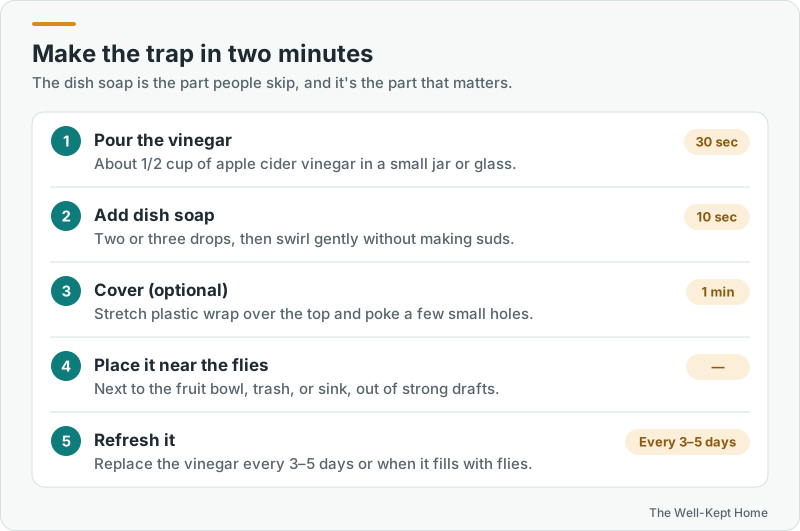
Version 1: The open dish (simplest)
Pour the vinegar into the jar, add two or three drops of dish soap, and swirl gently so it mixes without foaming. That’s it. Flies land to feed, the soap breaks the surface tension, and they sink.
Version 2: Plastic wrap cover
Make Version 1, then stretch plastic wrap tightly over the top, secure it with a rubber band, and poke four to six small holes with a toothpick. Flies crawl in through the holes and have trouble finding their way out. This version is tidier and holds its scent longer.
Version 3: Paper funnel
Roll a sheet of paper into a cone, snip a small opening at the tip, and set it in the jar so the tip sits above the liquid. Tape it to the rim. The funnel guides flies in and makes escape harder. It’s a good option if you don’t have plastic wrap.
Why the dish soap matters
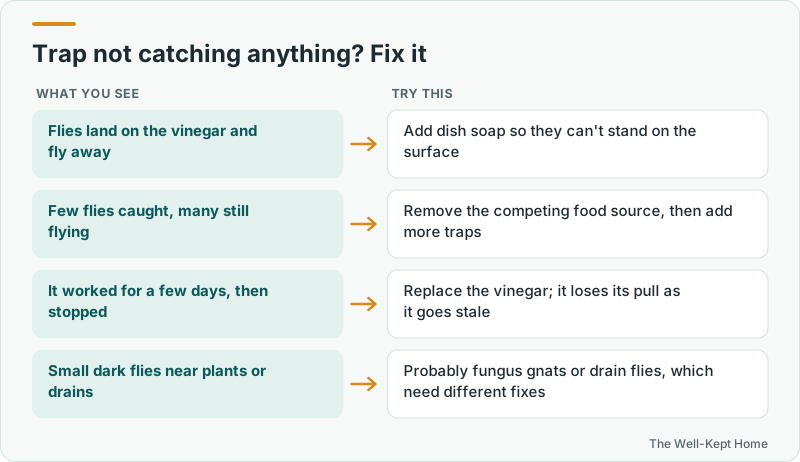
Without soap, vinegar has enough surface tension that fruit flies can land on it, drink, and leave. This is the most common reason homemade traps catch nothing. A few drops are enough. Too much soap can mask the vinegar smell, so don’t overdo it.
Where to put your traps
- Next to the source: beside the fruit bowl, trash can, recycling bin, or sink.
- Several, not one. Two or three traps in different spots work faster than one large trap.
- Out of drafts. Fans and vents scatter the scent and the flies.
- Away from competing food. A trap next to an open bowl of ripe peaches has to compete with the real thing. Put the peaches in the fridge.
How long until it works?
You’ll usually see flies in the trap within a few hours. The number flying around should drop noticeably over two or three days, as long as you’ve also removed what they were breeding in. Replace the vinegar every three to five days, or sooner if it’s full of flies or evaporating. Stale vinegar loses its pull.
Variations that also work
- Leftover wine or beer. A little in the bottom of a bottle or glass with a drop of soap is very attractive to fruit flies.
- Overripe fruit in a jar. A chunk of banana under plastic wrap with small holes works as bait, though it’s messier.
- Yeast and sugar water. A spoonful of sugar and a pinch of active dry yeast in warm water ferments and gives off an attractive smell. Add a drop of soap.
The limit of any trap
A trap catches adults. It doesn’t touch eggs and larvae developing in a rotten onion, a sticky recycling bin, or the film inside your drain. If you set traps and the flies keep coming, the source is still there. Our full guide to getting rid of fruit flies in the kitchen walks through where to look. If you’d rather buy a ready-made option, see our comparison of the best fruit fly traps.
Common questions
Can I use regular white vinegar?
It works a little, but apple cider vinegar is much more attractive to fruit flies. If white vinegar is all you have, add a piece of overripe fruit or a splash of wine to boost the scent.
Is the trap safe around kids and pets?
Vinegar with a few drops of dish soap is low-risk, but keep the trap where pets can’t drink from it or knock it over, mostly because of the mess.
Why are the flies ignoring my trap?
The usual reasons are missing soap, stale vinegar, a draft, or a better food source nearby. If the flies are dark and hang around houseplants or drains, they may not be fruit flies at all. Fungus gnats and drain flies respond poorly to vinegar traps.