A line of ants marching across the counter is rarely the whole colony. It’s a group of foragers following a scent trail laid by scouts who found something worth carrying home: crumbs, a sticky spill, pet food, or water. Kill the ants you see and more arrive along the same trail. Deal with the trail, the food, and the colony itself, and they stop coming.
You can handle most kitchen ant problems without spraying insecticides around where you cook. Here’s how.
Table of Contents
First, figure out which ant you have
- Small dark ants that smell like rotten coconut when crushed are odorous house ants, one of the most common kitchen invaders.
- Small dark ants that leave little piles of sand near cracks are likely pavement ants.
- Tiny, pale yellowish ants in warm spots may be pharaoh ants. Don’t spray these. Spraying can cause colonies to split into several new ones, so they need patient baiting, often by a professional.
- Large black ants, especially with piles of sawdust-like debris, may be carpenter ants, which nest in damp or damaged wood. They’re a reason to call a pro.
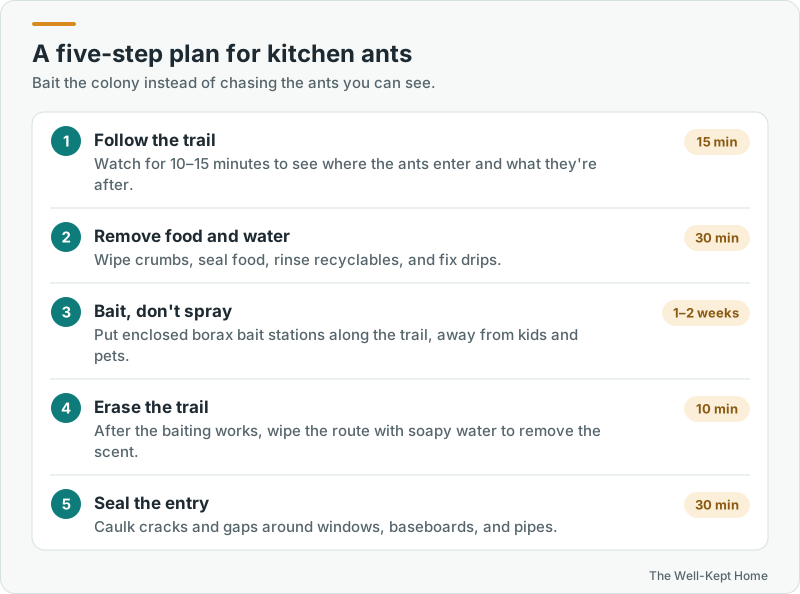
Step 1: Follow the trail
Before you wipe anything, watch the ants for 10 to 15 minutes. Where are they going, and where are they coming from? You’re looking for two things: the food or water source, and the entry point, which is often a gap around a window, a baseboard, a pipe under the sink, or a crack in the backsplash.
Step 2: Take away food and water
- Wipe counters and sweep floors every evening, including under the toaster and coffee maker.
- Move sugar, honey, cereal, and pet food into airtight containers.
- Rinse recyclables and take out the trash.
- Don’t leave pet food out all day. Placing the bowl in a shallow dish of water creates a moat ants won’t cross.
- Fix dripping faucets and leaks under the sink. In dry weather, ants come indoors for water as much as food.
Step 3: Use bait, not spray
This is the step that reaches the colony. Ant baits combine a food the ants want with a slow-acting ingredient. Workers carry it back and share it, including with the queen. Borax (sodium borate) is one of the most widely used bait ingredients. It’s a naturally occurring mineral, and in bait form it’s considered low toxicity, though it’s still harmful if a child or pet eats a quantity of it, so use enclosed bait stations rather than open dishes.
- Place stations right along the trail, near where ants enter.
- Expect more ants at first. That means they’ve found the bait and are recruiting.
- Don’t wipe the trail or spray near the stations while baiting. You want the ants to keep visiting.
- Most colonies of common kitchen ants decline within a few days to two weeks.
Step 4: Erase the scent trail
Once the ants stop coming, wipe the entire route with soapy water, or with a 1:1 mix of white vinegar and water on surfaces that tolerate it. This removes the pheromone trail so new scouts don’t follow the old path. Skip vinegar on marble, granite, and other natural stone; soapy water works there.
Step 5: Seal the way in
Caulk cracks around windows, baseboards, and backsplashes, and seal gaps where pipes and cables enter the wall. Outside, trim plants and mulch away from the foundation, since branches touching the house act as bridges.
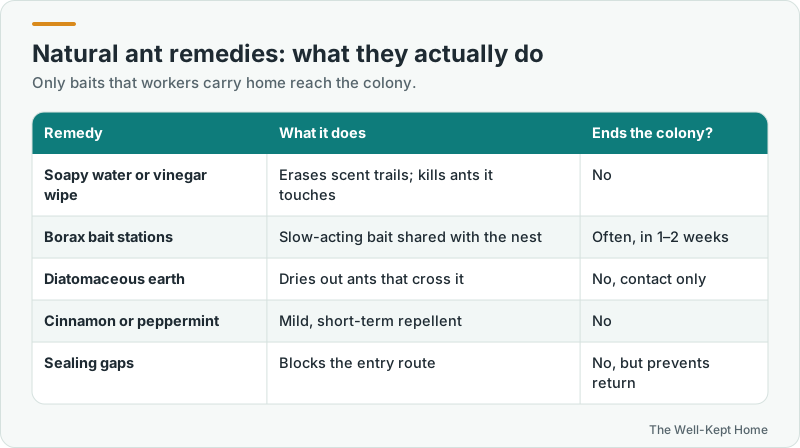
What about other natural remedies?
- Vinegar and soapy water kill the ants they touch and erase trails, but they don’t affect the colony.
- Diatomaceous earth (food grade) damages the waxy coating on insects and dries them out. It only works where ants walk through it, it must stay dry, and it should be applied as a thin dusting in cracks, not puffed into the air, where it irritates lungs.
- Cinnamon, peppermint oil, and coffee grounds may disrupt trails briefly. They won’t eliminate an infestation. Be careful with essential oils if you have cats, which are sensitive to many of them.
When to call a professional
Call a pro if you see signs of carpenter ants, if you suspect pharaoh ants, if ants keep returning after several weeks of baiting, or if you’re dealing with fire ants in the yard. See our guide to finding an ant exterminator for what to expect and what it costs.
Common questions
Does vinegar kill ants?
It kills ants it soaks and wipes out scent trails, but it doesn’t reach the colony. Use it for cleanup, not as the main treatment.
Why do ants come back every spring?
Colonies outdoors become active as the weather warms and send foragers looking for food. Sealing entry points and keeping counters clean in early spring prevents most repeat visits.
How long should I leave bait stations out?
Until you haven’t seen ants for several days. Then remove them, clean the area, and keep a station or two handy for the next sighting.