If you keep finding small, fuzzy, moth-like flies resting on the bathroom wall or hovering over the kitchen sink, you probably have drain flies. They also go by moth flies, sink flies, and sewer gnats. They’re harmless in the sense that they don’t bite, but they’re persistent, and no amount of swatting gets rid of them, because the problem isn’t the flies you can see. It’s where they’re breeding.
Table of Contents
How to identify drain flies
- About 1/16 to 1/8 inch long, gray or tan
- Fuzzy bodies and wings that make them look like tiny moths
- Wings held over the body like a roof when resting
- Weak, fluttery fliers that tend to hop short distances
- Usually found near sinks, tubs, showers, and floor drains, often resting on walls
If the flies are tan with red eyes and gather around fruit, see our guide to fruit flies instead.
Why they’re in your drain
Drain fly larvae live in the gelatinous film that builds up inside drain pipes: a mix of hair, soap, skin cells, food residue, and bacteria. They feed on that film, mature, and emerge as adults. The film also collects in sink overflow openings, garbage disposals, floor drains, rarely used showers, and anywhere water and organic matter sit, including under a slow leak.
Step 1: Find the breeding drain
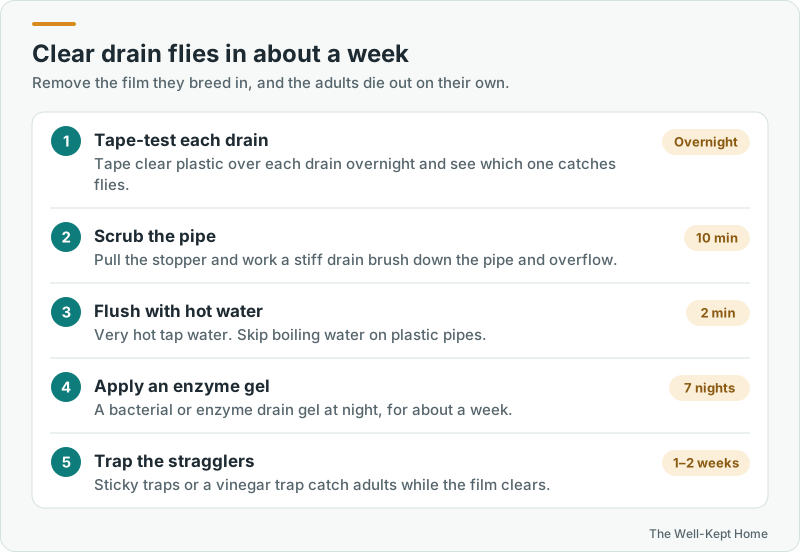
Don’t guess. Test each drain in the area. At night, place a strip of clear packing tape sticky side down loosely over the drain opening, leaving gaps so air can pass, or set a clear plastic cup upside down over it. In the morning, check which drain has flies stuck to the tape or trapped under the cup. Do the overflow hole too. Often only one or two drains are the problem.
Step 2: Remove the film
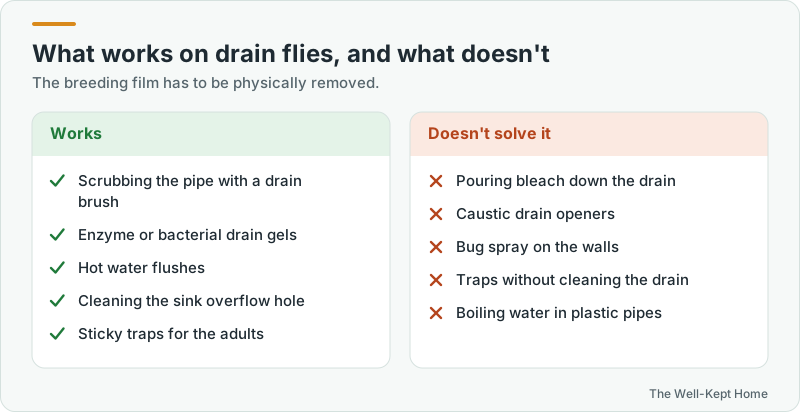
This is the step that matters. Pull the stopper out of the drain, since film builds up on it and around the linkage. Then work a stiff, flexible drain brush down into the pipe as far as it will go, twisting and scrubbing the walls. Clean the sink overflow opening with a bottle brush; that small channel is a classic hiding place. Rinse the brush and repeat until it comes out clean.
Step 3: Flush with hot water
Run very hot tap water for a couple of minutes to wash out the loosened film. Avoid pouring boiling water into drains with plastic pipes, since repeated boiling water can soften PVC joints over time.
Step 4: Use an enzyme or bacterial drain cleaner
Bio-based drain gels and foams contain bacteria or enzymes that digest the organic film you couldn’t reach with the brush. Apply one at night, when the drain won’t be used for several hours, and repeat for about a week. They work slowly but are safe for pipes and septic systems. Our comparison of enzyme vs. chemical drain cleaners explains the difference.
Step 5: Trap the adults
Adult drain flies live about two weeks. Once the breeding film is gone, the population dies out on its own. Sticky traps placed near the drain, or a vinegar trap, catch the remaining adults in the meantime.
What doesn’t work
- Bleach. It flows past the film too quickly to remove it, and the flies come back.
- Caustic drain openers. They’re made to dissolve clogs, not the slime lining the pipe, and they’re hazardous to handle.
- Bug spray. It kills the adults on the wall but does nothing about the larvae in the pipe.
If they keep coming back
If you’ve cleaned every drain and the flies return within a couple of weeks, look further:
- Rarely used drains: guest showers, basement floor drains, and laundry sinks. Run water through them weekly to keep their traps full.
- Leaks: a slow leak under a sink or behind a toilet can soak organic debris and create a breeding site outside the pipe.
- Broken drain lines: a cracked pipe under a slab or in a crawlspace can sustain drain flies for months. A plumber can run a camera through the line to check.
Prevention
- Flush drains with very hot tap water weekly.
- Use an enzyme drain cleaner monthly in sinks and showers that collect hair and soap.
- Clean stoppers and overflow holes during your regular bathroom cleaning.
- Fix drips and leaks promptly.
Common questions
Are drain flies harmful?
They don’t bite or sting. They come from drains, though, so you don’t want them landing on food or toothbrushes. They can also bother people with allergies.
How long does it take to get rid of them?
Usually one to two weeks after you remove the film from the breeding drain. That gives the remaining adults time to die off without laying new eggs.
Can drain flies come from the toilet?
It’s uncommon in a toilet that’s used and flushed regularly. A rarely used toilet, or a leak around the toilet’s base, can be a source.