Fruit flies seem to appear out of nowhere: one day there are two hovering over the bananas, and a week later there’s a cloud around the trash can. They’re tiny, about an eighth of an inch long, tan with red eyes, and drawn to anything sweet that’s starting to ferment.
The reason they multiply so fast is their life cycle. A female can lay hundreds of eggs on overripe produce or other moist, fermenting material, and in a warm kitchen those eggs can become breeding adults in a little over a week. That’s why traps alone rarely solve the problem. They catch the adults you can see while the next generation develops in a forgotten potato or the film inside your drain.
Here’s a plan that deals with both.
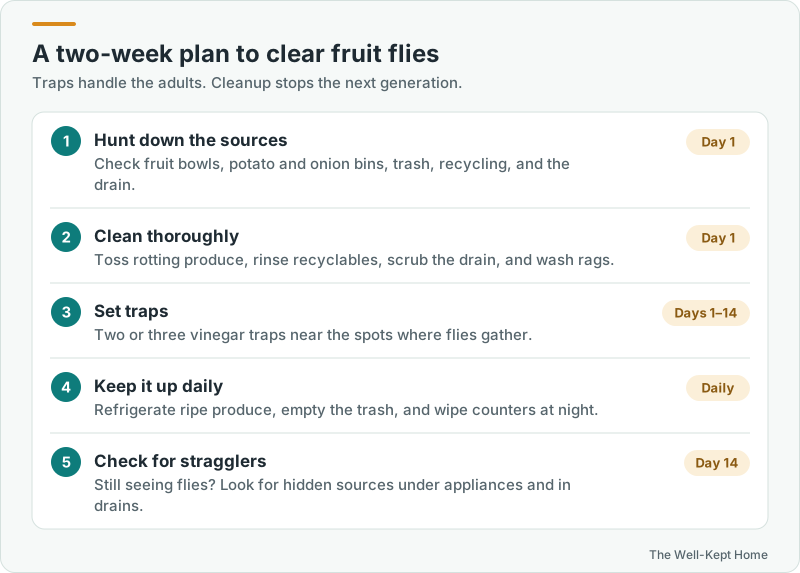
Table of Contents
Step 1: Find and remove every breeding source
This is the step that actually ends an infestation. Fruit flies breed in moist, fermenting organic material. Check all of these:
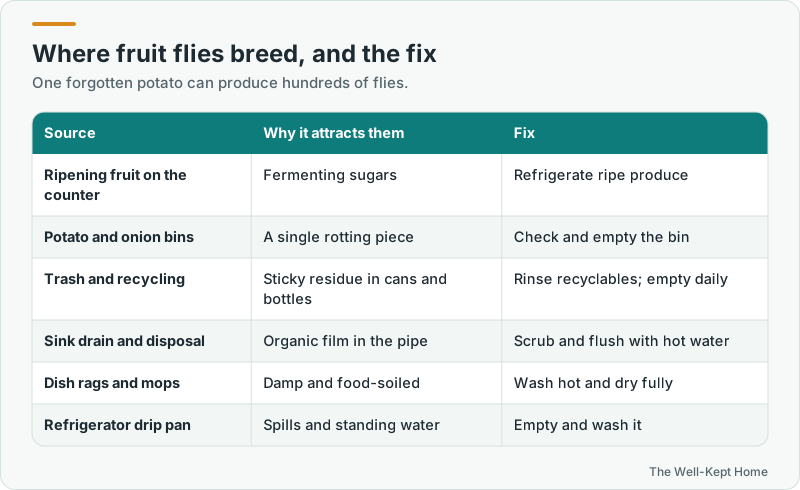
- The fruit bowl. Overripe bananas, peaches, tomatoes, and grapes are the obvious starting point. Toss anything soft or split, and refrigerate ripe produce for now.
- Potato and onion bins. A single rotting potato or onion in a dark pantry bin can produce hundreds of flies. Empty the bin and check every piece.
- Trash and recycling. Soda cans, beer and wine bottles, and juice cartons with a little residue are perfect nurseries. Rinse recyclables and take the trash out daily for a while.
- The sink drain and garbage disposal. Food film inside the drain and under the disposal’s rubber splash guard is a common hidden source.
- Damp rags, sponges, and mops that smell sour.
- Under and behind appliances. Spilled juice under the fridge or a drip pan with standing water can sustain a population for weeks.
- Compost caddies, pet food bowls, and forgotten lunch boxes.
Step 2: Clean the places they’ve been breeding
Once the obvious sources are gone, clean thoroughly. Wipe counters and the inside of the fruit bowl, wash the trash can with hot soapy water, and scrub the drain. For the disposal, lift the rubber splash guard and scrub its underside with an old toothbrush and dish soap, then run cold water with the disposal for 30 seconds. Wash dish rags and sponges on a hot cycle or replace them.
Drains deserve extra attention. Scrub inside the pipe with a flexible drain brush and flush it with very hot tap water. If small flies keep appearing near the sink, they may be drain flies, which breed in the slime inside pipes and need a slightly different approach.
Step 3: Trap the adults
With the breeding sources gone, traps mop up the flies that are left. The simplest is a small jar with apple cider vinegar and a few drops of dish soap. The soap breaks the surface tension so flies that land on it sink. Our guide to the homemade apple cider vinegar fruit fly trap explains how to make it work properly. Put two or three traps where you see the most flies, and refresh them every few days.
Step 4: Keep it up for two weeks
Eggs laid before your cleanup can still hatch. Keep produce in the fridge, empty the trash daily, and wipe counters every evening for about two weeks. That covers more than one full life cycle, so any flies that hatch late have nowhere to lay eggs.
Is it really a fruit fly?
Several tiny flies show up in kitchens, and the fix depends on which one you have:
- Fruit flies are tan with red eyes and hover around produce, trash, and drinks.
- Drain flies are fuzzy, gray, and moth-like, and they rest on walls near sinks and showers.
- Fungus gnats are dark, slender, and weak fliers that hang around houseplants. They breed in damp potting soil.
How to keep them from coming back
- Wash produce when you bring it home. Fruit flies often arrive as eggs on the skin of ripe fruit.
- Store ripe fruit in the refrigerator, especially in summer.
- Rinse recyclables before they go in the bin.
- Take out the trash and compost often, and keep lids closed.
- Clean the drain and disposal weekly.
- Fix leaks under the sink, which keep cabinets damp.
When to call a professional
In most homes, the steps above clear fruit flies within two weeks. If they’re still around after two or three weeks of consistent cleanup, there’s a hidden source you haven’t found, such as a broken drain line, a leak under the floor, or rotting material behind a cabinet. That’s when a pest control inspection makes sense. See our guide to pest control for fruit flies.
Common questions
Do fruit flies bite?
No. They’re a nuisance rather than a direct health threat. Because they land on garbage and drains as well as food, though, it’s best to keep them off your counters.
Why do I get fruit flies every summer?
Warm temperatures speed up their life cycle, and summer produce ripens fast on the counter. Refrigerating ripe fruit and taking out the trash more often during hot months usually prevents the annual outbreak.
Will bleach down the drain kill them?
Not reliably. Bleach rushes past the film lining the pipe without removing it. Scrubbing the pipe and flushing it with hot water does more.