Washing machine cleaner tablets promise a fresh drum in one cycle, and most of them deliver, as long as you pick the right kind for the problem. The products on the shelf look alike, but they’re built on a few different chemistries, and each is good at different things. Here’s how to match the cleaner to your washer.
Table of Contents
Why use a washer cleaner at all?
Modern washers, especially high-efficiency front-loaders, use very little water. Detergent residue, fabric softener, body soil, and minerals build up on surfaces you never see: the outside of the drum, the outer tub, and the hoses. That film feeds mildew and bacteria, which produce the classic musty smell. A monthly cleaning cycle with a dedicated cleaner reaches those hidden surfaces in a way that hand-wiping can’t.
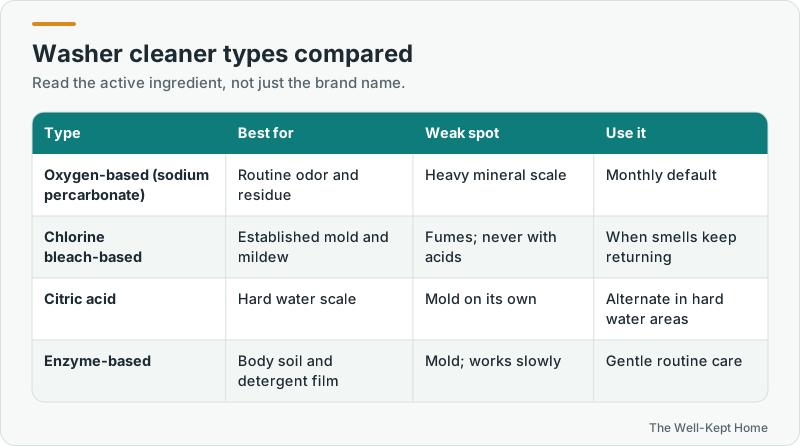
The main types
Oxygen-based tablets
Many popular tablets rely on sodium percarbonate, an oxygen bleach that releases hydrogen peroxide in water, combined with surfactants and water conditioners. They’re good all-rounders: they break down organic residue and much of the odor-causing growth without chlorine fumes, and they’re safe for most machines. This is the sensible default for routine monthly maintenance.
Chlorine bleach-based cleaners
Bleach-based washer cleaners, often sold as liquids or gels, are the strongest option against established mold and mildew. They’re the right call when a machine has been neglected or the smell keeps returning. The tradeoffs are strong fumes, the risk of bleach spots if any residue touches your next load, and the absolute rule that bleach never shares a cycle with vinegar or acidic cleaners. Run an extra rinse afterward.
Citric acid cleaners
Acid-based cleaners dissolve mineral scale. If you live in a hard water area and see chalky deposits in the dispenser or drum, an acid cleaner removes what oxygen and chlorine cleaners leave behind. Lemi Shine is a well-known citric acid line. Acid cleaners are weaker against mold on their own, so they work best alternated with an oxygen or bleach cleaner.
Enzyme cleaners
Enzyme-based cleaners break down proteins, fats, and starches. They’re gentle and handle odor from body soil and detergent film, but they work slowly and do little against established mold. They suit households that prefer milder products and keep up with regular maintenance.
Brands you’ll see
A few names come up constantly. Affresh is made by Whirlpool and is the cleaner named in many Whirlpool, Maytag, and KitchenAid manuals. Tide, OxiClean, and Lysol all sell washer cleaners, and Clorox makes a bleach-based version. Store brands often use the same core chemistry for less money. Read the label for the active ingredient instead of relying on the brand, and confirm the product is safe for HE machines.
How to use a cleaner tablet
- Empty the drum completely.
- Place the tablet in the drum, not the dispenser, unless the package says otherwise.
- Run the Tub Clean or Clean Washer cycle. If your machine doesn’t have one, use the hottest, longest cycle.
- Wipe the gasket, door, and drum dry afterward, and leave the door open.
- Repeat monthly, or as the package directs.
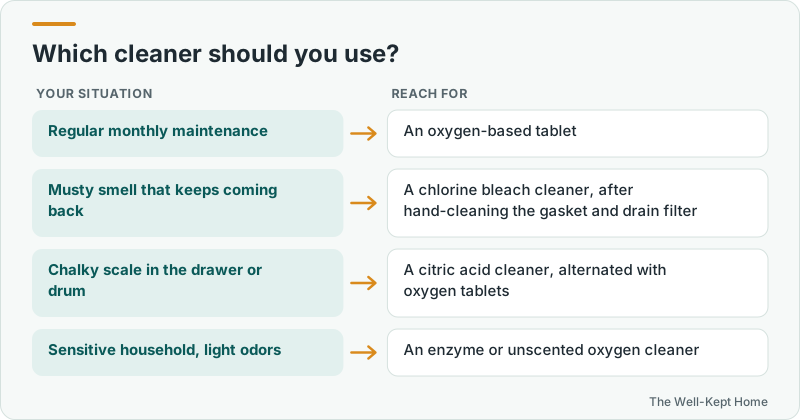
For a machine with a strong existing smell, run two cycles a few days apart, and clean the gasket and drain filter by hand first. Tablets can’t reach the slime in the gasket folds or the debris in the filter. Our guide to washing machine odors explains where else to look.
Tablets vs. vinegar and baking soda
Vinegar is cheap and good at dissolving scale and detergent film, but it’s weaker against mold, and some technicians caution that frequent full-strength use is hard on rubber parts. Baking soda deodorizes but does little against buildup. Many households use a commercial cleaner monthly and a vinegar cycle occasionally for scale.
What to look for when buying
- HE compatibility if you have a high-efficiency washer.
- Your manual’s recommendation. Some manufacturers name a specific product or warn against certain ingredients.
- The active ingredient, matched to your problem: oxygen for routine care, chlorine for mold, acid for scale.
- Price per cleaning. Tablets usually come in packs of three or more, one per monthly cleaning, so a pack lasts a while. Compare the cost per use rather than per box.
- Fragrance. Heavily scented products can mask odors without removing the cause. Unscented cleaners work just as well.
The bottom line on choosing
For most homes, an oxygen-based tablet once a month plus a few good habits is all a washer needs: measured HE detergent, wet laundry moved out promptly, and the door left ajar between loads. Keep a bleach-based cleaner for the occasional deep reset and an acid cleaner if hard water is part of the problem. If you’re fighting mold you can see, start with the gasket itself; see getting rid of mold in a washer gasket.