“Eco-friendly” has become one of the most common phrases in cleaning company marketing, and one of the least specific. Some companies have genuinely reworked their products and methods to reduce harsh chemicals, waste, and indoor air pollution. Others have simply added a leaf to their logo. If a greener clean matters to you, whether for your family’s health, your pets, or the environment, it helps to know what a real green cleaning service does differently.
Table of Contents
What green cleaning actually involves
A genuinely eco-friendly cleaning service changes four things: the products it uses, the tools and methods it relies on, how it handles disinfection, and how much waste it creates.
Products
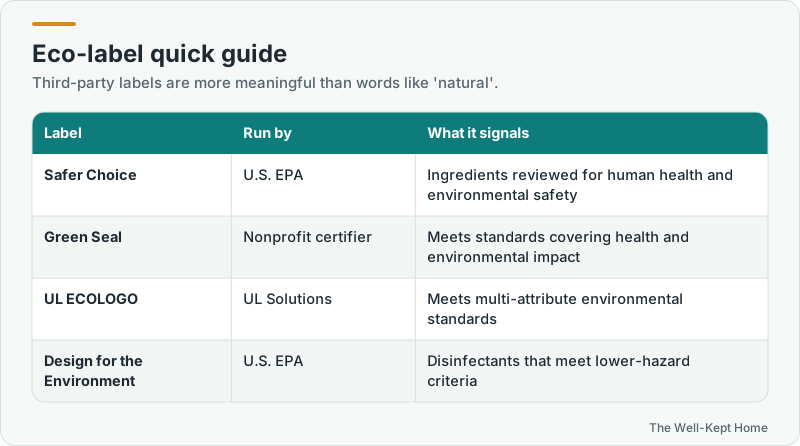
The most credible green companies use products certified by an independent third party rather than relying on their own claims. Common certifications in the U.S. include the EPA’s Safer Choice label, Green Seal, and UL ECOLOGO. For disinfectants, the EPA’s Design for the Environment logo marks products that meet lower-hazard criteria. Many green services also offer fragrance-free options, which matter for people with asthma, allergies, or chemical sensitivities.
Tools and methods
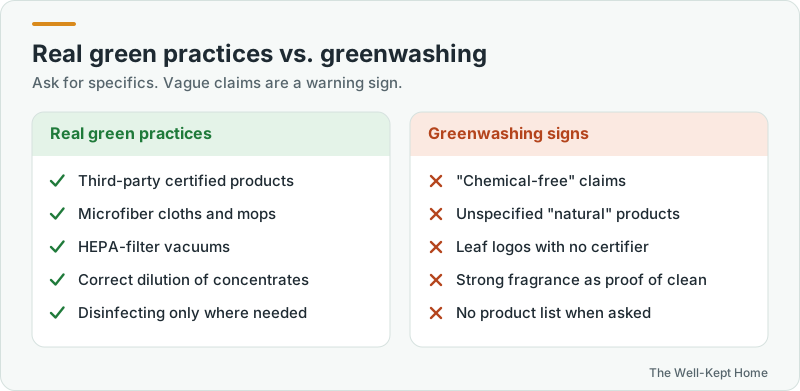
- Microfiber cloths and mops trap dust and grime mechanically, so less cleaning chemistry is needed.
- Vacuums with HEPA filters capture fine dust and allergens instead of blowing them back into the air.
- Dwell time. Letting a gentle cleaner sit and work reduces the need for harsh products and hard scrubbing.
- Correct dilution. Concentrates mixed to the right strength work better than overdosed ones, and they leave less residue.
Smart disinfection
Cleaning with soap and water removes most germs from surfaces, and routine disinfecting of every surface isn’t necessary in most homes. A thoughtful green service cleans thoroughly everywhere and disinfects targeted, high-touch areas when there’s a reason, such as illness in the household, using the gentlest effective registered product and following its contact time.
Less waste
Concentrates in refillable bottles, washable microfiber instead of paper towels and disposable wipes, and efficient routes all reduce a company’s footprint.
Spotting greenwashing
The Federal Trade Commission’s Green Guides caution businesses against broad, unqualified environmental claims. In practice, be skeptical of:
- “Chemical-free.” Everything, including water and vinegar, is a chemical. The claim is meaningless.
- “Natural” or “non-toxic” with no product names or certifications to back it up.
- Leaf and earth logos that don’t come from a recognized certifier.
- Heavy fragrance presented as proof of cleanliness. Clean doesn’t have a smell.
- Reluctance to share a product list when you ask.
Who benefits most
- Households with asthma, allergies, or sensitivity to fragrances
- Families with babies and young children who spend time on floors
- Pet owners; see pet-safe cleaning products
- Anyone who wants to reduce indoor air pollution and plastic waste
What changes room by room
Green cleaning isn’t a different checklist so much as a different approach to the same tasks. In practice, a well-run green clean tends to look like this:
- Kitchen. Counters and appliance fronts get a mild detergent or certified all-purpose cleaner, with a disinfectant reserved for raw-meat prep areas or illness. Natural stone gets a pH-neutral cleaner, never vinegar.
- Bathrooms. Soap scum and mineral film are handled with certified bathroom cleaners, used only on surfaces that tolerate them, and extra dwell time takes the place of harsher chemistry. The toilet is a reasonable place for a disinfectant.
- Floors. Microfiber flat mops use far less solution than a string mop and bucket, and they don’t leave a sticky residue that attracts dirt.
- Dusting. Damp or electrostatic microfiber captures dust instead of pushing it into the air, which matters for allergy sufferers.
- Air. Windows open or fans running while products are in use, and no plug-in fresheners left behind as a “finishing touch.”
Does green cleaning work as well?
Yes, when it’s done well. Certified green products are evaluated for performance as well as safety, and microfiber and good technique do much of the work. Some heavy jobs, such as baked-on oven grime, take longer with gentler products, which is why good green cleaners plan for dwell time rather than reaching for harsher chemicals.
What it costs
Many green cleaning services charge about the same as conventional companies; some charge slightly more for certified products and equipment. If you want to supply your own products, ask whether that changes the price. For general pricing, see house cleaning prices.
How to choose
Ask for the product list by name, check the labels, and ask about methods and disinfection. Our companion guide to finding a green cleaning service near you lists the questions to ask. For a broader look at products, see non-toxic cleaning products for home.
Common questions
Is vinegar-based cleaning the same as green cleaning?
Vinegar is one useful tool, but professional green cleaning usually relies on certified products designed for specific jobs, plus microfiber and HEPA equipment. Vinegar also isn’t safe on every surface; see DIY vinegar cleaner.
Do green cleaners disinfect?
Most will disinfect high-touch areas on request, preferably with lower-hazard registered products. Ask which product they use and why.
Can I ask for fragrance-free products?
Yes. Many green services offer them by default or on request. Mention it when booking.
Are certified products more expensive?
Sometimes slightly, but concentrates and refill systems often offset the cost for companies.