Scrubbing grout with a toothbrush is nobody’s idea of a good Saturday, and most of the time it isn’t necessary. Grout grime is mostly organic: soap residue, body oils, mildew, and tracked-in dirt sitting in a porous surface. Give the right cleaner enough time and it breaks that down, so a rinse or a light wipe finishes the job.
The method that works best in most homes is an oxygen bleach soak. Steam and a peroxide paste are good alternatives, depending on your grout and what’s staining it.
Table of Contents
Method 1: Oxygen bleach soak (best all-around)
Oxygen bleach is sodium percarbonate, the main ingredient in powders like OxiClean. Dissolved in hot water, it breaks down into hydrogen peroxide and soda ash. The peroxide lifts organic stains and kills mildew; the soda ash cuts grease. Unlike chlorine bleach, it’s color-safe on most grout and doesn’t fill the room with fumes.
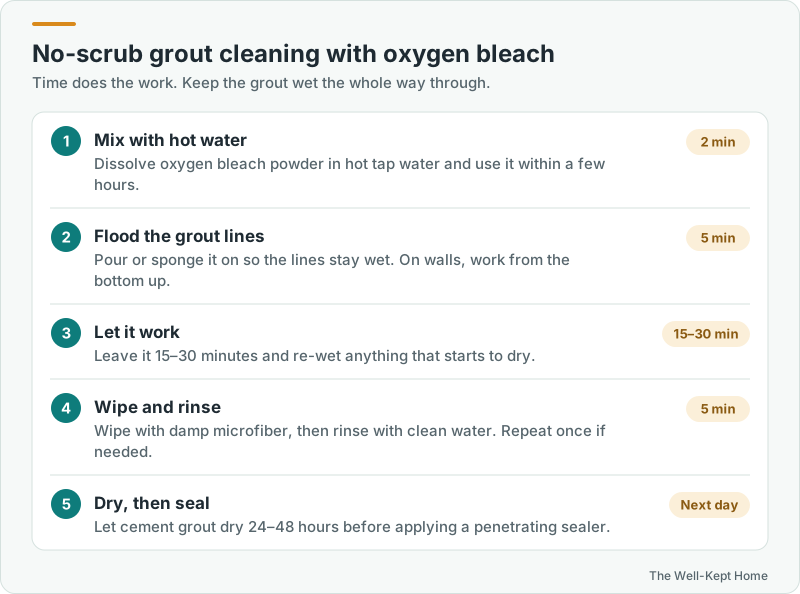
- Mix it hot. Dissolve oxygen bleach powder in hot tap water at the strength the label recommends for heavy stains; about 2 tablespoons per 2 cups is a common mix. It needs hot water to activate and is most effective in the first few hours after mixing.
- Flood the grout lines. Pour or sponge the solution on so the lines stay wet, not just damp. On walls, work from the bottom up so drips don’t streak areas you’ve finished.
- Wait. Leave it 15 to 30 minutes. You’ll see light fizzing as it works. Re-wet any areas that start to dry.
- Wipe and rinse. Wipe with a damp microfiber cloth or mop, then rinse with clean water. Most staining lifts without scrubbing, and a second round handles what’s left.
- Let it dry completely before you judge the result. Damp grout always looks darker than it is.
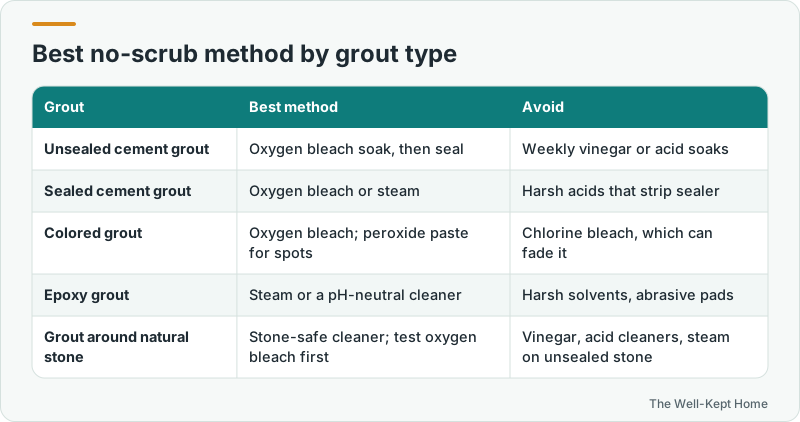
Safe on: sealed and unsealed cement grout, most colored grout, ceramic and porcelain tile. Test first on: natural stone and anything you’re unsure about.
Method 2: Steam
A steam cleaner with a narrow nozzle or grout brush attachment drives high-temperature steam into the grout’s pores, loosening grime and killing mildew with no chemicals at all. You’ll still wipe up afterward, but you won’t scrub. Steam is the fastest option for large floors and the best choice if you’d rather avoid cleaning products entirely.
It isn’t right for every surface. Skip steam on unsealed natural stone, cracked grout, and older installations where hot moisture could work its way behind loose tiles.
Method 3: Peroxide and baking soda paste (for problem spots)
For a few stubborn dark lines, mix baking soda with enough 3% hydrogen peroxide to make a thick paste. Spread it over the stained grout, leave it 10 to 15 minutes, then wipe it away. The peroxide bleaches organic stains and the paste keeps it in place. A drop or two of dish soap helps if the stain is greasy.
Which method for which grout
What about vinegar and chlorine bleach?
Vinegar shows up in a lot of DIY grout recipes, but it’s not the best choice here. Cement grout is alkaline, and repeated acid soaks slowly eat into it, leaving it rougher and more porous, which makes it stain faster. Vinegar is great for mineral buildup on tile. Don’t make it your weekly grout cleaner.
Chlorine bleach works on black mildew stains, but it can fade colored grout, it irritates the lungs in a small bathroom, and it must never be mixed with vinegar, ammonia, or acidic cleaners. If you use it, dilute it, ventilate well, and rinse thoroughly.
When cleaning won’t fix it
Sometimes grout looks dirty because it’s damaged. If the color stays dark and blotchy after two oxygen bleach treatments, the stain may be deep in porous, unsealed grout. If the grout is crumbling, cracked, or pulling away from the tile, no cleaner will help. At that point the options are a color sealant, which recolors and seals the grout, or regrouting. Both are standard services from tile and grout cleaning pros.
Black spots that keep coming back within days, especially along the corners of the tub or shower, are usually mildew growing in the caulk. Caulk is cheap to replace, and once mold has rooted in it, it rarely comes truly clean.
Keep it clean longer: seal it
Cement grout is porous. Once it’s clean and fully dry, which takes at least 24 to 48 hours, a penetrating grout sealer makes every future cleaning easier. Many sealers recommend reapplying every one to two years in a shower, and less often on floors that stay dry. Epoxy grout doesn’t need sealing at all.
To check an existing seal, sprinkle a few drops of water on the grout. If they bead, the sealer is still working. If they soak in and darken the grout within a minute, it’s time to reseal.