Few things are as frustrating as opening an electric bill that’s much higher than last month’s when you can’t think of anything you did differently. The cause is usually one of a handful of things: the weather, a price change, a longer billing period, an estimated meter reading, or one appliance quietly running far more than it should. Here’s a step-by-step way to figure out which.
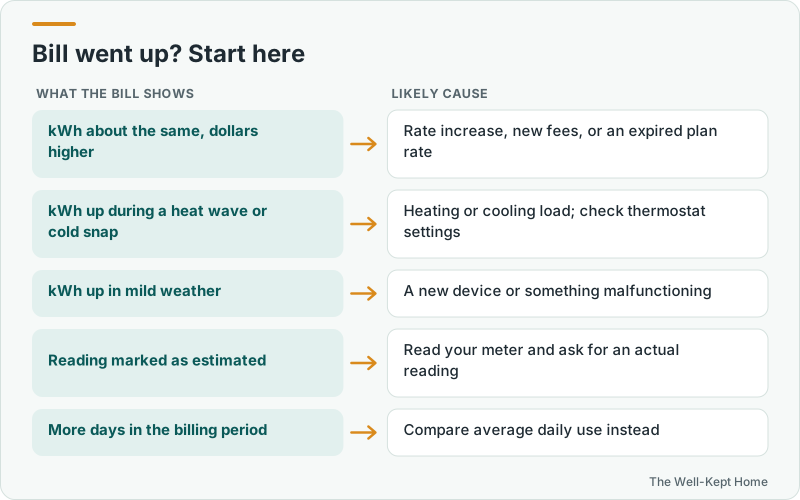
Table of Contents
Step 1: Compare kilowatt-hours, not dollars
Find the kWh, the amount of electricity used, on this bill and on last year’s bill for the same month. This separates two very different problems:
- kWh about the same, but the bill is higher: you’re paying more per kWh. Prices have been rising nationally; EIA’s outlook puts the 2026 average U.S. residential price at roughly 18 cents per kWh, up from about 17 cents the year before. Look on the bill for a rate change, new fees or surcharges, or, in states with retail choice, the end of a fixed-rate or promotional plan.
- kWh went up: you’re using more electricity. Keep going.
Step 2: Check the billing period and meter reading
Look at the number of days in the billing period. A 35-day bill will be higher than a 28-day bill, so compare your average daily usage. Also check whether the meter reading was actual or estimated. If last month was estimated low, this month’s actual reading includes the catch-up. You can read your own meter and compare it with the bill.
Step 3: Consider the weather
A heat wave or cold snap can raise usage sharply, especially with electric heat or a heat pump. Heat pumps often switch on electric backup heat in very cold weather, which uses much more electricity. If the bill covered unusually hot or cold weeks, that alone may explain it. Many utility accounts show daily usage alongside temperature.
Step 4: Think about what changed at home
- Guests staying, or someone newly working from home
- A new space heater, dehumidifier, freezer, or aquarium
- A new electric vehicle, or charging more often
- A hot tub or pool pump back in use
- Gaming PCs, servers, or other always-on equipment
Use the watts-times-hours method to estimate what a new device costs. See what uses the most electricity in a home.
Step 5: Hunt for a malfunction
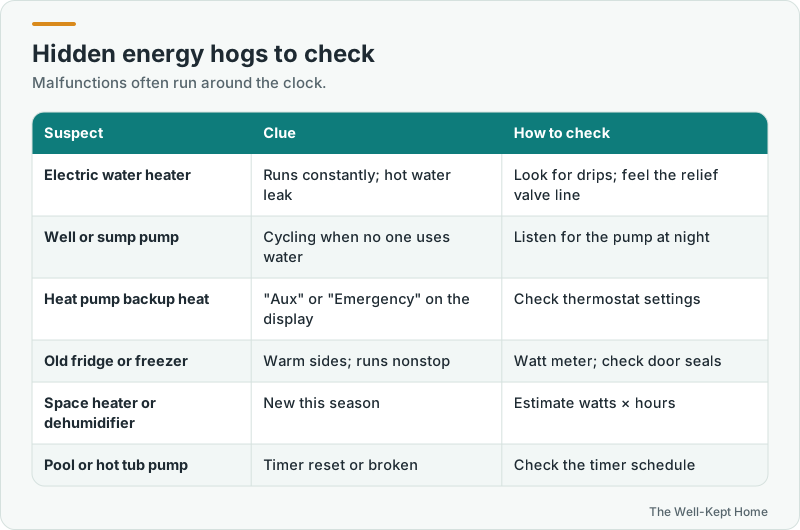
If the weather was mild and nothing changed, something may be running constantly:
- Electric water heater: a hot water leak, a dripping faucet, or a failed element or thermostat can make it run nonstop. Check for leaks and listen for it heating at odd times.
- Well or sump pump: a pump that cycles when no one is using water suggests a leak or a failing pressure switch.
- Heat pump backup heat: if the thermostat shows “Aux” or “Emergency” heat on mild days, have the system checked.
- HVAC running constantly: a clogged filter, low refrigerant, or a thermostat problem.
- Old refrigerator or freezer: a failing compressor or bad door seal can make it run continuously.
- Pool pump timer: a power outage can reset a timer so the pump runs around the clock.
Step 6: Try the breaker test
Turn off everything you can and look at your meter. Most digital meters show current usage or a blinking indicator. If it’s still spinning fast, switch off breakers one at a time and watch for the drop. The circuit that causes a big change is where to look. Be careful: leave refrigerators, sump pumps, and medical equipment on, and don’t touch the panel if it’s damaged or wet. If you’re not comfortable working at the electrical panel, skip this step.
Step 7: Use your utility’s tools
Many utilities with smart meters let you see hourly usage, set high-bill alerts, and download your data. An unexplained spike at the same time every day or night is a strong clue. If you still can’t find a cause, ask the utility to verify the meter reading, or request a meter test. Meter errors are rare but possible.
If the bill is hard to pay
Call your utility before the due date. Most offer payment plans and budget billing, which spreads costs evenly over the year. Income-qualified households may get help through the Low Income Home Energy Assistance Program (LIHEAP), and many utilities run their own assistance programs.
Common questions
Can a bad appliance really double my bill?
Yes. A water heater running constantly because of a leak, or a stuck backup heat strip in a heat pump, can add hundreds of kilowatt-hours in a month.
Why is my bill higher in winter even though I have gas heat?
Your furnace blower runs on electricity, days are shorter so lights stay on longer, and people spend more time indoors with electronics and cooking. A space heater or two adds even more.
How do I prevent surprises?
Sign up for usage alerts, check your utility account monthly, and watch your overnight baseline. Our guides to reducing phantom power and lowering your summer bill cover the most common fixes.