Drain cleaning prices vary more than most homeowners expect, because “drain cleaning” covers everything from a 20-minute sink fix to a half-day main sewer job with a camera inspection. National cost guides put a simple sink or tub clog at roughly $100 to $300. Main line work, hydro jetting, and inspections cost more, and after-hours calls add a premium on top.
Here’s what each service typically costs and what pushes your bill up or down.
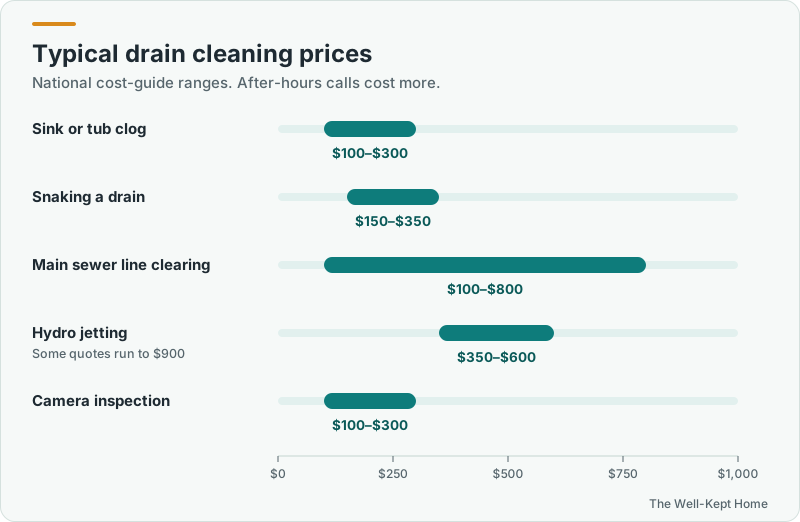
Table of Contents
Typical prices by service
Sink, tub, or shower clog: about $100 to $300
A plumber clears a single branch line with a small drain machine. This is the most common service call and the cheapest, especially during regular business hours.
Snaking a drain: about $150 to $350
Cost guides commonly list professional snaking in this range, with national averages around $200. Price depends on how far the clog is and how accessible the line is.
Main sewer line clearing: about $100 to $800
The range is wide because main line jobs vary so much. A clog near an accessible cleanout may cost little more than a branch line call. A deep clog, tree roots, or no cleanout access, which can mean pulling a toilet to reach the line, push it toward the top.
Hydro jetting: about $350 to $600
High-pressure water scours the pipe walls clean of grease, scale, and roots. Some quotes run up to $900 or more for long or heavily obstructed lines. Many plumbers want a camera inspection first to make sure the pipe can handle the pressure.
Camera inspection: about $100 to $300
Sometimes it’s bundled with cleaning and sometimes it’s a separate charge. It’s worth it for recurring clogs or any time someone recommends a major repair.
Sewer line repairs: well above cleaning costs
If a camera shows a broken, collapsed, or root-damaged pipe, repair is a separate project. One national guide puts sewer line repair labor alone at roughly $1,800 to $3,700, and full replacement can cost much more depending on length, depth, and method.
What affects the price
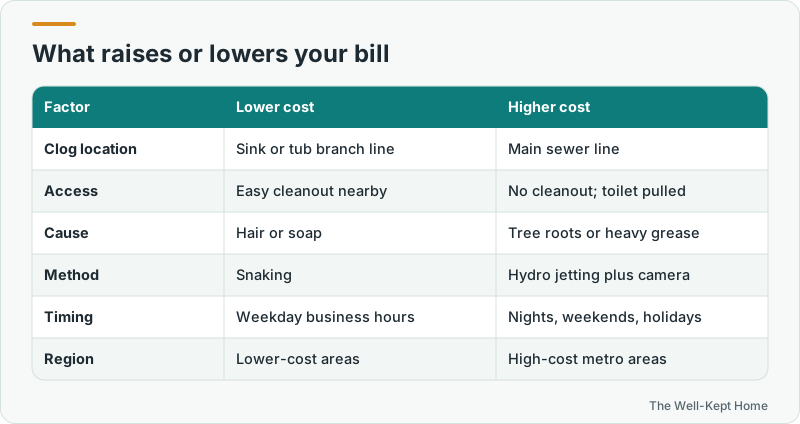
- Location of the clog. Branch lines are cheaper than main lines.
- Access. An outdoor cleanout makes main line work faster. Without one, the plumber may have to pull a toilet or go through a roof vent.
- Cause. Hair and soap are quick. Tree roots, heavy grease, and foreign objects take longer.
- Method. Hydro jetting and camera work cost more than basic snaking.
- Timing. Nights, weekends, and holidays often cost 1.5 to 2 times more or carry a flat surcharge. See our guide to emergency plumbers.
- Region. Labor rates in high-cost metro areas run above national averages.
How to save money
- Try DIY first for single clogs. A barbed drain tool, a plunger, and a hand auger solve most sink and shower clogs. See how to unclog a bathroom sink without chemicals.
- Book during business hours if the problem can wait. A slow drain usually can; a sewage backup can’t.
- Ask for flat-rate pricing and the trip fee before work starts.
- Ask about warranties. A 30- to 90-day guarantee on the clearing saves money if the clog returns.
- Get a second opinion before agreeing to sewer line replacement.
- Prevent repeat clogs by keeping grease, wipes, and hair out of drains.
Red flags
- A very low advertised price with no mention of a trip fee or “starting at” fine print
- Pressure to approve hydro jetting or replacement without showing camera footage
- Refusal to give a price before starting
- No license number or proof of insurance
Does insurance cover drain cleaning?
Routine clogs aren’t covered; they’re maintenance. Damage from a sewer backup may be covered if your policy includes a water or sewer backup endorsement, which standard policies often don’t include automatically. It’s worth checking before you need it.
Common questions
Why do plumbers charge a trip fee?
It covers travel time and vehicle costs. Some companies apply it toward the job; others charge it in addition. Ask when you call.
Is a maintenance plan worth it?
For homes with recurring root intrusion or grease problems, scheduled cleaning can cost less than repeated emergency calls. For most homes, it isn’t necessary.
How often should a main line be cleaned?
Only when there’s a problem, unless roots or grease make it recurring. In that case, a plumber may recommend cleaning every one to two years.
If you’re deciding whether to call someone at all, our guide to drain cleaning services covers the warning signs.