A smelly drain is one of those problems that’s easy to ignore until guests notice it. The fix depends entirely on the cause, and the type of smell is your best clue. A musty or sour smell usually means gunk in the drain itself. A sewer or rotten-egg smell usually means something is letting sewer gas into the room, or there’s a reaction happening in your water heater.
One important safety note before anything else: if you have natural gas service and smell rotten eggs near a gas appliance or throughout the house, treat it as a possible gas leak, not a drain problem. Leave the house and call your gas utility or 911 from outside.
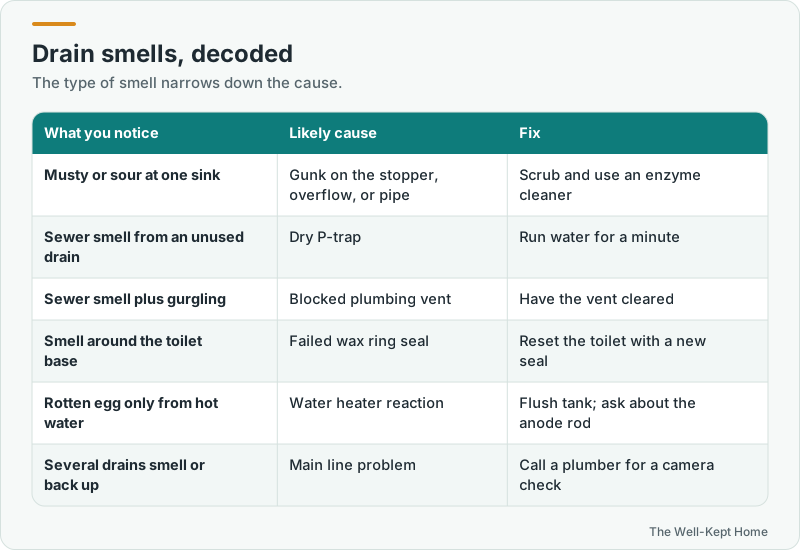
Table of Contents
1. Gunk in the drain, stopper, or overflow
The most common cause of a musty or sour smell is the organic film that builds up inside drains: hair, soap, toothpaste, skin cells, and food residue, colonized by bacteria. It collects on sink stoppers, in the pipe just below the drain, in the sink’s overflow channel, and under the rubber splash guard of a garbage disposal.
Fix it:
- Pull and clean the stopper. See how to remove a sink stopper.
- Scrub the inside of the pipe with a flexible drain brush.
- Clean the overflow hole with a bottle brush.
- Use an enzyme or bacterial drain cleaner overnight to digest what’s left.
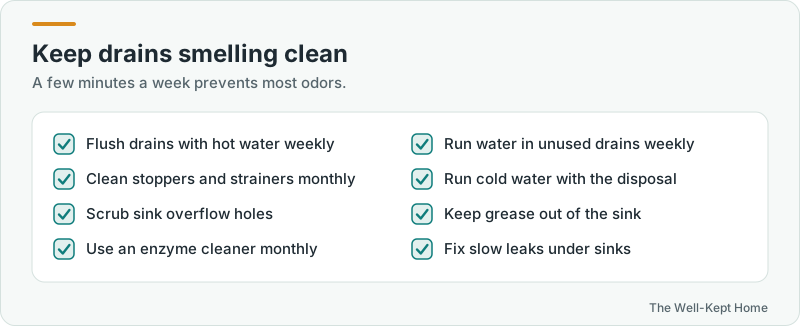
- Flush with very hot tap water.
2. A smelly garbage disposal
Food particles stick to the grinding chamber and the underside of the splash guard. Lift the splash guard and scrub its underside with an old toothbrush and dish soap. Then grind a handful of ice cubes with a tablespoon of coarse salt to scour the chamber, followed by a little baking soda and vinegar. Run cold water for 30 seconds afterward. Small pieces of citrus peel add a fresh smell, but avoid fibrous scraps and grease.
3. A dry P-trap
Every drain has a trap, a bend that holds water to block sewer gas. In drains that aren’t used often, like a guest bathroom, a basement floor drain, or a laundry sink, that water evaporates and sewer gas comes straight up. Running water for a minute refills the trap. For floor drains that dry out often, a few tablespoons of mineral oil poured in after the water slows evaporation. A plumber can also install a trap primer, which refills it automatically.
4. A blocked plumbing vent
Plumbing vents run up through the roof and let air into the drain system so water flows smoothly. When a vent is blocked by leaves, a nest, or ice, drains gurgle, run slowly, and can pull water out of traps, letting sewer smell in. If you notice gurgling plus a sewer smell, especially in several fixtures, have a plumber or roofer check the vent. Don’t climb onto the roof if it isn’t safe.
5. A failed seal
A sewer smell around the base of a toilet often means the wax ring under the toilet has failed. The fix is to pull the toilet and install a new seal. A loose slip nut under a sink can also leak sewer gas; tighten it and see if the smell fades.
6. Rotten egg smell from hot water only
If the smell appears only when you run hot water, the water heater is the likely source. Bacteria in the tank can react with the anode rod and produce hydrogen sulfide. A plumber can flush the tank and replace the anode with a different type. Run cold water at the same tap to compare; if the cold water smells too, the issue may be your water supply, which is more common with private wells.
7. A main sewer line problem
If several drains smell, gurgle, or back up at once, the problem is likely in the main line: a partial clog, tree roots, or a broken pipe. That needs a plumber, usually with a camera inspection. See our guide to drain cleaning services.
What not to do
- Don’t pour bleach down the drain to fix odors. It rushes past the film without removing it, and it should never be mixed with vinegar or other cleaners.
- Don’t mask it with air freshener. A persistent sewer smell is a sign that something needs fixing.
- Don’t pour grease down the kitchen drain. It solidifies, traps food, and smells.
Common questions
Is sewer gas dangerous?
Sewer gas contains hydrogen sulfide and methane. At the low levels behind a faint, occasional whiff, it’s mostly unpleasant. A strong or persistent sewer smell should be fixed promptly, and if the smell is overpowering or anyone feels unwell, ventilate, leave the area, and call a plumber.
Why does my drain smell worse in summer?
Heat speeds up bacterial growth in drain film and makes traps evaporate faster. Weekly hot water flushes help.
Will baking soda and vinegar fix a smelly drain?
For mild odors from light buildup, often yes. For a dry trap, a failed seal, or a vent problem, no. See how to use baking soda and vinegar in a drain.