Baking soda and vinegar is the most famous home remedy for a clogged drain, and it does have its uses. It’s also widely oversold. The fizzing looks dramatic, but it isn’t strong enough to dissolve a hair clog or push through a solid blockage. Knowing what it can and can’t do saves you time and a lot of fizzing.
Table of Contents
What actually happens in the drain
Baking soda is a mild base; vinegar is a mild acid. When they meet, they react and release carbon dioxide gas, along with water and a small amount of sodium acetate. The bubbling agitates loose grime, and the hot water you use before and after softens soap and grease so they rinse away. The two ingredients mostly neutralize each other, though, so the mixture isn’t a powerful cleaner on its own.
That makes it a good tool for light buildup and odors, and a poor one for real clogs.
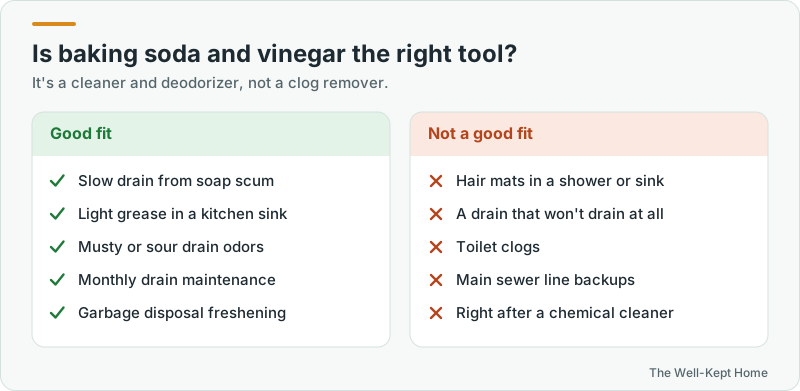
When it works
- Slow bathroom drains from soap scum and toothpaste
- Kitchen sinks with light grease film
- Musty or sour drain odors
- Monthly drain maintenance
- Freshening a garbage disposal
When it won’t
- Hair clogs in showers and bathroom sinks
- A drain with standing water that won’t go down at all
- Toilets
- Main sewer line backups, where several fixtures are affected
- Solid objects such as bottle caps, jewelry, or food scraps
The method
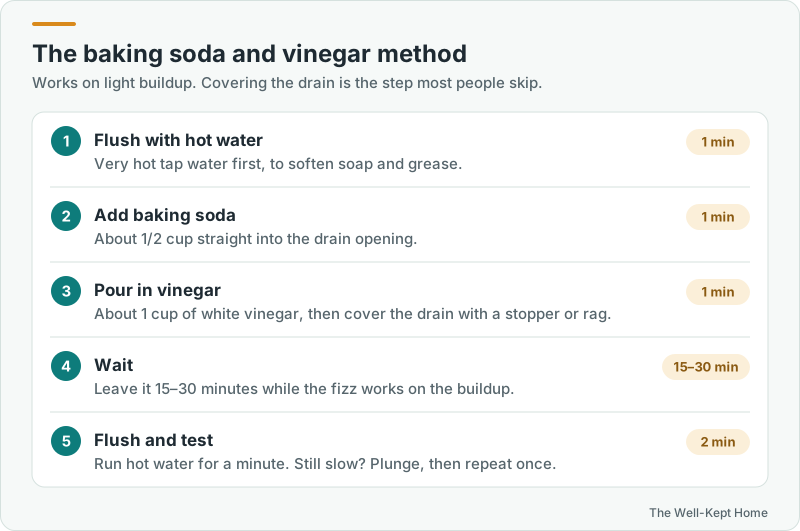
- Clear standing water if you can. Scoop it out with a cup. The mixture works better when it isn’t diluted.
- Flush with very hot water. Run the hottest tap water you have for a minute to soften soap and grease. Avoid boiling water on plastic pipes or older porcelain.
- Add the baking soda. Pour about 1/2 cup directly into the drain opening.
- Add the vinegar. Pour in about 1 cup of white vinegar. It will fizz immediately.
- Cover the drain. Put the stopper in or cover the opening with a wet rag. This keeps the reaction in the pipe instead of bubbling up into the sink.
- Wait 15 to 30 minutes. You can leave it longer for odors.
- Flush again. Run very hot tap water for a minute or two.
- Test it. If the drain is faster but still not right, plunge it, then repeat the treatment once.
Variations worth knowing
- Baking soda and hot water alone work nearly as well for deodorizing, without the vinegar.
- Baking soda and salt, about 1/2 cup each, left for an hour and then flushed with hot water, add a little abrasion for light buildup.
- Dish soap and hot water are often better than baking soda and vinegar for greasy kitchen drains. Dish soap is made to break up grease.
Safety notes
- Don’t use it right after a chemical drain cleaner. Mixing products in a drain can cause splashing or release fumes.
- Never combine vinegar with bleach. If you’ve recently poured bleach down a drain, flush it thoroughly with water before using vinegar. The combination releases chlorine gas.
- Wear gloves and eye protection if you plunge afterward. Dirty drain water can splash.
What to do when it doesn’t work
If the drain is still slow after two rounds, the clog is something baking soda and vinegar can’t touch. Usually that’s hair, so move to mechanical methods:
- Pull and clean the stopper. See how to remove a sink stopper.
- Use a barbed plastic drain tool or a hand auger.
- Plunge, with the overflow hole blocked.
- Clean out the P-trap.
Our step-by-step guides to unclogging a bathroom sink without chemicals and unclogging a shower drain full of hair walk through each one.
Using it for maintenance
The best use of baking soda and vinegar is preventive. Once a month, treat bathroom sinks, the tub, and the kitchen sink to keep light buildup and odors from getting established. For drains that smell or attract drain flies, an enzyme cleaner works better over time; see our comparison of enzyme vs. chemical drain cleaners.
Common questions
Can baking soda and vinegar damage pipes?
No. Both are mild and safe for metal and plastic pipes and for septic systems. The only caution is with very hot or boiling water on older or plastic plumbing.
Can I leave it in the drain overnight?
Yes. It won’t hurt anything. Flush with hot water in the morning. For odor problems, an overnight treatment can help.
Does it work in a garbage disposal?
Yes, for odors. Follow it with cold water while running the disposal. For a jammed disposal, use the hex key slot on the bottom of the unit and the reset button instead.