A slow bathroom sink is almost always the same problem: hair, soap scum, and toothpaste knotted together into a mat that grows a little with every use. The good news is that this kind of clog usually sits within the first foot or two of the drain, either wrapped around the stopper or caught in the P-trap under the sink. You can reach both without a single chemical.
Chemical drain openers often struggle with hair, they’re hazardous to handle, and if they don’t work you’re left with a sink full of caustic water. The methods below are safer and, for this kind of clog, usually more effective. Work through them in order.
Table of Contents
What you’ll need
- Rubber gloves and an old towel
- A flashlight
- A barbed plastic drain-cleaning strip (inexpensive at hardware stores)
- A small cup plunger, the flat kind, not a toilet plunger
- A wet rag
- A bucket or large bowl
- A 1/4-inch hand auger, if the clog is deeper
Fix 1: Pull and clean the stopper
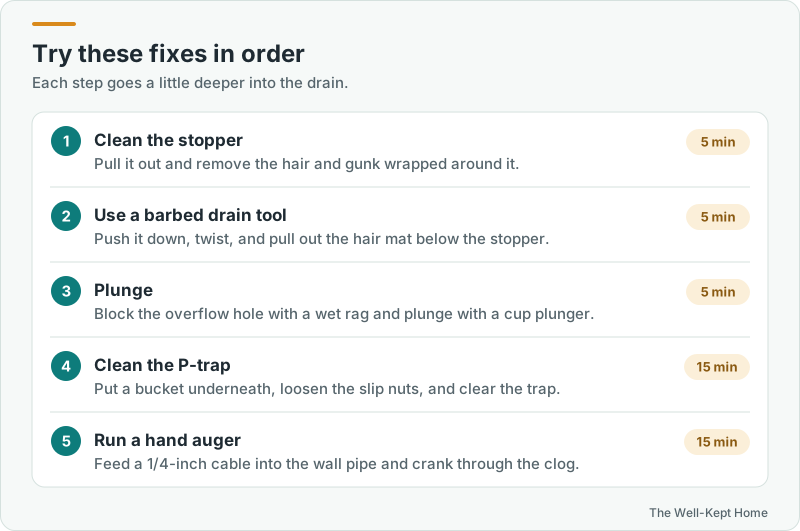
The pop-up stopper is the most common culprit. Hair wraps around its stem and forms a plug just below the drain opening. Many stoppers lift straight out with a twist; others are held by a pivot rod under the sink. Our guide on how to remove a sink stopper covers every common type. Pull off the hair and gunk, rinse the stopper, and run the water. This alone fixes a large share of slow bathroom sinks.
Fix 2: Use a barbed drain tool
With the stopper out, push a barbed plastic strip down into the drain as far as it goes, twist it a few times, and pull it out slowly. The barbs snag the hair mat that sits below the stopper. It’s not pleasant to look at, but it works remarkably well. Repeat until it comes out clean, then flush with hot water.
Fix 3: Plunge it properly
Bathroom sinks have an overflow hole near the rim, and if you don’t block it, the plunger’s pressure escapes through it. Stuff a wet rag into the overflow and hold it there. Run an inch or two of water into the basin so the plunger cup is covered, seat the plunger over the drain, and give it 15 to 20 firm, quick strokes, keeping the seal. Pull it away sharply on the last stroke. Repeat a few times if the water starts to move.
Fix 4: Hot water and dish soap
If the sink drains slowly rather than not at all, the problem may be soap scum lining the pipe. Squirt a little dish soap into the drain and follow it with a few quarts of very hot tap water. Skip boiling water, which can be hard on plastic pipes and older fixtures. This softens soap buildup but won’t break up a hair clog on its own.
Fix 5: Clean out the P-trap
The P-trap is the U-shaped pipe under the sink. It holds water to block sewer gas, and it also catches things like hair ties, earring backs, and wads of hair.
- Clear the cabinet and put a bucket and towel under the trap.
- Loosen the two slip nuts on either end of the trap. Most turn by hand; if not, use slip-joint pliers with a rag to protect the finish.
- Lower the trap and dump the water and debris into the bucket.
- Clean the trap with a bottle brush, and check the short pipe going into the wall for buildup.
- Reinstall the trap, making sure the washers are seated, and tighten the nuts hand-tight plus a little more.
- Run water and check for drips.
Fix 6: Run a hand auger
If the trap is clear and the sink is still slow, the clog is in the pipe inside the wall. With the trap removed, feed a 1/4-inch hand auger into the wall pipe, crank it clockwise as you push, and work it through the clog. Pull it back slowly, wiping the cable as it comes out. Our guide to the best drain snake for a bathroom sink explains which type to buy.
What about baking soda and vinegar?
It helps with slow drains from light soap buildup and with odors, but it won’t break up a hair mat. See how to use baking soda and vinegar on a drain for when it’s worth trying.
When to call a plumber
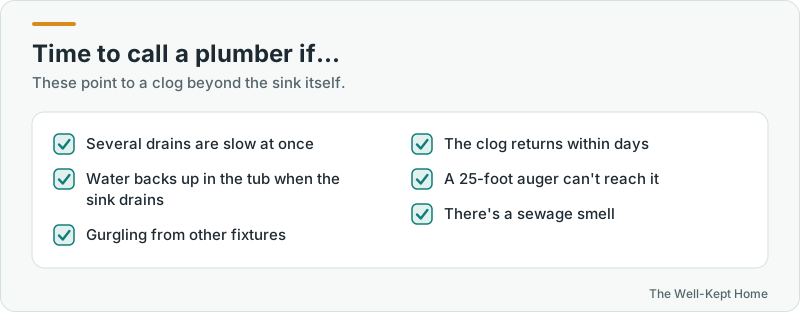
If several drains are slow at once, if water backs up in the tub when the sink drains, or if the clog keeps returning within days, the problem is likely farther down the line. That needs a plumber’s longer equipment. See our guide to drain cleaning services for what to expect.
Keep it from happening again
- Put a small drain hair catcher over the opening, or wipe hair into the trash rather than rinsing it down.
- Pull and rinse the stopper once a month.
- Flush the drain with very hot tap water weekly.
- Use an enzyme drain cleaner monthly if your sink gets a lot of soap and toothpaste.
Common questions
Why does my sink drain slowly but never fully clog?
A partial hair mat on the stopper or in the trap lets some water through. It will get worse over time, so clean it now while it’s easy.
Can I use a chemical drain cleaner if this doesn’t work?
It’s better to call a plumber. If you do use one, never plunge or snake afterward, because the chemical can splash, and tell the plumber what you used.
Do I need to turn off the water to remove the P-trap?
No. Just don’t run the faucet while the trap is off.