There are dozens of fruit fly traps on the market, from small plastic apples to plug-in gadgets with glowing lights. They don’t all work the same way, and the best one for your kitchen depends on what’s going on: a sudden swarm, a few flies that never quite leave, or small flies that turn out not to be fruit flies at all.
Here’s how the main types work and when each one makes sense.
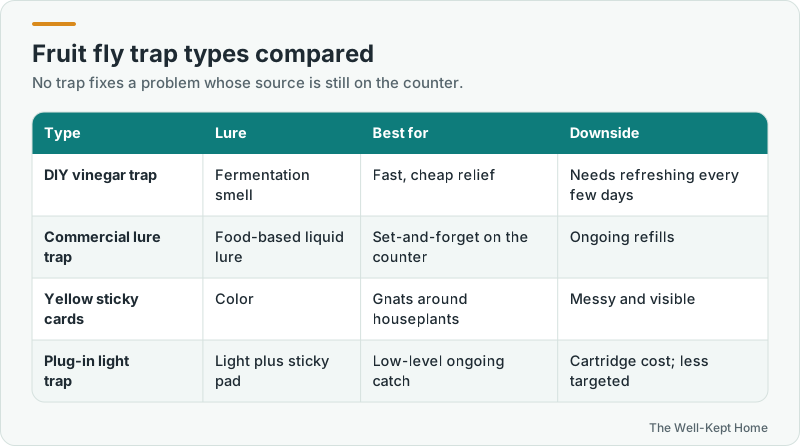
Table of Contents
1. DIY apple cider vinegar traps
A jar of apple cider vinegar with a few drops of dish soap is hard to beat for a sudden outbreak. The vinegar smells like fermenting fruit, and the soap breaks the surface tension so flies sink instead of landing and leaving. It costs almost nothing and you can make several in minutes.
Strengths: cheap, fast, and very attractive to fruit flies. Weaknesses: needs refreshing every three to five days, and an open jar is easy to knock over. Our step-by-step guide to the homemade apple cider vinegar trap covers the details that make it work.
2. Commercial lure traps
These are small, enclosed containers with a food-based liquid lure, often shaped like fruit. Flies enter through small openings and can’t find their way out. Terro’s apple-shaped fruit fly trap is a widely available example, and there are many similar products.
Strengths: tidy, discreet, hard to spill, and ready to use. They’re good for keeping a low-level problem in check near the trash or sink. Weaknesses: they cost more over time than vinegar, and like any lure, they compete with real food. A trap next to a bowl of ripe peaches loses.
3. Yellow sticky cards
Small yellow cards coated in adhesive attract many small flying insects by color. They’re especially useful for fungus gnats, which are often mistaken for fruit flies and hang around houseplants. Stick the cards in plant pots or hang them nearby.
Strengths: inexpensive, no liquid, and they catch a variety of small flies. Weaknesses: they look unattractive, they can catch pet hair and curious fingers, and they’re less effective than a vinegar lure for fruit flies around produce.
4. Plug-in light traps
These plug into an outlet and use light, sometimes with a small fan, to draw flying insects onto a sticky pad hidden inside. Zevo and Katchy are well-known brands.
Strengths: they work around the clock, look neater than sticky cards, and catch several kinds of small flying insects. Weaknesses: replacement cartridges add up, and because they aren’t scent-based, they’re less targeted at fruit flies than a vinegar lure. They work best as a supplement in rooms where flies are a recurring nuisance.
How many traps, and where?
- Use two or three traps for an active outbreak, not one.
- Place them close to where flies gather: the fruit bowl, the trash, the recycling bin, and the sink.
- Keep them out of drafts from fans and vents.
- Move ripe fruit into the fridge so your traps aren’t competing with it.
The part no trap can do
Every trap catches adults. None of them touches the eggs and larvae developing in an overripe banana, a forgotten onion, sticky recycling, or the film inside a drain. If you set out traps and the flies keep coming, the source is still in your kitchen. Our guide to getting rid of fruit flies in the kitchen walks through where to look.
Make sure it’s actually fruit flies
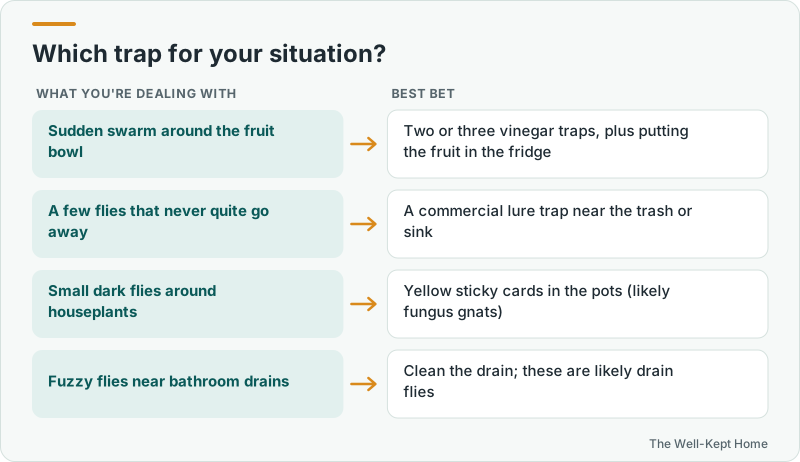
- Fruit flies: tan, red eyes, around produce and trash. Vinegar and lure traps work well.
- Fungus gnats: dark and slender, around houseplants. Use sticky cards and let the soil dry out between waterings.
- Drain flies: fuzzy, moth-like, resting on walls near drains. Traps help only after you clean the drain; see how to get rid of drain flies.
Our take, by situation
- Sudden swarm: DIY vinegar traps plus a thorough cleanup.
- Ongoing low-level flies: a commercial lure trap near the trash or sink.
- Houseplant gnats: yellow sticky cards and less watering.
- Recurring flying insects in general: a plug-in light trap as a background helper.
Common questions
Do bug zappers work on fruit flies?
Outdoor bug zappers are a poor fit. Fruit flies are drawn to scent more than light. Indoor light traps catch some, but a vinegar lure is more effective for fruit flies specifically.
Are fruit fly traps safe around pets?
Enclosed lure traps and vinegar traps are low-risk if placed out of reach. Sticky cards can trap fur and paws, so keep them high or inside plant pots that pets can’t reach.
Why does my store-bought trap seem to stop working?
Lures dry out and lose their scent over time, and a new food source nearby can pull flies away. Replace the lure on schedule and keep ripe produce in the fridge.