A spray bottle of vinegar and water is one of the cheapest, simplest cleaners you can make, and it genuinely works on a lot of jobs around the house. It cuts through mineral film, cleans glass without streaks, and freshens surfaces for pennies a bottle. It also has limits: vinegar is an acid, and some surfaces can’t handle it. Here’s the recipe, a few smart add-ins, where to use it, and where to keep it away.
Table of Contents
The basic recipe
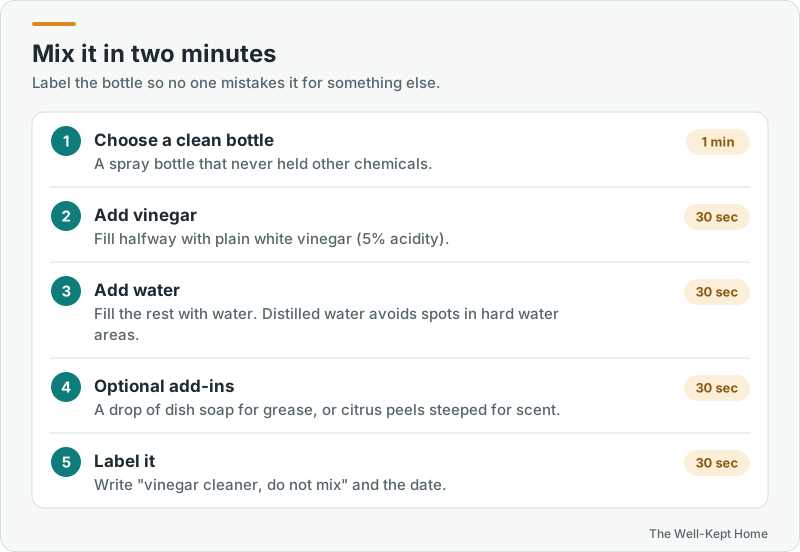
- 1 part plain white distilled vinegar, the standard 5% acidity kind from the grocery store
- 1 part water
Mix them in a clean spray bottle that has never held other chemicals. If you have hard water, use distilled water to avoid leaving fresh mineral spots on glass. Label the bottle clearly with the contents and the date.
For tougher mineral buildup, such as hard water stains on shower glass, use vinegar at full strength instead. See removing hard water stains from glass shower doors.
Optional add-ins
- A drop or two of dish soap helps the spray cut light grease and cling to vertical surfaces. Too much soap leaves streaks, so keep it minimal.
- Citrus peels. Steep lemon or orange peels in vinegar in a sealed jar for a week or two, then strain and dilute. It softens the vinegar smell.
- Essential oils add scent, but several are toxic to cats and dogs. If you have pets, skip them. See pet-safe cleaning products.
Where it works well
- Glass, mirrors, and shower doors. It cleans without streaks and dissolves water spots.
- Laminate counters and sealed ceramic or porcelain tile.
- Stainless steel sinks, for water spots. Rinse afterward and don’t leave it sitting; see how to clean a stainless steel sink.
- Chrome faucets and fixtures with limescale; see how to remove limescale from faucets.
- Inside the refrigerator and on shelves.
- The microwave. Heat a bowl of water with a splash of vinegar for a few minutes, let it steam, then wipe.
- Small appliance exteriors and plastic surfaces.
Where to keep it off
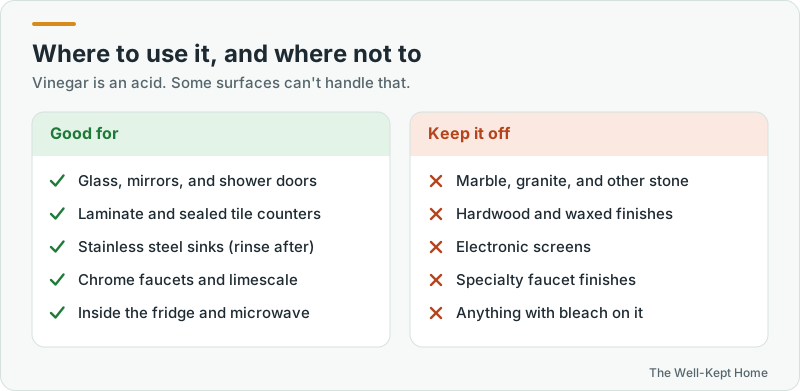
- Natural stone. Marble, travertine, limestone, and even granite. Acids can etch stone and wear down sealers. See whether vinegar is safe for granite.
- Hardwood floors and furniture, especially waxed or oiled finishes, which acid can dull.
- Electronic screens. Many have coatings that acids can damage. Use a cleaner made for screens.
- Specialty faucet finishes such as matte black, brushed gold, oil-rubbed bronze, and unlacquered brass.
- Cement grout, used repeatedly. Occasional use is fine, but frequent acid exposure slowly erodes it.
- Cast iron and aluminum cookware, which acids can pit or strip.
Never mix vinegar with these
- Bleach. Combining vinegar with bleach releases chlorine gas, which is dangerous even in small amounts. Never use them together or one right after the other without rinsing.
- Hydrogen peroxide, in the same container. Mixing them creates peracetic acid, which is corrosive. Using them one after the other on a surface, with a wipe in between, is a different matter, but don’t combine them in a bottle.
- Baking soda, in advance. It isn’t dangerous in an open container, but the two neutralize each other and the cleaning power disappears. Use them one after the other instead; see how to clean with baking soda and vinegar.
Does vinegar disinfect?
Vinegar has some antimicrobial activity, but it isn’t registered as a disinfectant with the EPA, and it isn’t a substitute for one when you genuinely need to kill germs, for example after raw meat or when someone in the house is sick. For daily cleaning, though, removing dirt and grime is what matters most, and vinegar spray does that well on the right surfaces.
About the smell
Vinegar smells strong while you’re cleaning, but the odor fades quickly as it dries, usually within an hour with a window open. Citrus-infused vinegar softens it noticeably.
Mistakes to avoid
- Reusing an old spray bottle that once held bleach or another cleaner. Leftover residue can react with vinegar. Start with a new or thoroughly washed bottle.
- Using it as a degreaser. Vinegar is weak against oily grime. For a greasy stovetop or range hood, dish soap and hot water work better.
- Letting it sit on metal. Long contact can dull or pit some metals. Spray, wipe, and rinse.
- Assuming it’s safe everywhere because it’s natural. Check the surface first, and test in a hidden spot when you’re unsure.
What it costs
A gallon of white distilled vinegar typically costs a few dollars at the grocery store, and at a 1:1 dilution it makes about eight 32-ounce bottles of cleaner. Even after you buy a sturdy spray bottle and a few microfiber cloths, the cost per bottle is a fraction of most store-bought sprays.
Common questions
Can I use apple cider vinegar instead?
It works, but it can leave a slight residue and color. White distilled vinegar is clearer and cheaper for cleaning.
What about cleaning vinegar?
“Cleaning vinegar” is typically stronger, around 6% or more acidity. Dilute it more, and be extra careful on sensitive surfaces.
How long does homemade vinegar spray last?
Vinegar and water keep for a long time. If you add citrus or other organic material, make smaller batches and strain them well.
Is it safe around kids?
Diluted vinegar is a low-hazard cleaner, but label the bottle and store it out of reach like any other cleaning product.