That tacky film on your kitchen cabinets isn’t just dirt. When you cook, tiny droplets of oil travel through the air and settle on every nearby surface. Over time the oil oxidizes and turns sticky, dust clings to it, and the cabinets near the stove start to feel faintly gummy. Handles and edges get it worst, because they also collect the oils from your hands.
The good news is that most cabinet grease comes off with mild products and the right technique. The key is to work from gentlest to strongest and to protect the finish while you do it.
Table of Contents
Know your cabinet finish
The finish determines how aggressive you can be:
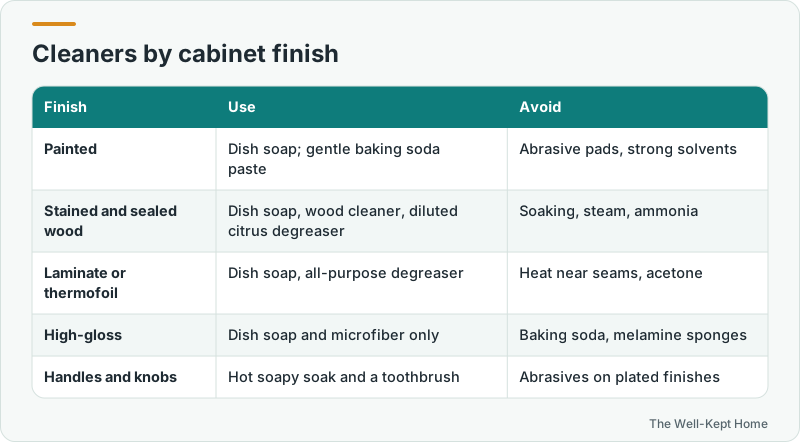
- Painted cabinets can be scuffed or dulled by abrasives and strong solvents.
- Stained wood with a clear finish (lacquer, varnish, or polyurethane) tolerates mild cleaners but not soaking, steam, or harsh chemicals.
- Laminate and thermofoil handle most cleaners, but heat and some solvents can loosen their seams.
- High-gloss finishes scratch and haze easily, even with baking soda.
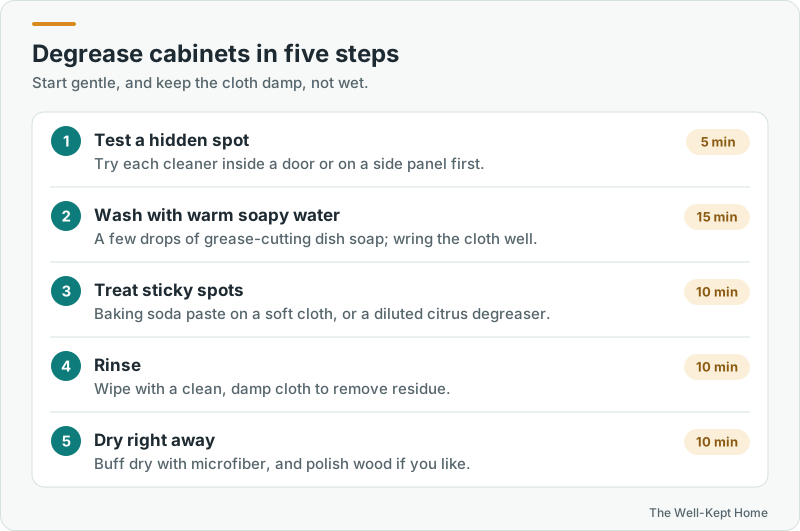
Whatever you’re using, test it first on a hidden spot, such as the inside of a door or the side of a cabinet next to the fridge.
Step 1: Warm, soapy water
Start here; it handles most cabinets. Add a few drops of grease-cutting dish soap to a bowl of warm water. Dip a microfiber cloth, wring it out well, and wipe the cabinets from top to bottom. Wood should never get soaked, and drips that run down a door leave streaks. Rinse the cloth often.
Step 2: Baking soda for sticky spots
For spots that stay tacky, mix two parts baking soda with one part water into a paste. Apply it with a soft cloth or sponge and rub gently in the direction of the wood grain. The fine grit lifts gummy grease without much pressure. Test it first on painted and glossy cabinets.
Step 3: A degreaser, if needed
Heavy buildup, especially on cabinets right above the range, may need a dedicated degreaser:
- Citrus-based degreasers use orange oil (d-limonene) to cut grease and are popular for kitchen cabinets. Dilute them as directed.
- Wood cleaners such as oil soaps are made for finished wood and clean gently.
- All-purpose degreasers work well on laminate and painted cabinets, but read the label, since some are strong enough to soften paint.
A 1:1 mix of white vinegar and water with a drop of dish soap also cuts grease on many surfaces. Vinegar is acidic, though, and can dull some finishes over time, so test it before using it everywhere, and keep it off natural stone countertops below.
Step 4: Rinse
Wipe each section again with a clean cloth dampened in plain water. Leftover soap or degreaser attracts dust and leaves the surface tacky, which defeats the purpose.
Step 5: Dry immediately
Buff the cabinets dry with a clean microfiber towel. Water left on wood can raise the grain or seep into joints. For wood cabinets, you can follow with a light coat of a cabinet or furniture polish made for finished wood.
Don’t forget the hardware
Handles and knobs collect the worst grime. Remove them if you can and soak them in hot, soapy water for 15 minutes, then scrub with an old toothbrush and dry them before reinstalling. If you can’t remove them, use a toothbrush and soapy water in place. Avoid abrasives on plated finishes, which can wear through to the metal underneath.
The tops of the cabinets
If your cabinets don’t reach the ceiling, the tops are probably coated in a thick layer of grease and dust. A degreaser and a few paper towels handle it. Once it’s clean, some people lay sheets of wax paper or shelf liner on top, then simply replace them every few months instead of scrubbing again.
What to avoid
- Abrasive scrubbers and steel wool
- Soaking wood or using a steam cleaner on it
- Ammonia and strong solvents on wood and painted finishes
- Melamine sponges on glossy finishes, which leave dull patches
- Leaving any cleaner to dry on the surface
Keep grease from building up
- Run the range hood every time you cook, and for a few minutes afterward.
- Clean the range hood filters every month or two. Saturated filters stop trapping grease.
- Wipe the cabinets closest to the stove weekly. Fresh grease comes off with a damp cloth; old grease takes work.
If the whole kitchen is due for a reset, a professional kitchen deep cleaning service includes cabinet degreasing along with appliances and the range hood.
Common questions
Can I use dish soap on wood cabinets?
Yes. Diluted dish soap is one of the safest cleaners for finished wood. Wring the cloth out well and dry the surface right after.
Will vinegar damage my cabinets?
Occasional diluted vinegar is fine on many finishes, but frequent use can dull some lacquers and waxes. Test it first, and use soapy water for routine cleaning.
How often should I degrease cabinets?
Wipe the ones near the stove weekly and do a full degreasing every few months. Kitchens where a lot of frying happens may need it more often.