A small patch of mildew in the shower is a cleaning job. Mold spreading across a basement wall, inside an attic, or behind drywall after a leak is a different problem, and it usually needs professional mold remediation. Remediation isn’t just cleaning mold off surfaces; it’s finding and stopping the moisture, containing the area so spores don’t spread, removing contaminated materials safely, and verifying the job is done. Here’s when you need a pro, what the process involves, what it typically costs, and how to hire well.
Table of Contents
When to call a professional
- The affected area is larger than about 10 square feet. That’s the EPA’s rule of thumb for when a homeowner can usually handle it alone.
- Mold is in the heating and cooling system or the ductwork.
- The mold followed flooding, sewage backup, or contaminated water.
- You smell mustiness but can’t see mold, which suggests it’s hidden inside walls, under floors, or in the attic.
- It keeps coming back after cleaning.
- Someone in the household has asthma, allergies, or a weakened immune system.
- Building materials are damaged: soft drywall, rotting wood, or stained ceilings.
For small patches you can tackle yourself, see removing mold from a bathroom ceiling.
What professional remediation involves
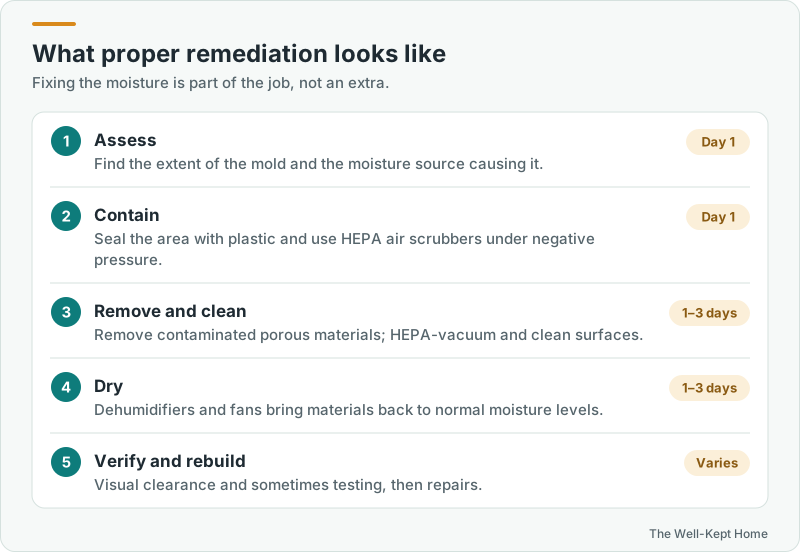
1. Assessment
The contractor determines how far the mold extends and, crucially, why it’s there: a leak, condensation, flooding, or poor ventilation. Moisture meters and thermal cameras help find wet materials hidden behind surfaces.
2. Containment
For anything beyond a small area, the work zone is sealed off with plastic sheeting, and air scrubbers with HEPA filters create negative pressure so spores don’t drift into the rest of the house. Workers wear protective equipment.
3. Removal and cleaning
Porous materials with significant mold growth, such as drywall, insulation, and carpet padding, are usually removed and bagged. Hard surfaces are cleaned, and the area is HEPA-vacuumed. Wood framing may be cleaned or sanded.
4. Drying
Dehumidifiers and air movers bring building materials back to normal moisture levels. Rebuilding over damp materials invites the mold back.
5. Verification and rebuilding
The area should pass a visual inspection, and sometimes post-remediation testing by an independent assessor. Then walls, insulation, and finishes are replaced.
Does mold need to be tested?
The EPA notes that if you can see mold, sampling usually isn’t necessary to decide to remove it. Testing can be useful in specific situations, such as suspected hidden mold or confirming that remediation succeeded, and it should be done by experienced professionals. Be wary of companies that test, find a problem, and then offer to fix it, without independent verification.
Some states regulate mold work. New York and Texas, for example, license mold assessors and remediators and generally require that the assessment and remediation on covered jobs be done by separate companies. Check your state’s rules.
What mold remediation costs
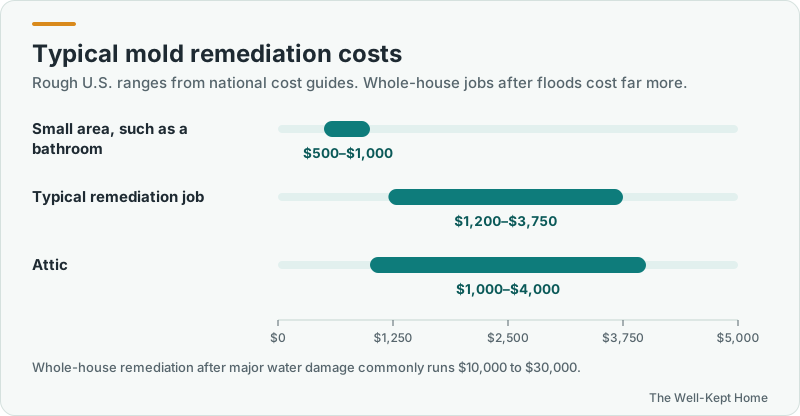
National cost guides commonly put typical professional mold remediation at roughly $1,200 to $3,750, with averages around $2,300, and broader ranges up to about $9,000 for larger jobs. Small areas, such as a section of bathroom, can cost around $500 to $1,000. Attics commonly run about $1,000 to $4,000. Whole-house remediation after major flooding can reach $10,000 to $30,000 or more. Some companies price per square foot of affected area, often in the range of $10 to $30. Costs rise with the size of the area, hidden mold, HVAC involvement, and the amount of rebuilding needed.
Will insurance cover it?
It depends on the cause and your policy. Mold resulting from a sudden, covered event, such as a burst pipe, may be covered, often with limits. Mold from long-term leaks, humidity, or lack of maintenance is commonly excluded. Many policies cap mold coverage. Document the damage and call your insurer early.
How to hire a remediation company
- Credentials. Look for IICRC certification in applied microbial remediation, or similar industry training, and state licensing where required.
- Insurance, including liability coverage that applies to mold work.
- A written plan describing containment, what will be removed, how it will be cleaned and dried, and how success will be verified.
- A focus on the moisture source. A company that doesn’t ask why the mold is there isn’t solving the problem.
- Multiple quotes. Get at least two or three for the same scope.
- Caution with scare tactics. Be skeptical of high-pressure sales, “toxic black mold” alarmism, and “fogging only” treatments that skip removal.
Common questions
Can I stay home during remediation?
For small, contained jobs, usually yes. For large jobs, or if someone is sensitive, the contractor may recommend staying elsewhere.
How long does remediation take?
Small jobs may take a day or two. Larger projects with drying and rebuilding can take a week or more.
Will mold come back after remediation?
Not if the moisture source is fixed and materials are dried properly. Keeping indoor humidity between about 30% and 50% helps prevent new growth.
Is black mold more dangerous?
Color doesn’t reliably indicate how harmful a mold is. Any significant mold growth indoors should be addressed, regardless of color.