Baking soda and vinegar are the two most famous natural cleaners, and they’re often mentioned in the same breath, usually in a recipe that has you mix them into a fizzing foam. That fizz looks impressive, but it’s mostly the two ingredients canceling each other out. Used separately, or one after the other, they’re genuinely effective, and together they can handle a surprising share of household cleaning. Here’s how they work and how to use each one well.
Table of Contents
What each one does
Baking soda
Baking soda, or sodium bicarbonate, is a mild alkali and a very gentle abrasive. It’s good at:
- Scrubbing without scratching most surfaces
- Loosening grease and baked-on food when left as a paste
- Neutralizing odors, especially acidic ones like sour milk and stale food
Vinegar
White vinegar is about 5% acetic acid. It’s good at:
- Dissolving mineral deposits: hard water spots, limescale, and the chalky film on glass
- Cutting soap film on glass and ceramic tile
- Cleaning glass without streaks
Why mixing them in advance doesn’t help
When baking soda meets vinegar, they react: carbon dioxide bubbles off, and what’s left is mostly water and a small amount of sodium acetate. The fizz can help agitate loose grime for a moment, which is why it’s popular for drains, but a pre-mixed solution has lost most of the cleaning power of both ingredients. The better approach is to use them one after the other: baking soda to scrub or loosen, then vinegar to dissolve minerals and lift the residue.
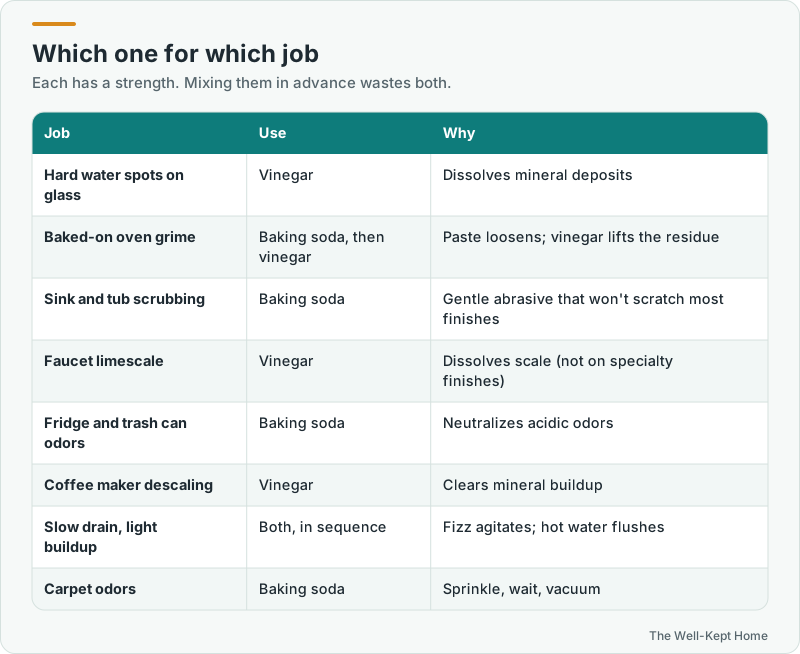
Which one for which job
Kitchen
- Oven: spread a baking soda paste, leave it overnight, wipe, then spray vinegar to lift the residue. See cleaning an oven without harsh chemicals.
- Sink: scrub with baking soda, then spray vinegar for water spots, and rinse.
- Microwave: steam a bowl of water with a splash of vinegar, then wipe. Use baking soda on stuck-on spots.
- Coffee maker: run a cycle with equal parts vinegar and water, then two cycles of plain water, unless the manufacturer says otherwise.
- Fridge odors: an open box of baking soda absorbs smells; wipe shelves with diluted vinegar.
- Trash cans: sprinkle baking soda in the bottom to control odors between washes.
Bathroom
- Tub and sink: baking soda on a damp sponge scrubs without scratching.
- Shower glass: vinegar dissolves hard water film; see the best cleaner for hard water stains on glass.
- Grout: a baking soda paste with hydrogen peroxide is gentler on cement grout than repeated vinegar; see cleaning grout without scrubbing.
- Faucets: vinegar for limescale on chrome, not specialty finishes.
Around the house
- Carpet and mattress odors: sprinkle baking soda, leave it for a few hours, then vacuum.
- Slow drains with light buildup: baking soda followed by vinegar, then hot water; see unclogging a drain with baking soda and vinegar.
- Windows and mirrors: a diluted vinegar spray.
The sequential method
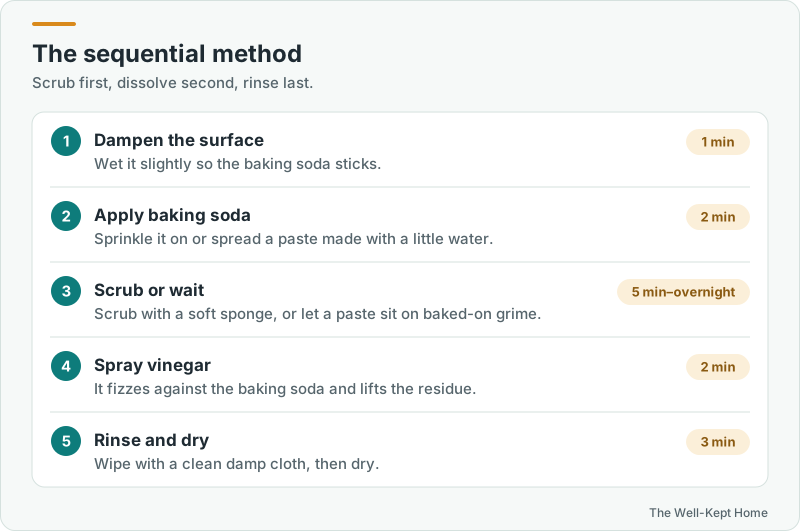
For most scrubbing jobs, this order works best: dampen the surface, apply baking soda or a paste, scrub or let it sit, spray vinegar to lift the residue, then rinse with a clean damp cloth and dry.
Where not to use them
- Vinegar on natural stone, hardwood, specialty metal finishes, and electronic screens
- Baking soda on aluminum, which it can discolor, and on high-gloss or delicate finishes you don’t want to dull
- Either one as a disinfectant when you truly need to kill germs; neither is an EPA-registered disinfectant
Safety notes
- Never combine vinegar with bleach. It releases chlorine gas.
- Don’t seal baking soda and vinegar in a closed container; the gas builds pressure.
- Label homemade sprays and store them out of reach of children.
Common mistakes
- Mixing a big batch ahead of time. Once the fizzing stops, you’re left with mostly salty water. Keep the two separate until the moment you use them.
- Leaving baking soda residue. Baking soda dries to a white, chalky film. Rinse well and wipe dry, especially on dark surfaces and glass.
- Using too much. A thin paste or a light sprinkle does the job. Piles of powder just mean more rinsing.
- Expecting vinegar to cut grease. Vinegar is great on minerals but mediocre on oily grime. Use dish soap or a baking soda paste for grease.
- Skipping the dwell time. Both work better when given a few minutes, and baking soda paste on baked-on food works best overnight.
A simple starter kit
A large bag of baking soda and a gallon of white vinegar cost a few dollars each and last for months of regular cleaning. Add two labeled spray bottles, one for diluted vinegar and one for plain water, a shaker jar for baking soda, a soft-bristle brush, a non-scratch sponge, and a stack of microfiber cloths, and you can handle most routine kitchen and bathroom cleaning without a cabinet full of specialty products.
Common questions
Does baking soda and vinegar unclog drains?
It helps with slow drains caused by light buildup and with odors. It won’t clear hair clogs or solid blockages.
Can baking soda scratch surfaces?
It’s very mild, so it’s safe on most sinks, tubs, and tile. Test it first on high-gloss finishes, glass cooktops, and coated surfaces.
Is this safe for septic systems?
Yes. Both are mild and used in small amounts, so they’re septic-friendly.
What’s a good replacement for a commercial all-purpose spray?
For most surfaces, a few drops of dish soap in warm water. Add a vinegar spray for glass and mineral film. See DIY all-purpose cleaner with vinegar.